















Advanced Heat Treatment Furnaces: Driving Precision and Efficiency in Modern Manufacturing
March 10, 2026 – As global manufacturing continues to evolve toward high precision, energy efficiency, and sustainability, heat treatment furnaces have emerged as critical equipment in optimizing material performance and ensuring product reliability. From aerospace components to automotive parts, and from bearing manufacturing to injection molds, advanced heat treatment furnaces are redefining industry standards by integrating cutting-edge technology, intelligent control, and eco-friendly design.
Heat treatment furnaces play an indispensable role in modifying the internal microstructure of metals and alloys, enhancing their mechanical properties such as strength, hardness, wear resistance, and fatigue life while eliminating internal stresses产生 during production. With the rapid development of industries like new energy vehicles, aerospace, and high-end equipment manufacturing, the demand for high-performance heat treatment solutions is growing exponentially, driving continuous innovation in furnace technology.
Today’s advanced heat treatment furnaces are characterized by four core advantages that address the evolving needs of modern manufacturing:
Precision Temperature Control and Uniformity: Equipped with advanced PID control algorithms and real-time dynamic compensation systems, modern heat treatment furnaces achieve temperature control accuracy of ±1℃ and temperature uniformity of ±1℃ within the effective working zone. For example, low-temperature vacuum tempering furnaces can operate stably up to 750℃ (1380°F) with strict compliance to AMS 2750F Class 2 TUS requirements, ensuring consistent process quality for high-demand applications like aerospace components. This level of precision is critical for producing parts with consistent metallurgical properties and flawless surface finishes.
Energy Efficiency and Environmental Sustainability: In response to global “dual carbon” goals and industrial energy efficiency policies, modern heat treatment furnaces adopt energy-saving technologies such as optimized heating elements, heat recovery systems, and inverter-controlled blowers to reduce energy consumption significantly. Compared with traditional equipment, advanced models can improve thermal efficiency by up to 20%, while low-emission designs and vacuum or controlled atmosphere technologies minimize environmental impact by preventing oxidation and reducing harmful emissions.
Intelligent Operation and Process Traceability: Integrated with Industry 4.0 technologies, modern heat treatment furnaces feature user-friendly touchscreen interfaces, multi-segment program programming, and real-time data monitoring systems. Operators can easily customize heat treatment processes, and the equipment automatically records process curves and operation logs, ensuring full traceability for quality audits and compliance with stringent industry standards. Remote monitoring and diagnostic capabilities also reduce downtime by enabling proactive maintenance and quick troubleshooting.
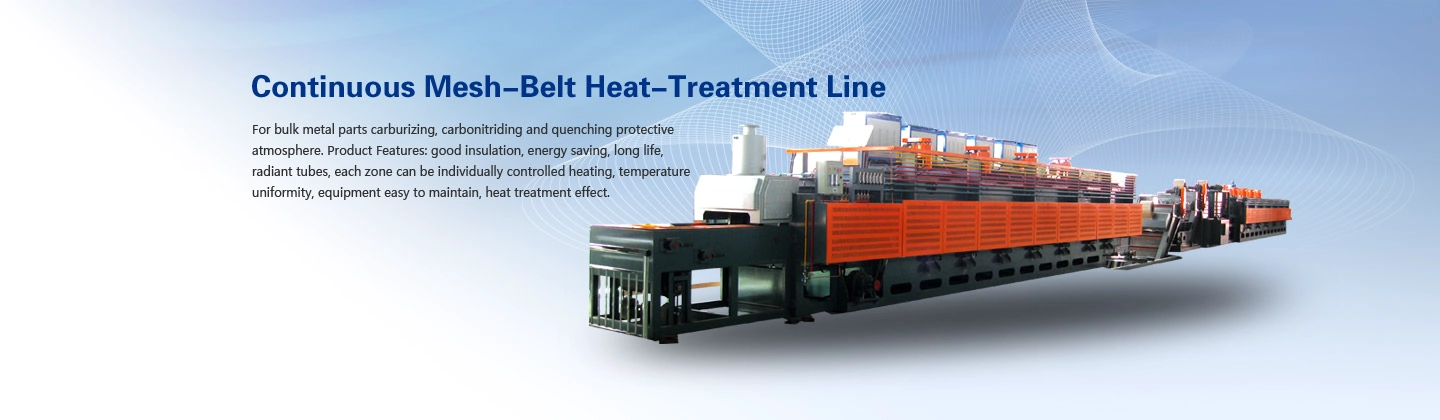
Versatility and Customization: To meet the diverse needs of different industries, manufacturers now offer a wide range of heat treatment furnace types, including vacuum furnaces, low-pressure carburizing (LPC) furnaces, mesh belt furnaces, and multi-chamber furnaces. These furnaces can be customized to handle various part sizes, from small precision components (400x400x600 mm heating chambers) to large industrial parts (36”×36”×48” hot zones), and support multiple processes such as tempering, annealing, brazing, and carburizing. This versatility makes them ideal for applications ranging from injection mold manufacturing to aerospace component production.
The global heat treatment equipment market is projected to grow at a CAGR of 3.97% from 2026 to 2035, reaching USD 10014.92 million by 2035. Key drivers of this growth include the expanding demand for high-performance materials in automotive and aerospace industries, the adoption of automation and digitalization, and the replacement of outdated, high-energy-consumption equipment. In particular, vacuum furnaces and LPC furnaces are gaining traction in high-end segments due to their ability to deliver clean, precise heat treatment results.
As a leading provider of advanced heat treatment solutions, our company is committed to developing innovative furnace technologies that empower manufacturers to achieve higher efficiency, better quality, and lower costs. Our product portfolio includes vacuum tempering furnaces, LPC furnaces, and custom-designed heat treatment systems, all engineered to meet the strictest industry standards and customer requirements. Backed by professional technical support and fast after-sales service, we help our partners stay competitive in the rapidly evolving manufacturing landscape.
In conclusion, advanced heat treatment furnaces are the backbone of modern manufacturing, enabling the production of high-quality, durable components across industries. As technology continues to advance, the integration of AI, IoT, and sustainable design will further enhance the performance and capabilities of these critical machines, driving the industry toward a more efficient, precise, and eco-friendly future.