














Global Fastener Manufacturing Trends 2026: Advanced Cold Heading Machines Drive Industry Efficiency Upgrade
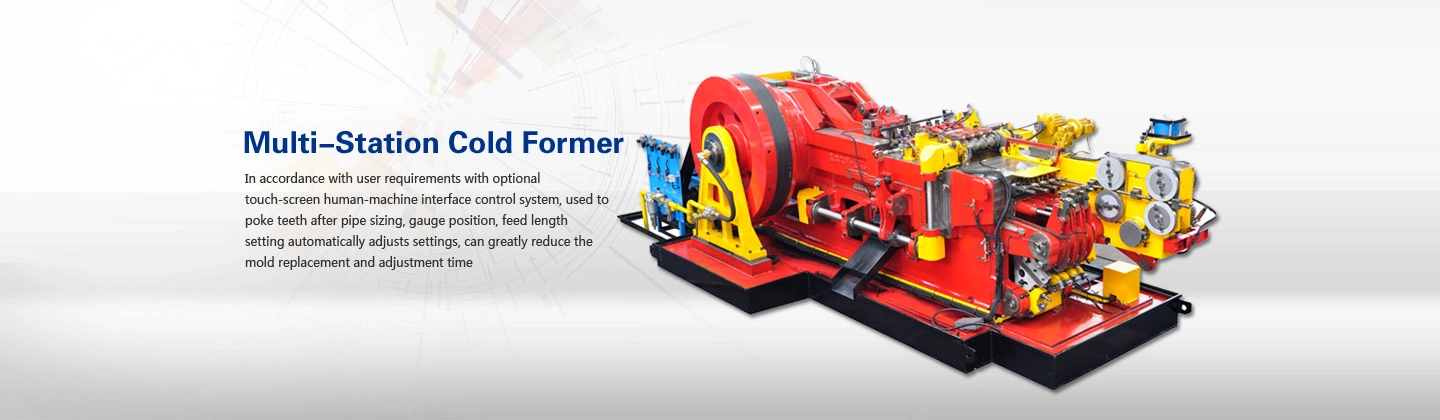
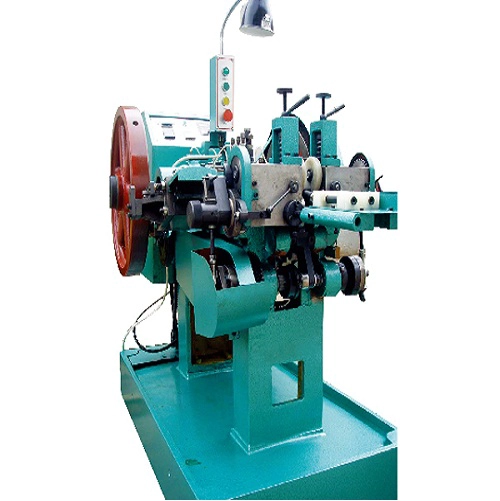
In 2026, the global fastener manufacturing industry is entering a new phase of high-quality development, driven by robust demand from new energy vehicles, high-end equipment manufacturing, infrastructure construction and electronic information sectors. According to the latest industry research, the global cold heading machine market is projected to reach USD 4.23 billion in 2026, with a compound annual growth rate of 5.8% from 2026 to 2034, and the Asia-Pacific region currently accounts for more than 40% of global consumption, maintaining its position as the largest and fastest-growing regional market. Downstream customers have put forward significantly higher requirements for fastener strength, precision, delivery efficiency and batch consistency. Against this backdrop, traditional cutting and turning processes have gradually fallen short of market demand due to low material utilization, insufficient mechanical performance of workpieces and limited production efficiency. A growing number of fastener manufacturers are turning to cold forming technology to achieve dual upgrades in production capacity and product quality. As the mainstream process of modern fastener manufacturing, cold heading technology forms workpiece heads and contour structures through room-temperature cold extrusion without cutting metal materials. The core difference from traditional machining lies in the forming principle: conventional cutting removes excess material to obtain the target shape, with material utilization usually only 40% to 70% and a large amount of metal scrap generated, while cold heading realizes near-net-shape forming through metal plastic flow, with material utilization as high as 90% to 99%, and some simple parts can even achieve zero waste. For a production run of one million fasteners, this difference translates directly into 20% to 35% savings in raw material costs. Meanwhile, the cold forming process completely retains the internal metal fiber flow of workpieces, and improves the tensile strength of finished fasteners by 20% to 35% and fatigue resistance by more than 40% through cold work hardening, making it highly suitable for load-bearing fastener applications in the automotive, construction and aerospace fields. In terms of production efficiency, cold heading equipment can complete dozens to hundreds of forming cycles per minute, which is dozens of times the efficiency of single-piece machining, fully meeting the needs of large-scale mass production. With the continuous upgrading of industrial automation technology, the new generation of automatic multi-station cold heading machines has become the preferred production equipment for medium and large fastener manufacturers. Different from traditional single-station equipment, 2-die 4-blow and multi-station cold heading machines integrate wire straightening, automatic feeding, continuous forming and finished product discharging, realizing fully unmanned continuous production. Equipped with a PLC intelligent control system and servo drive system, the new cold heading machine can achieve forming positioning accuracy of ±0.02mm, and maintain stable product dimensional consistency even under 24-hour continuous operation. The heavy-duty cast steel frame with stress relief aging treatment ensures long service life and low failure rate, while effectively reducing vibration and noise during production. In recent years, the industry has also seen an obvious trend of intelligent upgrading: more and more equipment is integrated with IoT sensors and digital monitoring systems, which can realize real-time monitoring of die wear, lubrication status and production data, and support predictive maintenance, greatly reducing unplanned downtime. Servo-driven cold heading machines are also gaining popularity, reducing energy consumption by 20% to 30% compared with traditional hydraulic models, which is in line with the global green manufacturing and low-carbon development goals. From the perspective of downstream application fields, the demand structure of cold heading equipment is also undergoing significant changes. The new energy vehicle industry has become the strongest growth driver: battery systems, motor assemblies and body structures of electric vehicles require a large number of high-strength, lightweight precision fasteners, and the demand for complex special-shaped parts is increasing, which pushes fastener manufacturers to upgrade to multi-station cold heading equipment that can complete multiple forming processes at one time. In the field of infrastructure and construction, the recovery of global engineering projects has driven the demand for high-strength structural bolts and large-size fasteners, and put forward higher requirements for the stability and heavy-load capacity of equipment. In addition, aerospace, wind power and high-end equipment manufacturing industries have also increased their demand for cold-formed precision parts, further expanding the application boundary of cold heading technology. For fastener factories planning production capacity upgrading, it is recommended to prioritize cold heading equipment with stable structure, high automation level and flexible die change capability. When selecting models, factories should make decisions based on their own product structure, production scale and material types: for the production of simple standard parts such as ordinary bolts and rivets, 1-die 2-blow cold heading machines can meet the demand with high cost performance; for the production of complex fasteners such as step bolts, shoulder screws and special-shaped parts, 2-die 4-blow or more multi-station models are more suitable, which can reduce secondary processing and improve overall efficiency. As a professional supplier of fastener manufacturing equipment, Harbin Rainbow Technology provides industrial-grade automatic cold heading machines with multiple configurations, suitable for producing various standard and non-standard fasteners such as bolts, screws and rivets. We offer professional die customization, on-site installation training and lifelong after-sales technical support to help customers quickly achieve production capacity upgrading and gain competitive advantage in the market. Looking ahead, with the deepening of global industrial upgrading and green manufacturing concepts, cold heading technology will further develop in the direction of intelligence, energy saving and high precision. On the one hand, the integration of digital technologies such as industrial Internet, digital twins and AI process optimization will make cold heading equipment smarter and more efficient, and realize the transformation from production equipment to intelligent manufacturing nodes. On the other hand, as downstream industries put forward higher requirements for the precision and performance of fasteners, cold forming technology will continue to break through in terms of forming accuracy, material adaptability and complex part forming capability. As the core equipment of fastener manufacturing, the technical iteration of cold heading machines will continue to promote the high-quality development of the entire industry, and bring broader market space for equipment manufacturers with technical strength.