















Heat Treatment Furnaces: Innovations, Types, and Industry Trends Shaping Manufacturing in 2025
In the realm of industrial manufacturing, heat treatment furnaces stand as critical equipment for enhancing material properties through controlled heating and cooling processes. From annealing and quenching to渗碳 (carburizing) and tempering, these specialized industrial furnaces play a pivotal role in industries such as automotive, aerospace, and metallurgy. As technology advances, modern heat treatment systems are evolving to meet demands for precision, energy efficiency, and automation. This article explores the classifications, key types, operational features, safety protocols, and future trends of heat treatment furnaces in 2025.
Classifications of Heat Treatment Furnaces
Heat treatment furnaces are categorized based on multiple criteria to suit diverse industrial needs:
1. By Operating Temperature
- High-Temperature Furnaces: Exceed 1000°C, ideal for processes like sintering and high-temperature annealing.
- Medium-Temperature Furnaces: Operate between 650°C–1000°C, commonly used for quenching and tempering.
- Low-Temperature Furnaces: Below 650°C, suitable for stress relieving and aging treatments.
2. By Operational Mode
- Continuous Furnaces: Feature automated conveyor systems (e.g., roller hearth, pusher-type) for mass production, ensuring consistent throughput.
- Batch-Type Furnaces: Designed for small-scale or custom processes, with manual loading/unloading (e.g., box-type furnaces).
3. By Heating Medium
- Gas-Fired Furnaces: Use natural gas or propane for cost-effective heating, often integrated with radiant tubes to prevent oxidation.
- Electric Resistance Furnaces: Offer precise temperature control (±3–10°C) via heating elements, critical for sensitive alloys.
- Salt Bath Furnaces: Utilize molten salts for rapid, uniform heating, ideal for surface-hardening small components.
Common Types of Heat Treatment Furnaces
1. Box-Type Resistance Furnaces
A staple in workshops, these annealing furnaces and quenching furnaces use electric heating elements to achieve temperatures up to 1200°C. They are prized for:
- Precise temperature control (±1°C) for processes like annealing and solid carburizing.
- Versatility: Accommodating both ferrous and non-ferrous materials.
- Safety: Sealed chambers with protective gas options to minimize oxidation.
2. Pit-Type Furnaces
Vertical, well-shaped furnaces designed for long or cylindrical parts (e.g., shafts, rods). Key advantages include:
- Uniform heat distribution via built-in fans, reducing part distortion.
- Ease of loading: Cranes lift parts vertically, ideal for heat-treating gears and axles.
3. Vacuum Furnaces
Critical for high-performance materials, these furnaces operate in inert atmospheres to prevent contamination. Applications include:
- Aerospace components: Titanium alloy hardening and brazing.
- Medical devices: Sterilization and precision annealing of surgical tools.
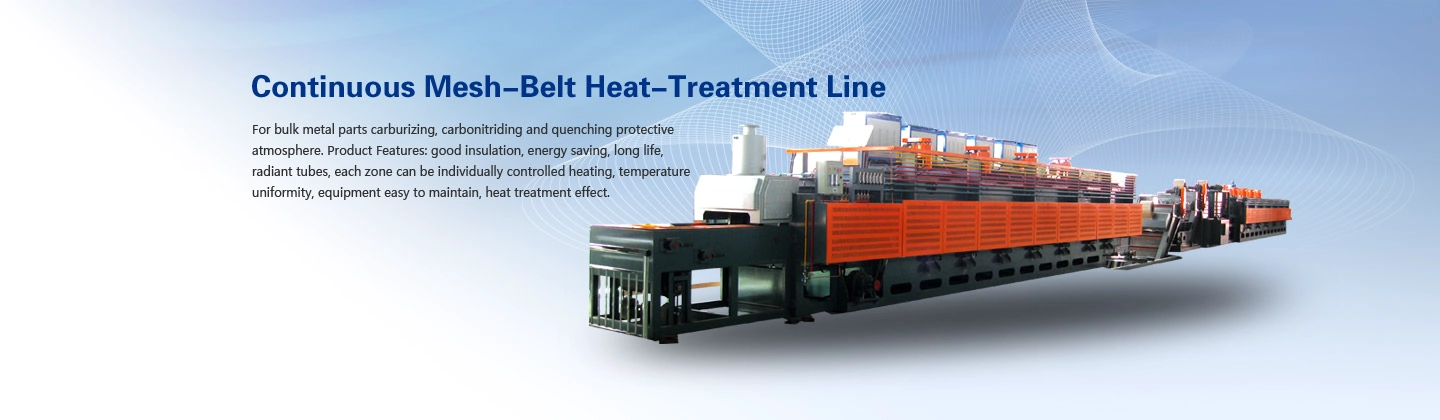
4. Continuous Mesh Belt Furnaces
Automated systems for high-volume production (e.g., automotive fasteners). They feature:
- Heat-resistant conveyor belts for non-stop processing.
- Energy recovery systems to minimize heat loss, enhancing efficiency by 20–30%.
Key Features of Modern Heat Treatment Systems
- Advanced Temperature Regulation: Digital controllers and thermocouples ensure accuracy, critical for processes like vacuum carburizing.
- Reduced Environmental Impact: Low-NOx burners and waste heat recovery systems align with global sustainability goals.
- Smart Automation: IoT-integrated sensors monitor furnace conditions in real time, enabling predictive maintenance and remote operation.
Safety Protocols for Heat Treatment Operations
- Pre-Operation Checks: Inspect electrical systems, gas lines, and emergency shutoffs.
- Temperature Ramp-Up: Follow predefined heating curves to avoid thermal shock to furnace linings.
- Gas Handling: Ensure proper ventilation when using flammable atmospheres (e.g., endothermic gas).
- Regular Maintenance: Replace worn heating elements and seals to prevent gas leaks or fires.
Future Trends in Heat Treatment Technology
1. Industry 4.0 Integration
AI-driven process optimization and machine learning algorithms will refine heating cycles, reducing energy consumption by up to 15%.
2. Green Energy Adoption
Solar-powered furnaces and hydrogen-fueled systems are emerging to lower carbon footprints.
3. Additive Manufacturing Compatibility
Specialized furnaces for post-processing 3D-printed parts will address unique heat-treating challenges of complex geometries.
Upcoming Events
The 2025 Shanghai International Heat Treatment Exhibition (Dec 2–4) will showcase cutting-edge furnace technologies, including plasma nitriding systems and hybrid heating solutions.
Conclusion
As manufacturing demands grow for stronger, lighter materials, heat treatment furnaces remain indispensable. From traditional batch furnaces to smart, energy-efficient systems, innovation continues to drive precision, safety, and sustainability. Stay ahead in this dynamic industry by exploring the latest advancements and adhering to best practices in furnace operation.
For inquiries about custom furnace solutions or technical support, contact our experts today.
Keywords: heat treatment furnace, industrial furnace, annealing furnace, quenching furnace, vacuum heat treatment, continuous furnace, batch furnace, 2025 heat treatment technology.