














Multi-Station Cold Heading Machine: The Core Equipment for High-Efficiency Fastener Manufacturing
In the global industrial manufacturing landscape, the demand for high-precision, high-efficiency, and low-waste metal processing equipment is constantly rising. As a key equipment in the cold forming industry, the multi-station cold heading machine has become an indispensable core device for mass production of fasteners, automotive parts, and precision components. It breaks through the limitations of traditional single-station cold heading machines, integrates multiple processing procedures into one continuous operation, and revolutionizes the production mode of metal forming with its unique advantages. This article will deeply explore the working principle, core features, wide application scenarios, and industry development trends of the multi-station cold heading machine, helping you understand how this equipment can optimize production processes, reduce costs, and enhance market competitiveness.
What is a Multi-Station Cold Heading Machine?
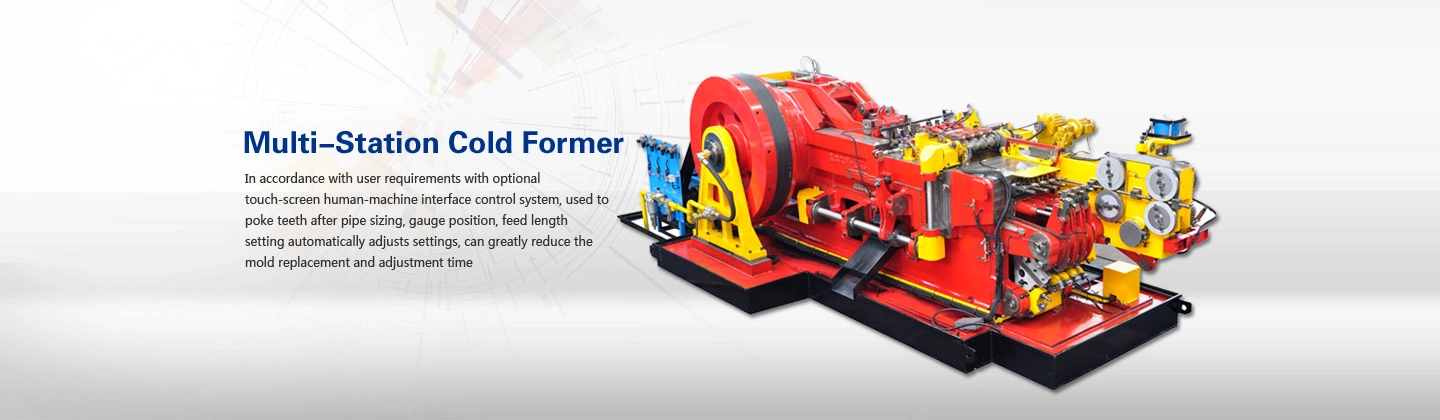
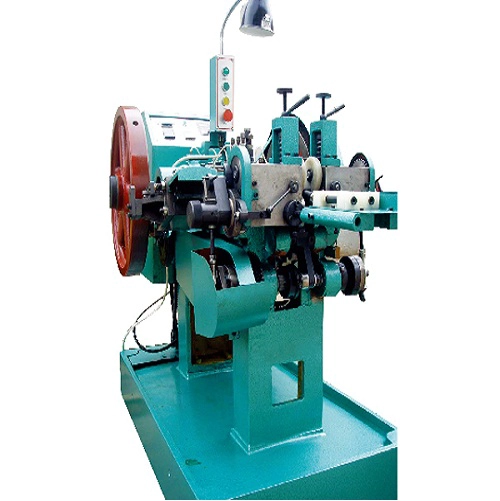
A multi-station cold heading machine is a high-precision automated metal forming equipment that uses cold heading technology to process metal blanks into desired shapes at room temperature without excessive heating. Different from traditional single-station equipment that can only complete one forming operation at a time, the multi-station cold heading machine is equipped with 2 to 6+ consecutive stations, each responsible for a specific process such as wire feeding, cutting, upsetting, forming, punching, and thread rolling. The metal wire or blank is continuously transferred between stations through an automated conveying system, completing all forming procedures in one cycle, realizing uninterrupted mass production.
As a key subset of cold forming equipment, the multi-station cold heading machine relies on the plastic deformation of metal, using high pressure instead of heat to shape raw materials, which not only ensures the excellent mechanical properties of the finished product but also achieves near-net shape production with extremely low material waste. Today, advanced models are integrated with servo drive and intelligent control systems, becoming an indispensable part of mass production of bolts, screws, rivets, and studs in various industries.
How Does a Multi-Station Cold Heading Machine Work?
The working process of the multi-station cold heading machine is highly automated and streamlined, with clear division of labor among stations, ensuring efficient and precise operation. The entire process can be divided into four core steps:
1. Wire Feeding & Straightening
Coiled metal wire (usually carbon steel, stainless steel, aluminum, or copper alloy) is automatically fed into the machine through a feeding roller system or servo-driven push rod, and then straightened by a straightening mechanism to ensure the uniformity of the wire and avoid deviations during subsequent processing. This step lays the foundation for the precision of the final product.
2. Cutting & Blanking
The straightened wire is cut into blanks of predetermined length by high-precision shearing blades. The cutting accuracy directly affects the weight and size consistency of the finished product, and the advanced multi-station cold heading machine can achieve cutting accuracy within ±0.01mm.
3. Multi-Station Continuous Forming
The cut blanks are automatically transferred to each forming station in sequence. The first station usually performs upsetting (expanding the material to form the initial shape of the fastener head), and the subsequent stations complete fine shaping, punching, grooving, thread rolling, and other processes according to the product requirements. Each station is equipped with a high-hardness carbide die and punch, which can withstand high pressure and ensure stable forming quality. The entire forming process is completed in a fraction of a second, realizing high-speed continuous production.
4. Ejection & Collection
After the final station completes the forming process, the finished product is automatically ejected to a conveyor belt or sorting system for quality inspection and packaging. The whole cycle from wire feeding to finished product ejection is fully automated, minimizing manual intervention and reducing human errors.
Core Advantages of Multi-Station Cold Heading Machine
The multi-station cold heading machine can become the first choice for mass metal forming production, thanks to its outstanding core advantages, which perfectly solve the pain points of low efficiency, high waste, and poor consistency of traditional processing equipment.
1. High Production Efficiency & Large Throughput
Equipped with a high-stability servo drive system, the multi-station cold heading machine can achieve 24/7 uninterrupted operation, with a production speed of up to 300-600 parts per minute (PPM) depending on the product type and size. Compared with traditional single-station cold heading machines, its production efficiency can be increased by more than 3 times, and it is especially suitable for large-scale production of standard parts and precision components. Industrial data shows that multi-station units improve production efficiency by 35.6% compared to traditional single-station alternatives.
2. High Precision & Stable Product Quality
Adopting high-precision CNC control system and closed-loop feedback mechanism, the multi-station cold heading machine can accurately control the stroke, pressure, and feeding speed of each station, with dimensional accuracy up to ±0.01mm, which meets international standards such as ISO 898-1 and SAE J429. At the same time, the cold heading process does not damage the metal grain structure, making the finished product have higher tensile strength and fatigue resistance than machined parts of the same material, and the product qualification rate can reach more than 99%. The hardened carbide molds and punches can withstand high pressure, extending the tool life to 1-3 million cycles.
3. Material Saving & Cost Reduction
The cold heading process is a chipless forming technology, which uses the plastic deformation of metal to shape the blank, with a material utilization rate of more than 95%—even up to nearly 100% in some cases—which is in sharp contrast to the traditional machining process that wastes 30-50% of raw materials. This not only greatly reduces the cost of raw materials but also reduces the subsequent processing procedures and labor costs. In addition, the servo motor replaces the traditional hydraulic system, reducing energy consumption by 20-30% compared with old models.
4. Intelligent Automation & Easy Operation
Modern multi-station cold heading machines are equipped with advanced PLC or CNC control systems, and operators only need to set process parameters through the touch screen to complete the entire production process automatically. Some high-end models are integrated with IoT technology and intelligent sensors, which can real-time monitor mold wear, lubrication level, and energy consumption, realizing predictive maintenance and reducing machine downtime by 18.7%. The quick tool change design allows switching between different product specifications within 30 minutes, supporting flexible production runs.
5. Strong Versatility & Wide Adaptability
The multi-station cold heading machine can process a variety of metal materials, including carbon steel, stainless steel, aluminum alloy, copper alloy, and even titanium alloy, meeting the processing needs of different industries. It can not only produce standard fasteners such as bolts, nuts, and rivets but also process complex-shaped parts such as automotive connecting rods, electronic components, and aerospace fasteners, with strong versatility and adaptability.
Wide Application Scenarios of Multi-Station Cold Heading Machine
Driven by the growth of key industries such as automotive, aerospace, and construction, the multi-station cold heading machine has been widely used in various fields that require mass production of high-precision metal parts, becoming an indispensable core equipment in the production line.
1. Fastener Industry (Core Application)
As the core equipment for fastener production, the multi-station cold heading machine is mainly used for the mass production of bolts, nuts, screws, rivets, studs, and other products. It can process various types of fasteners with different specifications and shapes, such as hexagon head bolts, flange bolts, and cross-slot screws, which are widely used in construction, machinery, and daily necessities industries.
2. Automotive & Aerospace Industry
In the automotive industry, the multi-station cold heading machine is used to produce high-strength fasteners such as engine connecting rod bolts, main bearing cap bolts, and chassis components, ensuring the reliability and safety of automotive parts under high-load operation. With the shift toward electric vehicles, the demand for specialized fasteners has increased, further driving the adoption of advanced multi-station cold heading machines. In the aerospace industry, it is used to process high-precision, high-strength fasteners such as titanium alloy bolts and aluminum alloy nuts, meeting the strict requirements of aerospace components for performance and precision.
3. Electrical & Electronic Industry
In the electrical and electronic industry, the multi-station cold heading machine is used to produce small precision parts such as connectors, pins, and electronic component shells. These parts require small size, high precision, and stable performance, and the multi-station cold heading machine can achieve mass production while ensuring product quality, meeting the needs of rapid production of electronic products such as mobile phones and computers.
4. Construction & Machinery Industry
In the construction industry, it is used to produce high-strength bolts, nuts, and scaffold accessories for connecting steel structures, ensuring the stability and safety of buildings. In the machinery industry, it is used to process precision parts such as pump and valve components, mold guide pillars, and camshafts, improving the assembly accuracy and service life of mechanical equipment.
5. Other Industries
In addition, the multi-station cold heading machine is also widely used in the oil and gas, bearing, and power industries, such as processing connecting parts for power towers and transformer components, showing strong versatility and market adaptability.
Industry Trends of Multi-Station Cold Heading Machine
With the continuous development of Industry 4.0 and intelligent manufacturing, the global multi-station cold heading machine market is showing a steady growth trend. The market size is expected to grow from USD 859.66 million in 2026 to USD 1090.22 million by 2035, with a CAGR of 2.9%. The Asia-Pacific region dominates the market, accounting for 46.8% of the global share, followed by Europe and North America. In the future, the multi-station cold heading machine will develop in three key directions:
First, intelligence upgrading. It will be more closely integrated with IoT, big data, and AI technologies, realizing remote monitoring, fault early warning, and intelligent optimization of the production process, further improving production efficiency and reducing operation and maintenance costs. Second, high-precision and high-speed development. With the increasing demand for precision components in the automotive and aerospace industries, the precision and production speed of multi-station cold heading machines will be further improved, meeting the processing needs of more complex parts. Third, customization and modularization. According to the personalized needs of different industries and products, customized solutions and modular designs will become the mainstream, realizing flexible production and adapting to the production needs of small batches and multiple varieties.