













Home > News > Industry News > Nylon Lock Nut vs Metal Lock Nuts: Difference in a Nutshell
Browse Categories
Non-abrasive Threads Heating Furnace Carburizing Furnace for Nuts Screws Bolts
M2 to M36 all size cold forging machine bolt maker with cover
Semi Cover Screw Threading Machine Thread Rolling Machine for Drywal Screws
Micro Nut Drilling Machine Nut Tapping Machine for Flange Nut
M2 M4 Micro Nut Threading Machine Nut Tapping Machine with Hopper
Automatic Cold Forging Machine Six Station Nut Bolt Making Machine for Screws and Bolts
The Last Day of Fastener Fair Global Stuttgart 2025 Trade Show
Industry News
Company News
Certifications
Contact Us
Harbin Rainbow Technology Co., Ltd.Address:C2-02 Handi Building,Songbei Distr.,Harbin,ChinaPostal Code:150028Web site address:http://www.fastenerequip... Contact Now
News

What is Cold Forging – Cold Forging Process, Materials, Uses, Advantages & Disadvantages

Working principle of nut tapping machine

Nut tapping machine is a kind of machining equipment that processes internal threads, screws or teeth buckles on the inner side of the holes of variou...

Difference between hot dip zinc and hot dip galvanising

Hot-dip zincing and hot-dip galvanising are two different processes for corrosion protection of metals, with hot-dip zincing usually providing better ...

Tightening bolts can not be ignored friction can cause problems to solve the problem

fortensionbolt, The friction force is a factor to be reckoned with. Bolt friction joint has been in existence, it may be part of the reason that cause...

Thread Rolling

The Complete Guide to Zinc Plating: All You Need To Know

High speed installation cold forging machine bolts and nuts making machine for screw

What's self-tapping screw?

Self-tapping screws: similar to machine screws, but the threads on the screw for special self-tapping screws with threads. Used to fasten the connecti...

Analysis of the principle and function of spring washers

In all kinds of mechanical connections, the anti-loosening of bolts is a very important link, and there are many ways to prevent loosening of bolts in...

What Is Cold Forming?

Browse Categories

Nylon Lock Nut vs Metal Lock Nuts: Difference in a Nutshell

Doris Wang 2025-12-31 13:40:34

When comparing nylon lock nuts vs metal lock nuts, the main difference lies in how they resist loosening: nylon lock nuts use a nylon insert for grip, while metal lock nuts rely on all-metal deformation for strength and vibration resistance. 

Both serve the same purpose of keeping fasteners secure, but their applications, durability, and performance differ in important ways.

Learn more by reading the article below.

Why Lock Nuts Matter in Industry

Lock nuts are widely used across industries such as automotive, wind power generation, and heavy machinery. 

The challenge is preventing loosening caused by vibration, temperature changes, or heavy loads. 

Whether you’re weighing a metal lock nut vs nylon lock nut, the choice impacts long-term reliability.

Nylon Lock Nut vs Metal Lock Nut: Core Differences
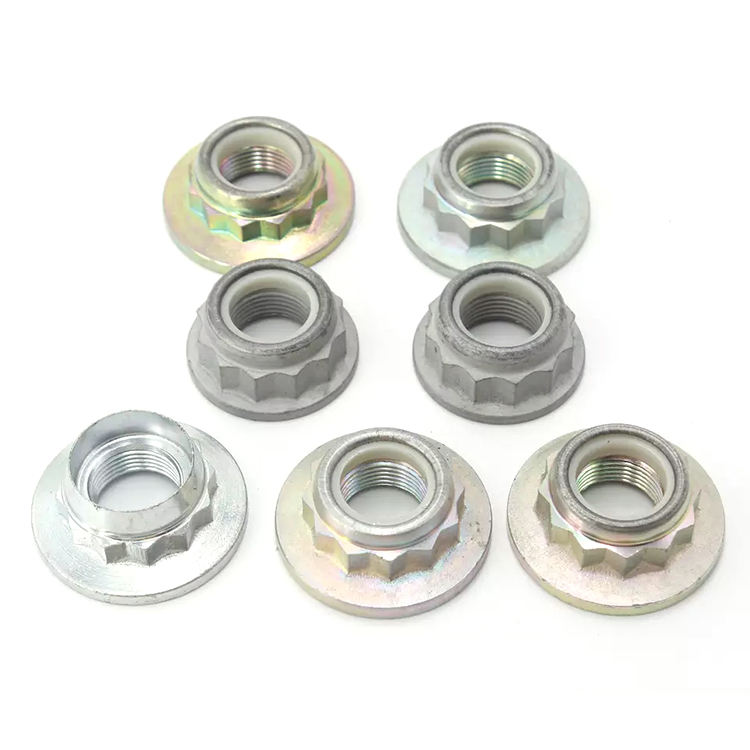
Custom 12 Point Nuts Prevailing Torque Type All-Metal Twelve Point Flange Nuts

A nylon lock nut, often called a nylon-insert lock nut, contains a polymer ring that deforms around the bolt threads. 

This resistance prevents loosening under moderate vibration. 

In contrast, an all-metal lock nut vs nylon lock nut comparison shows that metal versions achieve locking by creating intentional thread interference through deformed sections of the nut. 

This gives them superior heat and vibration resistance.

Feature Nylon Lock Nut Metal Lock Nut
Locking Mechanism Nylon insert grips the threads Deformed metal sections create interference
Temperature Resistance Up to ~120°C Withstands extreme heat
Vibration Resistance Good for moderate vibration Excellent for high vibration
Reusability Limited (nylon wears down) High and can be reused multiple times
Corrosion Protection Nylon offers slight protection Needs coating/alloy for corrosion resistance
Common Applications Automotive, consumer products Wind turbines, engines, heavy machinery