














Cold Heading Machine: Working Principles, Types and Industry Trends 2026
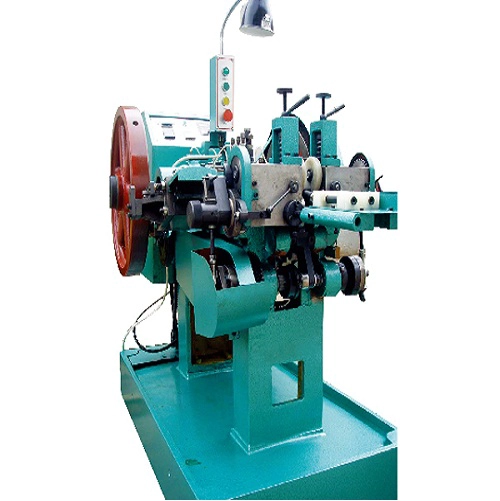
A cold heading machine is a high-efficiency cold forming industrial equipment specially designed for mass production of fasteners and precision metal parts. Also known as a cold former, it deforms metal blanks at room temperature through high-pressure stamping and die forming without heating materials. As core equipment in the fastener manufacturing industry, the industrial cold heading machine is widely applied in automotive, aerospace, electronics, construction, and hardware processing fields. It completely changes the traditional cutting and machining production mode, realizing low-waste, high-precision, and high-volume metal part production.
In 2026, with the booming development of intelligent manufacturing and the growing demand for high-strength precision fasteners in the global manufacturing industry, automated and energy-saving cold heading machine solutions have become the mainstream upgrade direction for processing enterprises. Modern cold heading equipment not only improves production efficiency and product consistency but also reduces material loss and comprehensive production costs, helping manufacturers gain competitive advantages in standardized mass production.
Working Principle of Cold Heading Machine
The working principle of a professional cold heading machine is based on metal cold plastic forming technology. Different from thermal processing equipment, it completes metal shaping at normal temperature by applying instantaneous high pressure to metal wires or strips. The whole process includes wire feeding, straightening, cutting, heading, forming, and discharging, realizing fully automated one-time molding without secondary heating.
During the cold heading process, the metal material flows along the internal grain structure, which does not destroy the metal fiber continuity. On the contrary, it improves the material density and mechanical properties such as tensile strength and fatigue resistance of finished parts. Strict mechanical structure coordination and precise die positioning ensure that each workpiece achieves high dimensional accuracy and smooth surface quality, effectively avoiding defects such as burrs and deformation caused by traditional machining.
High-quality cold heading equipment adopts multi-station synchronous forming technology, which can complete complex forming processes such as heading, upsetting, extrusion, and threading in one cycle, greatly simplifying the production process and improving production stability.
Main Types of Cold Heading Machine and Application Scenarios
According to structural design, station quantity, and production capacity, cold heading machines on the market are divided into multiple types, covering production demands from small-batch customized parts to large-scale standardized fasteners:
1. Single-station Cold Heading Machine
The single-station cold heading machine features a simple structure, low failure rate, and convenient operation and maintenance. It is mainly used for processing simple standard parts such as ordinary screws, bolts, and rivets. With low equipment investment cost and flexible debugging, it is suitable for small and medium-sized processing factories and small-batch multi-variety production scenarios, and is one of the most widely used basic cold forming equipment.
2. Multi-station Cold Heading Machine
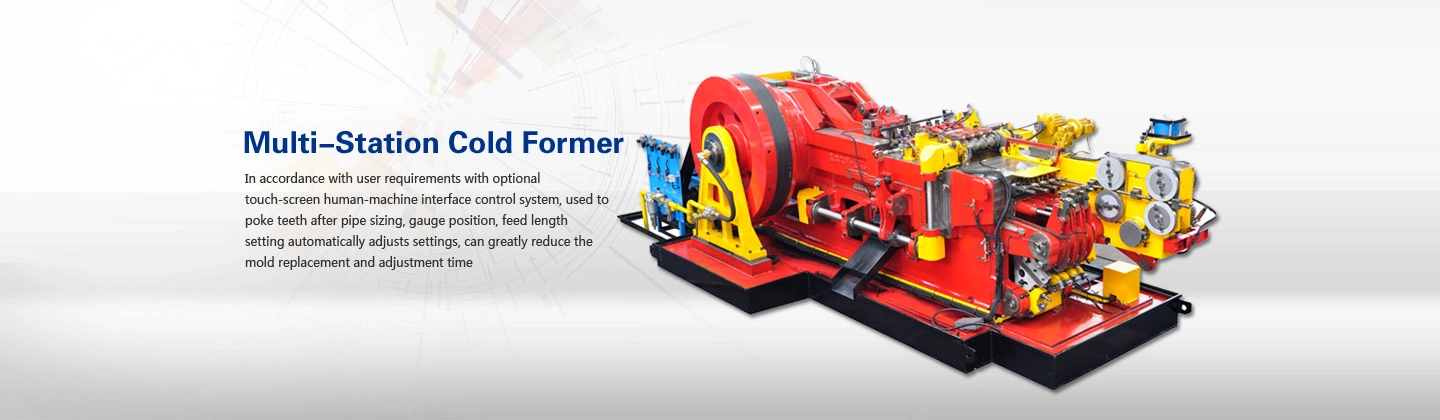
The multi-station cold heading machine is an upgraded high-efficiency model, equipped with 3 to 6 independent forming stations, which can complete complex multi-step forming at one time. It is suitable for producing non-standard fasteners, special-shaped bolts, precision nuts, and complex structural metal parts. This type of cold heading machine realizes continuous automated production, with higher processing accuracy and production efficiency, and is the core equipment for medium and large-scale fastener manufacturing enterprises.
3. Fully Automatic High-speed Cold Heading Machine
As a high-end intelligent device in the industry, the fully automatic high-speed cold heading machine integrates PLC intelligent control, automatic wire feeding, precise counting, and fault alarm systems. It supports ultra-high-speed continuous production, with an output of hundreds of parts per minute. It is specially used for mass standardized production of high-precision fasteners for automobiles, new energy equipment, and aerospace industries, meeting the strict size tolerance and mechanical performance standards of high-end manufacturing fields.
Core Advantages of Modern Cold Heading Machine
Compared with traditional lathe machining and hot forging processes, the upgraded industrial cold heading machine in 2026 has outstanding comprehensive advantages in efficiency, quality, cost, and environmental protection:
-
Ultra-high Material Utilization: Cold heading is a chipless forming process with almost no material waste. The material utilization rate is as high as 98%, which greatly saves raw material costs compared with traditional cutting processes that produce a large number of scraps.
-
Improved Mechanical Performance: Cold forming optimizes the internal metal grain structure and enhances the hardness, tensile strength, and fatigue resistance of parts. The finished products have more stable performance and longer service life, fully meeting high-load industrial application requirements.
-
High Production Efficiency: The automated assembly line operation realizes uninterrupted production, with a production efficiency more than 10 times higher than traditional machining. It is perfectly adapted to large-scale batch production and effectively shortens the production cycle.
-
Stable Product Precision: Equipped with high-precision dies and intelligent positioning systems, the equipment ensures consistent dimensional accuracy and smooth surface of each batch of workpieces, reducing defective products and secondary processing procedures.
-
Energy-saving and Eco-friendly: No heating process is required during operation, which reduces energy consumption and thermal pollution. The whole production process is clean and low-noise, complying with modern industrial green production standards.
2026 Cold Heading Machine Industry Development Trends
Driven by the global intelligent manufacturing upgrade and the rapid growth of new energy, automotive, and precision electronics industries, the cold heading machine industry shows three obvious development trends in 2026:
First, intelligent digital upgrade. More cold heading machines are equipped with IoT monitoring, data analysis, and remote fault diagnosis functions, realizing real-time monitoring of production data, automatic process parameter adjustment, and intelligent production management, which improves production refinement and controllability.
Second, high-precision and customized development. With the upgrading of downstream manufacturing standards, the market demand for high-precision cold heading equipment for special-shaped parts and high-strength fasteners continues to rise, and customized multi-station cold heading solutions have become a new market growth point.
Third, energy-saving and low-carbon iteration. New-generation cold heading machines adopt optimized mechanical transmission structures and energy-saving drive systems, which effectively reduce equipment energy consumption and operating noise, helping enterprises meet industrial energy-saving emission reduction policies and sustainable development requirements.
Tips for Selecting a Qualified Cold Heading Machine
Enterprises should select cold heading equipment according to their own production demands to avoid over-investment or insufficient production capacity. For small-batch and simple standard part processing, single-station cold heading machines with high cost performance are preferred. For mass production of standard fasteners, high-speed fully automatic cold heading machines are more suitable. For complex special-shaped parts and high-precision parts processing, multi-station precision cold heading equipment should be selected. Meanwhile, it is necessary to focus on equipment stability, die durability, after-sales technical support, and equipment intelligence expansion performance to ensure long-term stable production and reduce comprehensive operating costs.
Conclusion
The cold heading machine is an indispensable core equipment in the modern fastener and precision metal processing industry. With its unique advantages of high efficiency, low consumption, high precision, and high stability, it has completely replaced part of the traditional processing technology and become the mainstream choice for industrial mass production. With the continuous progress of intelligent and green manufacturing technology, cold heading machine equipment will develop in the direction of higher precision, higher automation, and lower energy consumption, continuously empowering the high-quality development of the global precision manufacturing industry.