














Cold Heading Machines: 2026 Trends, Core Advantages and Industry Impact
April 13, 2026 – As the global manufacturing industry marches toward intelligence, green development and high precision, cold heading machines have become the cornerstone equipment for fastener production and metal forming, driving innovation across automotive, aerospace, construction and industrial machinery sectors. This article explores the latest industry trends, core working principles, key advantages of cold heading machines, and their profound impact on modern manufacturing, providing valuable insights for manufacturers, procurement managers and industry professionals.
What is a Cold Heading Machine? Core Working Principles
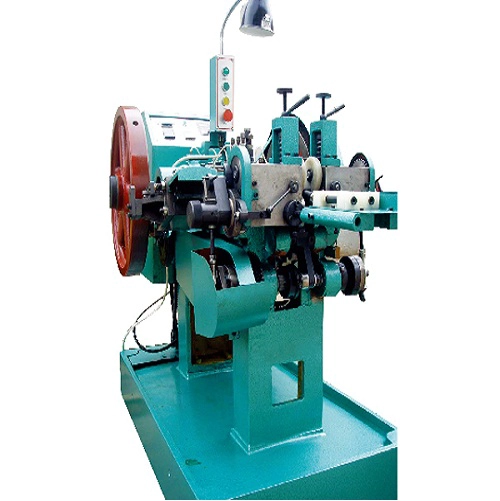
A cold heading machine is a high-efficiency metal forming equipment that shapes metal wire or rod into precise components at room temperature through high-pressure dies and punches, without the need for excessive heating – a process known as cold forming or cold forging. Unlike traditional machining that removes material and generates significant waste, cold heading relies on plastic deformation to reshape metal, ensuring the integrity of the material’s internal grain structure and enhancing the mechanical properties of finished products.
The standard working process of a cold heading machine consists of four key steps:
-
Wire Preparation & Feeding: Coiled wire stock (usually cold heading quality steel, stainless steel, aluminum or copper alloy) is straightened and fed into the machine through a servo-driven feeding system to ensure uniform alignment and precise positioning.
-
Blank Cutting: Precision shear blades cut the wire into predetermined lengths (called slugs), with dimensional accuracy controlled within ±0.05mm to avoid defects in subsequent forming processes.
-
Multi-Station Forming: The slug is transferred through 2-6 consecutive die stations, where punches apply high pressure (up to 2,500 MPa) to shape the material into desired forms – including upsetting (expanding the end to form bolt heads), threading, piercing and trimming. Advanced multi-station cold heading machines can complete all forming processes in one automated cycle.
-
Ejection & Collection: Finished components (such as bolts, screws, rivets or custom metal parts) are ejected onto a conveyor belt for quality inspection and packaging, with production speeds reaching 300-600 parts per minute (PPM) depending on the machine type and component size.
Key Types of Cold Heading Machines for Different Industrial Needs
Cold heading machines are categorized based on station count, speed and application, enabling manufacturers to choose the optimal equipment for their production requirements:
-
Single-Station Cold Heading Machines: Compact entry-level models with one set of dies and punches, suitable for small-batch production of simple fasteners such as nails and small screws, requiring minimal initial investment but manual intervention for auxiliary processes.
-
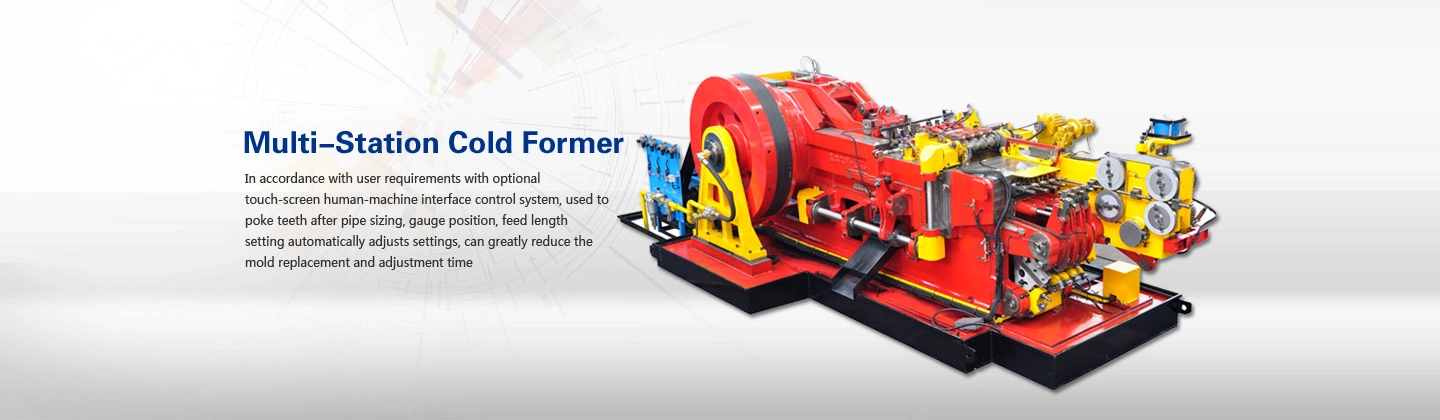
Multi-Station Cold Heading Machines: High-performance systems with 2-6 forming stations, integrated thread rolling and automatic transfer. Equipped with servo-driven controls for precise station synchronization, these machines are ideal for mass production of complex fasteners (e.g., automotive wheel bolts, structural bolts) with speeds up to 300 PPM.
-
High-Speed Cold Heading Machines: Optimized for maximum throughput, with rigid frames and quick tool change systems. Capable of producing small-diameter fasteners (≤M8) at speeds up to 600 PPM, they are widely used in the automotive and electronics industries where high-volume, low-cost production is critical.
-
Specialized Cold Heading Machines: Customized models such as nut cold heading machines (for nut forging and tapping) and semi-hot heading machines (for hard-to-form alloys like titanium, using moderate heat of 200-400°C) to meet specific material or component requirements.
2026 Cold Heading Machine Industry Trends: Intelligence, Green and High-End
The global cold heading machine market is experiencing steady growth, with a projected value of USD 4.2 billion in 2026 and a CAGR of 5.8% from 2026 to 2034, driven by technological innovation and growing demand for high-strength fasteners. Key trends shaping the industry in 2026 include:
-
Intelligent Upgrade: Increasing integration of IoT sensors, PLC/CNC controls and digital twin technology, enabling real-time monitoring of tool wear, lubrication levels and production metrics. Predictive maintenance systems alert operators to potential faults, reducing downtime and improving production stability.
-
Green Energy Efficiency: Servo-electric cold heading machines are gaining market share, reducing energy consumption by 20-30% compared to traditional hydraulic models. Regenerative braking systems recover energy during deceleration, further lowering operational costs and aligning with global "dual carbon" goals.
-
High-End and Localization: Driven by the新能源汽车 (new energy vehicle) and wind power industries, demand for high-precision, high-tonnage cold heading machines is surging. Domestic cold heading machines are continuously improving in stability and automation, gradually replacing imported products, with the localization rate of core components expected to exceed 60% in the near future.
-
Flexibility and Customization: Quick tool change systems (enabling size switching within 30 minutes) and compatibility with diverse materials (carbon steel, stainless steel, aluminum alloys) allow manufacturers to adapt to changing production needs, supporting small-batch, multi-variety production.
Why Choose Cold Heading Machines? Core Advantages for Manufacturers
Compared to traditional machining, hot forging and casting processes, cold heading machines offer unparalleled advantages that make them the preferred choice for high-volume, precision metal forming:
-
High Material Utilization: Near-net-shape forming results in material utilization of over 95%, compared to 30-50% waste in machining processes, significantly reducing raw material costs.
-
Superior Product Quality: Work hardening during the cold forming process enhances the tensile strength and fatigue resistance of components, with dimensional accuracy reaching ±0.01mm, meeting ISO 898-1 and SAE J429 standards.
-
High Production Efficiency: Automated multi-station models can produce hundreds of parts per minute, enabling daily output of over 1 million units, far exceeding traditional manufacturing methods.
-
Cost Savings: Reduced material waste, lower energy consumption and minimal secondary processing needs combine to cut overall production costs, improving manufacturers’ profit margins.
Global Market Outlook: Regional Demand and Growth Drivers
The Asia Pacific region dominates the global cold heading machine market, accounting for 32% of the market share in 2025, driven by strong manufacturing demand in China, India and Southeast Asia. Europe is expected to be the fastest-growing region with a CAGR of 9%, with Germany leading the market (valued at USD 0.62 billion in 2025) due to its robust automotive and industrial machinery sectors. North America remains a key market, with the U.S. market estimated at USD 949.1 million in 2024.
Key growth drivers include the rising demand for high-strength fasteners in automotive and aerospace industries, the shift from traditional machining to cold forming technologies, and the increasing adoption of automated production systems to improve efficiency and consistency.
As manufacturing continues to evolve, cold heading machines will play an increasingly critical role in enabling precision, efficiency and sustainability. Whether for mass production of standard fasteners or customized metal components, investing in advanced cold heading equipment is a strategic move for manufacturers looking to gain a competitive edge in the global market.