














The Development of Multi-Station Cold Forging Machines
The Development of Multi-Station Cold Forging Machines
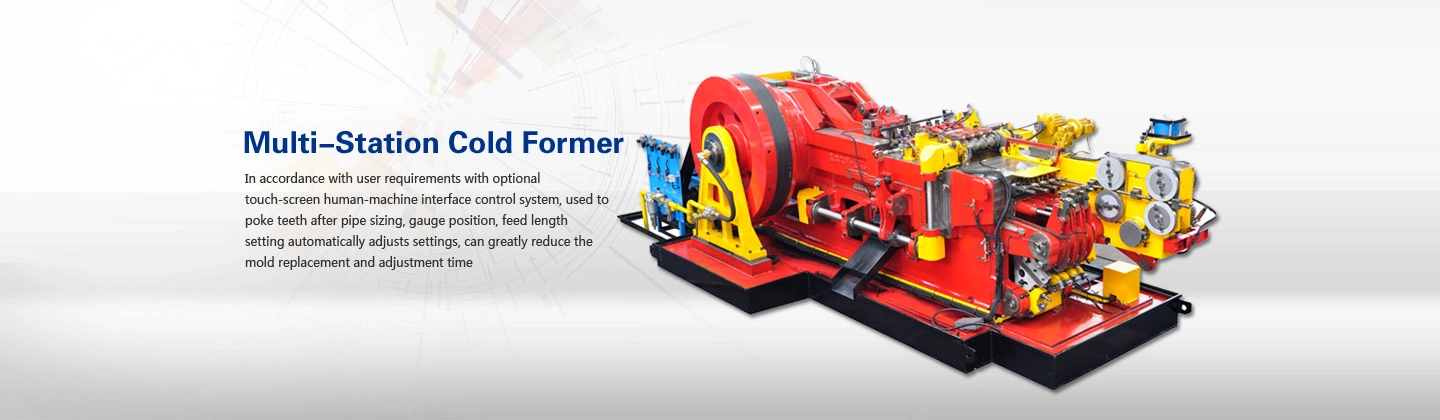
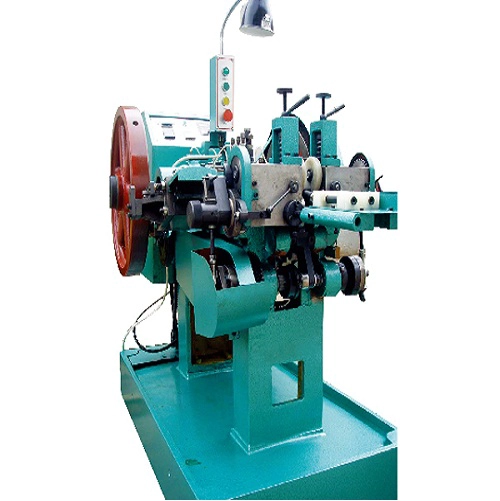
As a core equipment for mass production of fasteners, special-shaped parts and auto parts, multi-station cold heading machines have undergone decades of technological evolution, driving the transformation and upgrading of the manufacturing industry with continuous innovation. Cold heading technology, which forms metal wires at room temperature through multi-pass upsetting, extrusion and shaping, boasts advantages such as high material utilization, fast production efficiency and excellent mechanical properties, making multi-station cold heading machines an indispensable pillar in modern precision manufacturing.
The development journey of multi-station cold heading machines can be divided into several distinct stages, each marked by technological breakthroughs that have reshaped their performance and application scope. The origin of multi-station cold heading technology can be traced back to the early 20th century, but the real take-off came in the 1950s, when National Acme in the United States launched the epoch-making multi-station cold heading machine, marking a crucial shift from single-process to multi-process integrated fastener manufacturing. In the early stage, these machines were mainly driven by mechanical transmission, with limited processing speed of 30-50 pieces per minute and mold life of around 100,000 times, and their application was mostly confined to the production of simple standard fasteners.
From the 1960s to the 1980s, the rapid development of the automotive industry and the surging demand for fasteners drove the iterative upgrading of multi-station cold heading machines. In 1965, Japan's Ikegai Corporation successfully developed a multi-station cold heading machine with independent intellectual property rights, which significantly improved precision control and operational stability, increasing processing accuracy from ±0.1mm to ±0.05mm and operating speed to 80-120 pieces per minute. In China, the first multi-station automatic cold heading machine, Model Z47-12, was designed and manufactured in 1969 based on Germany's GB3 type, promoting the transformation of China's fastener production technology from semi-automatic hot heading cutting to fully automatic cold heading. During this period, manufacturers in Germany, Japan and other industrialized countries continued to optimize the machine structure, increasing the number of stations and improving processing efficiency—for example, the production efficiency of hexagon socket screws using multi-station automatic cold heading machines was 50 times higher than that of hot heading cutting processes. The introduction of PLC control systems in the 1980s became a key turning point; in 1983, Switzerland's Bucher Hydraulics launched a fully computer-controlled multi-station cold heading machine, realizing full automatic control from material feeding to finished product output, reducing equipment failure rate by 60% and doubling production efficiency.
Since the 21st century, with the in-depth integration of industrialization and informatization, multi-station cold heading machines have stepped into the era of high precision, high speed, automation and intelligence. Currently, high-end models are generally equipped with servo drive systems, high-rigidity machine bodies and precision mold guiding mechanisms, capable of one-time forming of complex parts with more than six stations and an accuracy of IT8 grade. The processing speed has been greatly improved, with some high-speed models reaching more than 300 pieces per minute, and even up to 400 pieces per minute for advanced models. In terms of core technologies, the transmission system has evolved from gear transmission and cam mechanisms to high-precision servo drive systems, with positioning accuracy improved from 0.1mm to within 0.01mm and response speed increased by more than 300%. Mold technology has advanced from ordinary tool steel to powder metallurgy high-speed steel and superhard alloy materials, extending mold life from 100,000 times to 1-2 million times, and even 2.5 million times for the latest international advanced models, significantly reducing maintenance costs and downtime. Meanwhile, the application scope of cold heading technology has expanded to difficult-to-deform materials such as titanium alloys and superalloys, driven by the rising demand for high-strength and lightweight fasteners in the new energy vehicle and aerospace fields.
The global market of multi-station cold heading machines is showing a steady growth trend. In 2025, the global cold heading machine market size was valued at USD 4.07 billion, and it is expected to reach USD 5.69 billion by 2032 with a CAGR of 4.9%. Specifically, the multi-station cold heading machine market was worth USD 859.66 million in 2026 and is projected to reach USD 1.09 billion by 2035, growing at a CAGR of 2.9%. Regionally, North America remains the largest market due to its strong manufacturing capabilities, while the Asia-Pacific region is emerging as the fastest-growing market, fueled by rapid industrialization and technological adoption. In China, domestic enterprises such as Harbin Rainbow have developed rapidly since the 2000s, gradually narrowing the gap with the international advanced level through technology introduction, digestion and re-innovation. These enterprises now offer a full range of products, including 5 major series and more than 160 specifications of cold forming equipment, with their products exported to Sweden, Turkey, India and other countries and regions. Currently, automated systems account for 64.2% of new global installations, and 5-station and 6-station configurations hold a combined 48.9% share of the current equipment landscape.
Despite the remarkable progress, the development of multi-station cold heading machines still faces several challenges. Key factors restricting the comprehensive efficiency of equipment include fast mold wear, long mold change and commissioning time, and high sensitivity to the spheroidizing annealing quality of raw materials. In addition, domestic equipment still lags behind the international leading level in terms of high-speed stability and long-term precision retention. High initial capital requirements also pose a barrier to the popularization of advanced equipment, especially for small and medium-sized enterprises.
Looking ahead, multi-station cold heading machines will continue to upgrade towards high flexibility, high intelligence and high reliability. Servo direct drive technology and digital twin simulation will realize dynamic optimization of forming force and speed curves, enhancing adaptability to new materials and complex geometric shapes. The integration of mold life prediction, automatic lubrication compensation and online dimension detection functions will greatly reduce downtime and ensure batch consistency. In terms of intelligence, equipment will support seamless connection with upstream wire processing, downstream heat treatment and testing systems, building "dark factory"-level intelligent manufacturing units for fasteners. The concept of green manufacturing will promote the standardization of waste recycling, noise suppression and energy consumption monitoring systems, with servo drive technology having already reduced energy consumption by 22.3% in high-volume production lines. Moreover, as the trend of global supply chain localization strengthens, cold heading machines with quick die change (SMED) capability and remote operation and maintenance support will play a key role in the construction of regional manufacturing centers. It is estimated that by 2030, the global cold heading machine market size will reach USD 830 million, with sustained growth driven by the automotive, aerospace and construction industries.
In conclusion, the development of multi-station cold heading machines is closely linked to the progress of the manufacturing industry. From the initial mechanical transmission to the current intelligent integration, from simple standard part production to complex precision component manufacturing, these machines have continuously broken through technical bottlenecks and expanded application fields. Facing the future, with the continuous advancement of technology and the growing demand for high-quality, efficient and green manufacturing, multi-station cold heading machines will usher in a new round of development opportunities, contributing more to the high-quality development of the global manufacturing industry.