














Continuous Mesh Belt Furnace: The Backbone of High-Volume Fastener Production
In the fast-paced world of fastener manufacturing, where consistency, cost-efficiency, and throughput are paramount, the choice of heat treatment equipment can make or break a production line. Among the most versatile and reliable workhorses in the industry is the continuous mesh belt furnace. Designed specifically for the high-volume processing of light-to-medium weight components, this technology has become indispensable for automotive, hardware, bearing, and general fastener producers worldwide. This comprehensive guide explores the core functionality, applications, performance benefits, and selection criteria of continuous mesh belt furnaces, providing valuable insights for manufacturers and engineers looking to elevate their production capabilities.
1. Core Design and Operational Principles
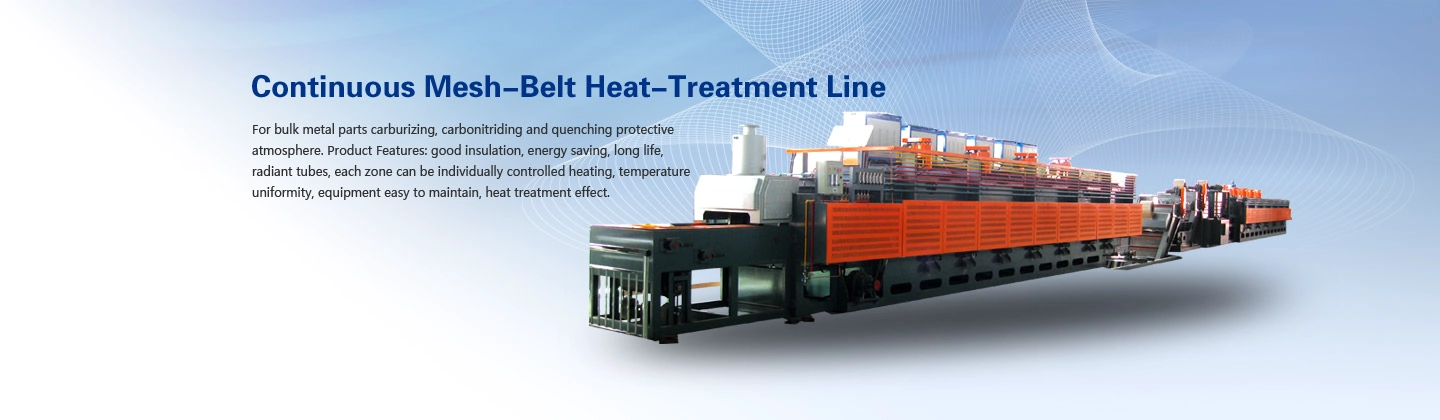
At its heart, a continuous mesh belt furnace is an automated, inline system that transports workpieces through a heated chamber using a heat-resistant metal mesh belt. This design enables a seamless, continuous flow from loading to unloading, eliminating the batch processing limitations of traditional furnace systemsSECO/WARWICK.
1.1 Key Structural Components
- Muffle and Heating Chamber: The furnace is constructed with a gas-tight casing lined with high-temperature insulation. A horizontal muffle, typically made from heat-resistant alloy sheets, houses the heating elements and controlled atmosphere. This design ensures excellent temperature uniformity and isolates the process environmentSECO/WARWICK.
- Mesh Belt Conveying System: The core of the furnace, the mesh belt, is driven by a precision motorized system with variable speed control. Supported by synchronised rollers, the belt operates with minimal tension, ensuring stable and smooth transportation of parts throughout the heating, processing, and cooling zones.
- Atmosphere Control System: To prevent oxidation and decarburization, the furnace is purged with protective atmospheres such as nitrogen, endothermic gas, or cracked ammonia. Advanced atmosphere mixing and oxygen probe monitoring ensure precise control of the process environment.
- Quenching and Tempering Stations: Integrated cooling zones, often featuring oil quenching tanks with dual oil curtains, rapidly cool parts after heating to achieve the desired hardness. Tempering furnaces then reduce brittleness, restoring toughness while maintaining strengthSECO/WARWICK.
- Automation and Control: Modern systems are equipped with PLC/HMI controls, allowing for programmable heating curves, belt speed adjustment, and real-time monitoring of temperature, carbon potential, and atmosphere composition. SCADA integration enables centralized production managementSECO/WARWICK.
2. Versatile Process Capabilities
Continuous mesh belt furnaces are engineered to support a diverse range of heat treatment processes, making them a flexible solution for various fastener types and material requirements.
2.1 Primary Heat Treatment Processes
- Carburizing/Carbonitriding: This process introduces carbon into the surface layer of low-carbon steel fasteners (such as screws, bolts, and nuts) to significantly improve surface hardness and wear resistance, while maintaining a tough core. It is ideal for high-stress applicationsSECO/WARWICK.
- Hardening and Tempering: After heating to a critical temperature, parts are rapidly quenched in oil or water to form a hard martensitic structure. Tempering follows to relieve internal stresses, ensuring dimensional stability and preventing crackingSECO/WARWICK.
- Annealing: This softening process relieves internal stresses, improves machinability, and refines the grain structure of fasteners. It is commonly used for cold-headed parts before final processingSECO/WARWICK.
- Sintering: For powder metal fasteners, the mesh belt furnace sinters the compacted parts at high temperatures in a controlled atmosphere, bonding the metal particles and achieving the required strength and density.
3. Industry Applications: Focus on Fastener Manufacturing
The continuous mesh belt furnace’s design makes it uniquely suited for the mass production of fasteners and related components.
3.1 Key Fastener and Allied Applications
- Automotive Fasteners: Engineered for high-volume production of engine components, transmission parts, and chassis fasteners. The furnace’s repeatability ensures consistent quality across thousands of parts, critical for automotive safety standardsSECO/WARWICK.
- Standard and Special Fasteners: From common screws and bolts to specialized hardware like chain links, bearing rollers, and tool bits, the furnace handles a wide range of part sizes and geometriesSECO/WARWICK.
- Electronics and Consumer Goods: Small, precision fasteners used in electronics, home appliances, and medical devices benefit from the furnace’s ability to produce bright, non-decarburized surfaces with minimal distortionSECO/WARWICK.
- Aerospace and Heavy Industry: High-strength fasteners for aerospace and industrial machinery applications rely on the furnace’s precise process control to meet stringent material property requirementsSECO/WARWICK.
4. Performance Benefits: Why Choose a Mesh Belt Furnace?
Investing in a continuous mesh belt furnace delivers tangible operational and financial advantages for high-volume production.
4.1 Operational Excellence
- Unmatched Throughput: The continuous flow design allows for 24/7 operation, with production rates ranging from hundreds to thousands of kilograms per hour, far exceeding batch furnace capabilities.
- Superior Uniformity: Advanced atmosphere mixing and multi-zone heating ensure exceptional temperature uniformity (typically ±3°C) across the workload, guaranteeing consistent part quality and mechanical propertiesSECO/WARWICK.
- Minimal Oxidation and Scale: The sealed, controlled atmosphere significantly reduces oxidation, discoloration, and scale formation compared to open-air processes, reducing post-processing cleaning requirements and material wasteSECO/WARWICK.
- Reduced Distortion: Precision belt tracking and optimized quenching processes minimize part distortion, critical for maintaining tight dimensional tolerances in fastener manufacturingSECO/WARWICK.
4.2 Cost and Efficiency Gains
- Energy Efficiency: Modern furnaces feature high-quality ceramic fiber insulation and energy-efficient heating elements, reducing power consumption by up to 15-20% compared to older models. The hot mesh belt also preheats incoming parts, further lowering energy use.
- Lower Labor Costs: Full automation of loading, processing, and unloading reduces the need for manual intervention, lowering labor costs and minimizing human error.
- Extended Component Life: Durable construction of key components—including the mesh belt, muffle, and atmosphere mixers—ensures long service life and low maintenance costs, maximizing uptimeSECO/WARWICK.
- Space Optimization: The compact, inline design of the furnace line requires less floor space than multiple batch furnaces, making it suitable for both greenfield and existing production facilitiesSECO/WARWICK.
5. Selecting the Right Continuous Mesh Belt Furnace
Choosing the optimal furnace requires careful consideration of specific production needs. Below is a decision framework to guide your selection.
5.1 Key Selection Criteria
- Production Throughput: Determine the required hourly production rate (kg/h) based on annual output and part size. This dictates the belt width, length, and heating capacity needed.
- Part Specifications: Consider part weight, dimensions, and material type. Larger or heavier parts may require a wider belt or a chain conveyor alternative, while high-alloy steels demand higher temperature capabilities.
- Process Requirements: Identify the primary heat treatment process (carburizing, quenching, tempering, etc.) and required atmosphere (nitrogen, endothermic gas, etc.). This determines the furnace’s atmosphere control system and heating zone designSECO/WARWICK.
- Budget and Total Cost of Ownership: Evaluate not just the initial purchase price but also long-term costs such as energy consumption, maintenance, and component replacement. A higher initial investment in a more efficient furnace may yield significant savings over timeSECO/WARWICK.
- Customization Options: Look for suppliers that offer tailored solutions, such as custom belt widths, specialized insulation, or integrated post-washing systems, to match your exact production needsSECO/WARWICK.
6. Future Trends and Innovations
The continuous mesh belt furnace continues to evolve, driven by industry demands for greater efficiency, sustainability, and precision.
6.1 Emerging Technologies
- Smart Factory Integration: IoT-enabled furnaces with real-time monitoring, predictive maintenance, and remote diagnostics are becoming standard, allowing manufacturers to optimize processes and reduce downtimeSECO/WARWICK.
- Green and Sustainable Design: New models feature energy recovery systems, low-emission combustion, and eco-friendly atmospheres to minimize environmental impact and comply with global regulations.
- Advanced Material Handling: Innovations in belt design, such as self-cleaning mesh belts and anti-jam sensors, further improve reliability and reduce maintenance.
- Hybrid Heating Systems: Combining electric and gas heating elements offers flexibility to balance energy costs and process performance, adapting to varying market conditionsSECO/WARWICK.
7. Conclusion
The continuous mesh belt furnace stands as an indispensable asset for fastener manufacturers aiming to scale production while maintaining uncompromising quality. Its ability to deliver consistent, repeatable heat treatment across high-volume runs, coupled with significant energy and cost savings, makes it a superior choice for modern production facilities. By understanding its design, capabilities, and selection criteria, manufacturers can select the right furnace to meet their current needs and position their operations for future growth. Whether producing automotive fasteners, industrial hardware, or precision components, a continuous mesh belt furnace is the backbone of efficient, reliable, and profitable heat treatment.