















Heat Treatment Furnaces: Driving Precision, Efficiency, and Quality in Modern Manufacturing
Meta Title: Heat Treatment Furnaces for Precision Manufacturing | Industrial Furnace Solutions
Meta Description: Discover how heat treatment furnaces improve metal strength, durability, and production efficiency across automotive, aerospace, tooling, and industrial manufacturing sectors.
SEO Keywords: heat treatment furnace, industrial heat treatment furnace, metal heat treatment, furnace manufacturer, annealing furnace, quenching furnace, tempering furnace, industrial furnace solutions
Heat Treatment Furnaces Support the Future of Industrial Manufacturing
As global manufacturing continues to demand stronger materials, tighter tolerances, and more consistent product quality, heat treatment furnaces have become essential equipment across a wide range of industries. From automotive components and aerospace parts to tools, bearings, molds, and precision machinery, heat treatment plays a critical role in improving the mechanical properties of metal materials.
A heat treatment furnace is designed to heat, hold, and cool metal workpieces under controlled conditions. Through processes such as annealing, quenching, tempering, carburizing, nitriding, and normalizing, manufacturers can enhance hardness, wear resistance, toughness, ductility, and dimensional stability. These improvements help extend product service life and reduce failure risks in demanding applications.
Precision Temperature Control Improves Product Consistency
One of the most important advantages of modern heat treatment furnaces is precise temperature control. Advanced furnace systems are equipped with intelligent control panels, uniform heating zones, high-performance insulation materials, and automated monitoring systems. These features help maintain stable furnace temperatures and reduce variation between production batches.
For manufacturers, temperature uniformity directly affects final product quality. Inconsistent heating may lead to uneven hardness, deformation, cracking, or reduced material performance. By using a reliable industrial heat treatment furnace, companies can improve process stability, meet strict technical standards, and deliver more consistent products to their customers.
Energy Efficiency Becomes a Key Industry Focus
Energy consumption is a major consideration for heat treatment operations. Modern furnace manufacturers are placing greater emphasis on energy-saving designs, including improved insulation structures, efficient burners or electric heating elements, optimized airflow systems, and intelligent energy management controls.
An energy-efficient heat treatment furnace can help reduce operating costs while supporting cleaner and more sustainable production. For factories with continuous or high-volume production needs, even small improvements in thermal efficiency can create meaningful long-term savings.
Wide Applications Across Key Industries
Heat treatment furnaces are widely used in industries where metal performance is critical. In the automotive sector, they are used for gears, shafts, fasteners, brake parts, and transmission components. In aerospace manufacturing, heat treatment helps ensure the strength and reliability of high-performance alloys. Tooling and mold manufacturers rely on furnaces to improve hardness, wear resistance, and service life.
Other common applications include bearings, springs, chains, construction machinery parts, oil and gas components, agricultural machinery, and precision metal parts. As industrial products become more complex, the demand for customized furnace solutions continues to grow.
Choosing the Right Heat Treatment Furnace
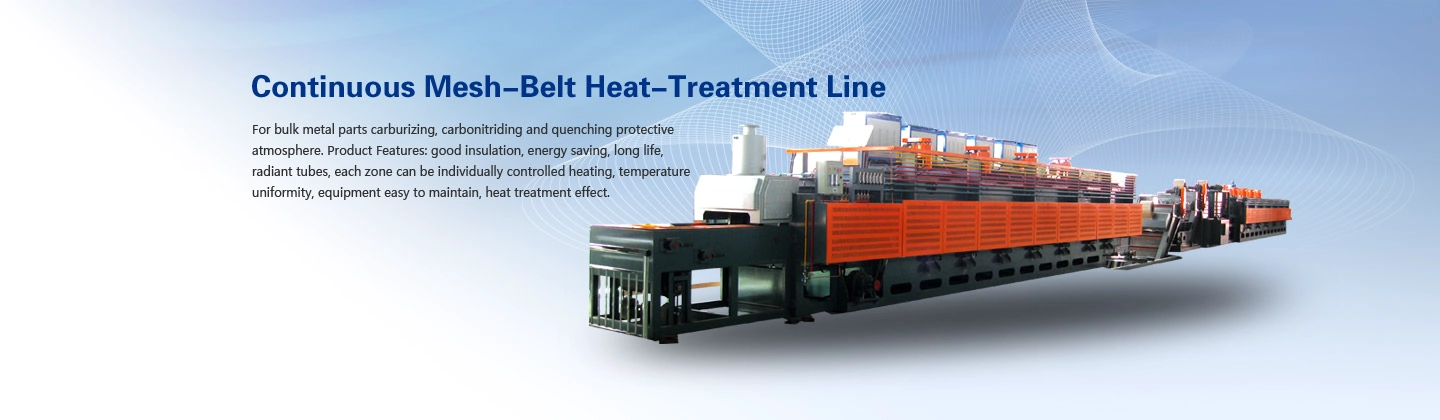
Selecting the right heat treatment furnace depends on several factors, including material type, workpiece size, production capacity, process requirements, heating method, atmosphere control, and automation level. Common furnace types include box furnaces, pit furnaces, bogie hearth furnaces, continuous furnaces, vacuum furnaces, mesh belt furnaces, and atmosphere furnaces.
A professional furnace supplier can provide technical guidance based on the customer’s production process. Customized furnace design helps improve heating performance, reduce energy waste, simplify operation, and support stable long-term production.
Automation Enhances Production Efficiency
Automation is transforming the heat treatment industry. Modern furnace systems can be integrated with automatic loading and unloading devices, PLC control systems, data recording, remote monitoring, alarm functions, and production management software. These technologies help reduce manual operation, improve safety, and increase production efficiency.
For manufacturers pursuing smart factory upgrades, automated heat treatment furnace systems provide better traceability and process control. Production data can be recorded and analyzed, making it easier to maintain quality standards and optimize future operations.
Market Demand Continues to Grow
The demand for high-quality heat treatment equipment is expected to remain strong as industries continue upgrading their manufacturing capabilities. Companies are looking for furnace solutions that offer stable performance, high energy efficiency, easy maintenance, and flexible customization.
With the development of advanced materials and precision manufacturing, heat treatment furnaces will continue to play an important role in improving product performance and supporting industrial innovation.
Conclusion
Heat treatment furnaces are more than heating equipment. They are key production assets that directly influence material performance, product quality, energy efficiency, and manufacturing competitiveness. By investing in advanced industrial heat treatment furnace solutions, manufacturers can improve production stability, reduce costs, and meet the growing demands of modern industry.
For companies seeking reliable heat treatment furnace systems, choosing an experienced furnace manufacturer with strong engineering capability and after-sales support is essential. A well-designed furnace solution can help build a more efficient, precise, and sustainable manufacturing process.