














Innovations in Fastener Heat Treatment Furnaces: Elevating Quality and Sustainability
Introduction
Fasteners, such as bolts and screws, are essential components in industries ranging from automotive to renewable energy. Their performance hinges on precise heat treatment processes, which enhance properties like strength, toughness, and corrosion resistance. Heat treatment furnaces are at the heart of this transformation, ensuring fasteners meet rigorous standards for reliability and safety. Recent advancements in furnace technology—including electric heating, belt, and vacuum systems—are revolutionizing the field by boosting efficiency, reducing costs, and supporting environmental goals. This article explores these innovations and their impact on modern manufacturing.
The Critical Role of Heat Treatment in Fastener Manufacturing
Heat treatment is indispensable for producing high-performance fasteners, as it modifies the internal microstructure of materials to achieve desired mechanical properties. For instance, processes like quenching and tempering increase tensile strength and reduce brittleness, while surface hardening enhances wear resistance 2. Without precise control, defects like uneven heating or decarburization can lead to failures in critical applications, such as automotive or aerospace assemblies. This underscores the need for advanced furnaces that ensure consistent, high-quality output. Industry practices, including ISO 9000 certifications, emphasize rigorous quality management to minimize risks and maximize product lifespan 4.
Key Types of Fastener Heat Treatment Furnaces and Their Advancements
Modern fastener production relies on specialized furnaces designed for scalability and precision. Here’s a look at the most impactful types:
-
Electric Heating Quenching Furnaces: These furnaces are renowned for their accuracy in temperature control and uniform heating, making them ideal for small-batch, high-value fasteners. For example, manufacturers like Jiaxian Sanyong Electric Furnace Industrial Co., Ltd. offer models with intelligent features, such as automated operation and integration with warehouse systems. These units also prioritize energy efficiency through heat recovery designs, reducing carbon emissions and operational costs 1.
-
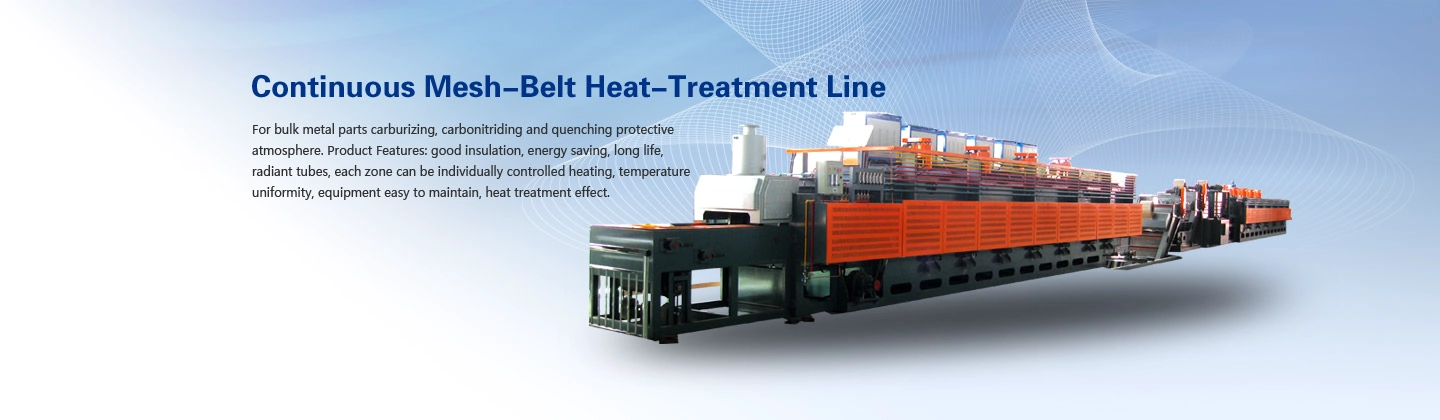
Continuous Belt Furnaces: Widely used for high-volume production, belt furnaces handle processes like carburizing and annealing efficiently. They feature automated workflows—loading, heating, quenching, cleaning, and tempering—all under controlled carbon potential to ensure uniformity. Oxygen probe technology allows for precise carburization, optimizing shallow-layer quality and minimizing waste. This makes belt furnaces perfect for applications like screw manufacturing, where consistency and speed are paramount 24.
-
Vacuum Heat Treatment Furnaces: Innovations like the patented vacuum quenching furnace from Suzhou Yongzhe Metal Technology address challenges in heating uniformity for delicate fasteners. This design uses multi-layer tray systems with perforated plates to hold fasteners securely, allowing even heat distribution and adaptability for various sizes. The vacuum environment prevents oxidation, enhancing durability for high-grade fasteners used in sectors like wind energy and aerospace 3.
Benefits Driving Industry Adoption
The evolution of fastener heat treatment furnaces brings tangible advantages:
- Energy Efficiency and Sustainability: Modern furnaces incorporate heat recovery and low-consumption designs, aligning with global carbon reduction targets. For instance, retrofitted systems can cut energy use by up to 30%, benefiting both costs and the environment 1.
- Intelligent Automation: Features like real-time monitoring and compatibility with AI-driven systems reduce human error and improve traceability. This is crucial for meeting standards like CQI-9 in automotive supply chains 13.
- Scalability and Flexibility: Projects like Zhejiang Hengchen Technology’s annual treatment of 28,000 tons of high-grade fasteners demonstrate how belt furnaces enable large-scale operations with minimal resource waste, using closed-loop water systems to eliminate discharge 5.
Future Trends and Recommendations for Manufacturers
As demand for high-strength fasteners grows—especially in electric vehicles and renewable energy—furnace technology will continue evolving. Trends include greater IoT integration for predictive maintenance and hybrid systems combining multiple processes. Manufacturers should invest in training and R&D to stay competitive, leveraging innovations from leaders like Sanyong and Yongzhe. Ultimately, adopting these advanced furnaces not only ensures superior fastener quality but also contributes to a greener, more efficient industrial ecosystem.
Conclusion
Fastener heat treatment furnaces are pivotal in transforming raw materials into reliable, high-performance components. With breakthroughs in electric, belt, and vacuum technologies, manufacturers can achieve unprecedented levels of precision, efficiency, and sustainability. By embracing these tools, the industry will keep pace with evolving standards and drive innovation across global supply chains. For more details on specific furnace models or case studies, readers can explore the referenced sources to deepen their knowledge.