














Maintenance and Upkeep of Fastener Heat Treatment Furnace
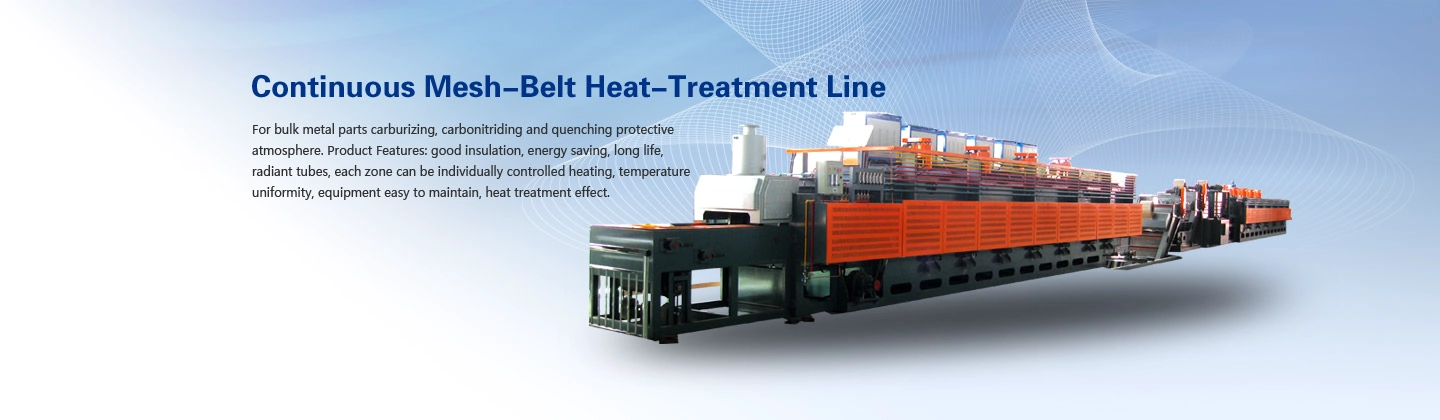
Scientific and standardized maintenance and upkeep are key to ensuring the stable operation of fastener heat treatment furnaces, improving heat treatment quality and extending equipment service life. As high-temperature continuous operation equipment, heat treatment furnaces are prone to failures such as temperature deviation, atmosphere instability, transmission jitter and heating element aging after long-term operation. Regular maintenance can effectively reduce equipment failure rate, avoid production shutdown losses, stabilize fastener heat treatment qualification rate, and reduce energy consumption and maintenance costs. The maintenance of fastener heat treatment furnaces is divided into three levels: daily routine maintenance, weekly and monthly regular maintenance, and seasonal overhaul maintenance, covering furnace body, heating system, transmission system, atmosphere system and control system.
Daily routine maintenance is the foundation of long-term stable operation of equipment, which needs to be implemented by operators on duty every day. First, conduct a comprehensive appearance inspection of the furnace body, check whether the furnace door seal is tight, whether there is air leakage, smoke leakage and heat loss, and clean the dust, oxide scale and residual fastener debris inside and outside the furnace cavity to avoid impurities affecting heat conduction and atmosphere stability. Second, inspect the heating system, observe whether the heating elements work normally, check for abnormal heating, local overheating and damage, and confirm that the temperature display of the temperature control instrument is consistent with the actual furnace temperature. Third, check the transmission system, test the mesh belt operation stability, observe whether there is deviation, jitter and stagnation, and clean the sundries on the mesh belt to prevent workpiece slipping and transmission failure. In addition, check the air filter of the atmosphere system every day to ensure smooth air circulation and avoid equipment overheating caused by poor ventilation.
Weekly and monthly regular maintenance focuses on component inspection, lubrication and parameter calibration to eliminate potential hidden dangers. For the transmission system, all moving parts such as driving motors, reducers and bearings need regular lubrication with high-temperature resistant lubricating grease to reduce friction and wear, ensure flexible operation of the transmission structure and avoid abnormal noise and stuck failure. The mesh belt needs regular tension adjustment to prevent loosening and deviation after long-term operation, and severely worn mesh belts should be replaced in time to avoid workpiece falling during transmission. For the temperature control system, thermocouples need to be calibrated monthly to correct temperature detection errors and ensure the accuracy of furnace temperature control within the standard range of ±5℃.
The atmosphere protection system is the key maintenance object to ensure fastener processing quality. Weekly inspect the gas pipeline, valve and sealing interface to check for air leakage, blockage and aging damage, and test the gas flow stability and pressure control accuracy. Clean the gas filter and drying device regularly to prevent impurity and moisture mixing into the furnace cavity, which will cause fastener surface oxidation and decarburization. The quenching and cooling system needs monthly cleaning of the quenching tank, removal of surface oxide scale and sediment, detection of quenching medium concentration and temperature control effect, and replacement of deteriorated quenching oil regularly to ensure stable quenching quality.
Seasonal overhaul maintenance is carried out every quarter or half year, focusing on deep inspection and aging component replacement. First, thoroughly inspect the furnace lining insulation structure, check for fiber falling, cracking and heat insulation failure, and repair and replace damaged insulation materials to reduce heat loss and improve energy utilization efficiency. Second, comprehensively detect the aging degree of heating elements, replace seriously oxidized and deformed heating wires to avoid local insufficient heating and temperature unevenness. Third, overhaul the PLC control system and circuit lines, check for line aging, loose wiring and control module failure, calibrate automatic operation parameters, and ensure the accuracy of automatic feeding, temperature adjustment and speed regulation functions.
In addition to hierarchical maintenance, standardized operation management is also essential. Operators must strictly follow the equipment operation manual, avoid overloaded operation, sudden start and stop, and ultra-high temperature operation. After daily production, cut off the power and gas supply in sequence, cool the furnace body naturally, and complete equipment cleaning and operation record filling. Establish equipment maintenance files, record each inspection, maintenance and component replacement information, realize traceable maintenance, and formulate targeted maintenance plans according to equipment operation status. Scientific maintenance can extend the service life of fastener heat treatment furnaces by more than 30%, stabilize product processing quality, and create greater economic benefits for fastener manufacturing enterprises.