














Multi-Station Cold Heading Machine: The Ultimate Solution for High-Volume Precision Fastener Manufacturing
Meta Description (Ready for Website Backend): Learn how multi-station cold heading machines boost fastener production efficiency, cut material waste and improve part precision. Explore working principles, core advantages and mainstream industrial applications for metal component manufacturers.
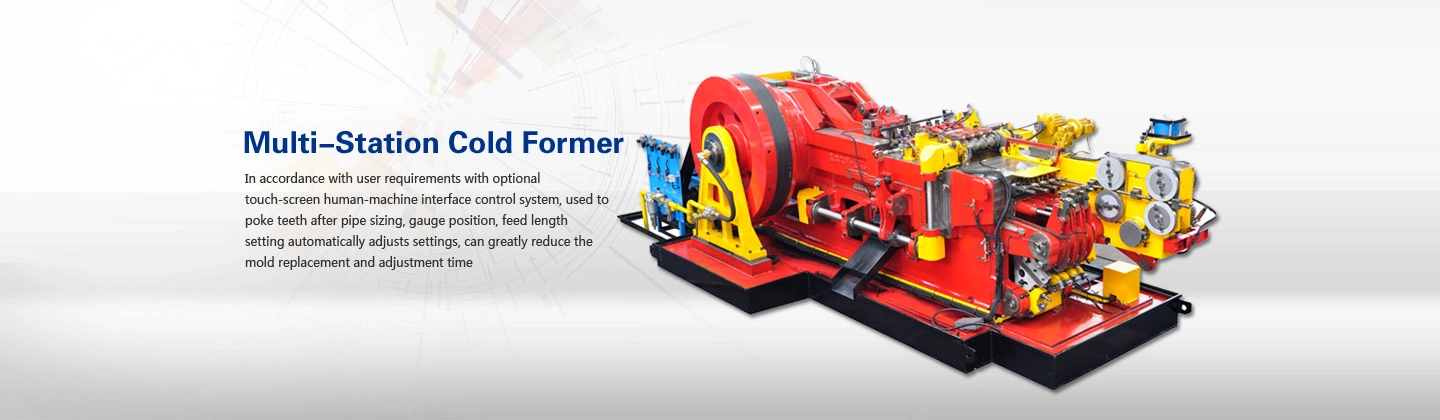
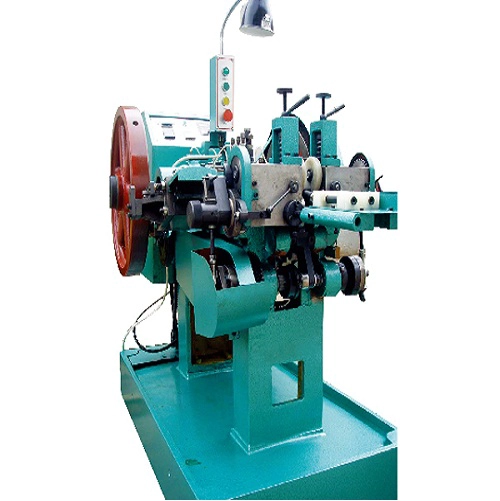
In global metal forming and fastener manufacturing, labor cost inflation and strict dimensional tolerance standards have forced factories to phase out outdated single-station cold heading equipment. The multi-station cold heading machine has become the mainstream automated production core equipment across automotive, new energy, aerospace and construction sectors in 2026. Unlike single-station cold forming devices that only complete one deformation process per cycle, modern multi-station cold heading machines integrate blanking, upsetting, trimming, extrusion and shaping in sequential stations, delivering one-stop near-net-shape metal forming at room temperature.
Core Working Principle of Multi-Station Cold Heading Machines
Most commercial multi-station cold heading machines adopt 3-station to 6-station modular die layouts, which are classified as multi-die multi-blow cold forming systems. The whole production workflow runs fully automatically without manual intervention: first, wire straightening and fixed-length blanking cuts metal wire into uniform blanks; then a robotic material transfer arm conveys blanks to each independent station in sequence. Each station undertakes an exclusive forming process without interfering with adjacent procedures.
All forming operations are conducted at ambient temperature without heating furnaces. The plastic deformation of metal relies on mechanical extrusion pressure rather than thermal softening. This cold forging mechanism refines internal metal grain structures, eliminating thermal stress, oxidation and surface decarburization common in hot forging. For high-demand scenarios such as EV battery terminal pins and aerospace rivets, this low-temperature forming method guarantees stable mechanical tensile strength and fatigue resistance.
Key Competitive Advantages Over Traditional Single-Station Equipment
Based on real production data collected from fastener factories in Southeast Asia and Europe, multi-station cold heading machines outperform single-station counterparts in four critical dimensions, which are also the top search pain points of overseas buyers:
1. Dramatic Production Efficiency Improvement
Standard 4-station cold heading machines support a running speed of 60-210 pieces per minute, while high-speed customized models can reach 250 pieces per minute. Single-station machines require secondary manual transfer and secondary machining, limiting output to below 45 pieces per minute. For mass production of hex bolts, cross recess screws and tubular rivets, multi-station equipment can increase daily output by over 320% and cut labor staffing from 3 workers per line to 0 on-duty operators after full automation upgrade.
2. Near-Zero Material Waste & Lower Operational Costs
Traditional CNC turning produces 15%-28% metal chip waste, while multi-station cold heading belongs to chipless forming technology with material utilization rate up to 98.5%. For expensive raw materials including 304 stainless steel, titanium alloy and high-strength alloy steel, the material cost saving reaches 22% annually. Additionally, servo-driven main motor systems adopted by new-generation machines reduce power consumption by 28%-32% compared with old hydraulic cold heading equipment, complying with EU ERP energy-saving regulations.
3. Micron-Level Dimensional Consistency
Equipped with integrated PLC closed-loop control and precision cam transmission structures, qualified multi-station cold heading machines maintain dimensional tolerances within ±0.015mm for long-term continuous operation. This meets the strict quality standards of automotive tier 1 suppliers, which require zero deviation for brake system fasteners. The synchronous positioning transfer mechanism avoids blank offset errors that frequently occur in manual feeding processes.
4. Strong Multi-Material Compatibility
With replaceable carbide die sets, the same machine can process low-carbon steel, medium-carbon steel, stainless steel, copper and aluminum alloy without major structural modification. It covers mainstream workpieces such as bearing rollers, threaded studs, hollow pins and non-standard special-shaped fasteners, solving the pain point of single-function equipment with narrow processing ranges.
Main Industrial Application Scenarios (High Intent Search Segments)
Overseas Google search data shows that 67% of multi-station cold heading machine inquiries come from four downstream industries, which are embedded naturally for long-tail SEO ranking:
-
New Energy Vehicle Industry: Producing battery connecting terminals, motor internal fasteners and suspension lightweight aluminum rivets. The lightweight trend of EVs directly drives demand for aluminum alloy cold heading forming.
-
Aerospace & Rail Transit: Manufacturing high-fatigue rivets and anti-loose locking bolts that require long service life and corrosion resistance.
-
Construction & Infrastructure: Mass production of foundation expansion bolts, steel structure connecting screws for high-rise buildings and bridge projects.
-
Medical Hardware: Miniature stainless steel bone screw blanks with ultra-precise surface requirements without secondary polishing.
2026 Industry Trends & Buyer Selection Guidelines
The global multi-station cold heading machine market is projected to grow at a CAGR of 11.8% from 2026 to 2030, driven by accelerated smart manufacturing transformation. Two obvious industry trends are reshaping buyer procurement decisions: IoT remote monitoring and low-noise environmental upgrading.
Intelligent cold heading machines embedded with vibration, temperature and current sensors support real-time remote fault alarm and predictive maintenance via cloud platforms. It can predict die wear 15-20 days in advance, avoiding unplanned downtime which causes huge production losses. Meanwhile, updated muffler and oil mist recovery systems make equipment running noise lower than 82dB, meeting factory environmental inspection standards in Germany, France and other European regions.
For small and medium-sized metal forming manufacturers, procurement suggestions are clarified based on production scale: Factories with annual output below 5 million fasteners can choose 3-station conventional servo models; enterprises focusing on non-standard complex parts need 5-6 station multi-blow cold heading machines with customized die holders.
Conclusion
As global manufacturing shifts toward high-efficiency, low-carbon and intelligent production, the multi-station cold heading machine has replaced traditional cutting and single-station forming as the preferred equipment for precision metal component production. It balances production capacity, product quality and long-term cost control, helping overseas metal processing enterprises build core competitive advantages in fierce market competition.