













Working Principle and Core Advantages of Cold Heading Machines
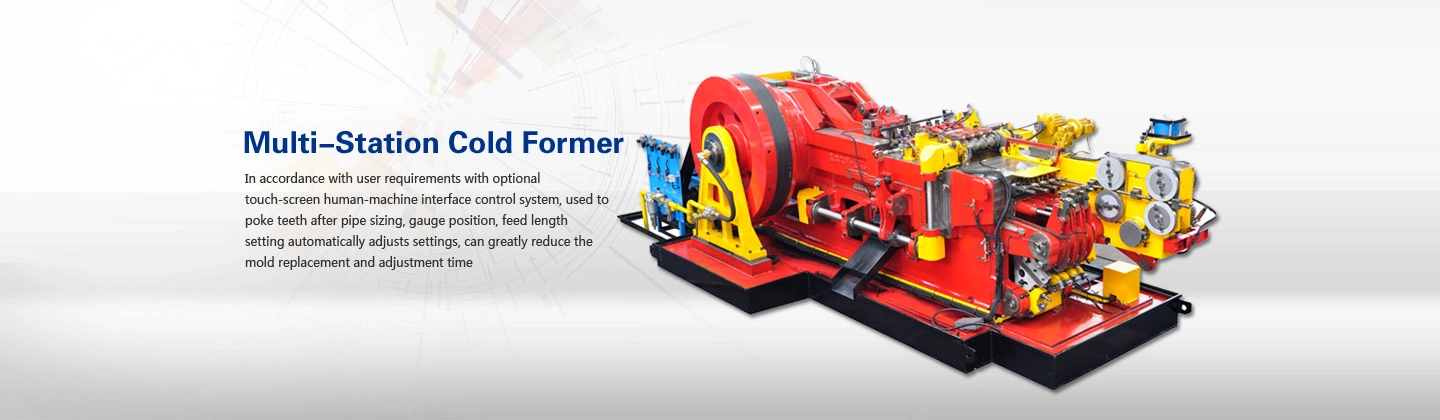
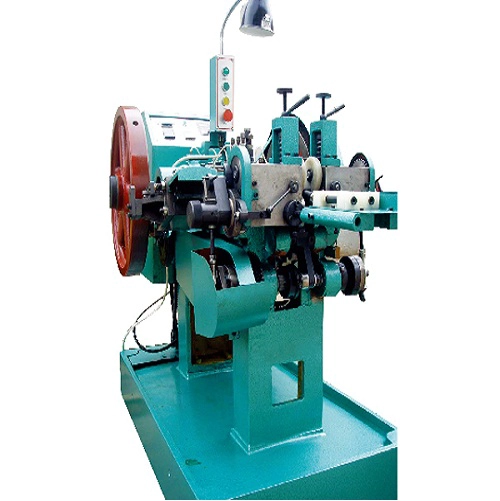
The core of the cold heading machine's work is the cold heading process, that is, at room temperature, through the high-speed impact of the punch and the constraint of the mold, the metal material undergoes plastic deformation, and finally forms the required workpiece shape. Its working process is mainly divided into four steps: feeding, positioning, heading and ejection. The whole process is continuous and efficient, no need to interrupt, suitable for mass production.
The feeding mechanism accurately feeds the metal wire into the mold, and the positioning device ensures the accurate position of the wire to avoid processing deviation; the punch, driven by the crankshaft, impacts the wire at a very high speed, so that the wire is squeezed and deformed in the mold, fitting the shape of the mold to form a workpiece; finally, the processed workpiece is pushed out of the mold through the ejection mechanism to complete a processing cycle. The whole process only takes a few seconds, which greatly improves the production efficiency.
The core advantages of cold heading machines are reflected in three aspects: first, energy saving and consumption reduction, no need to heat metal, reducing energy consumption and environmental pollution; second, high quality of finished products, the metal fibers of the cold-headed workpieces are continuous, the strength is 10%-30% higher than that of hot-forged parts, and the dimensional accuracy is high, the surface is smooth, no subsequent polishing is needed; third, high efficiency, a fully automatic cold heading machine can process tens of thousands of fasteners every day, far exceeding the traditional processing method, and reducing labor costs.