




How to Configure a Complete Fastener Production Line in 2026: From Wire Rod to Galvanized Bolt
How to Configure a Complete Fastener Production Line in 2026: From Wire Rod to Galvanized Bolt
Most fastener projects do not fail because of a single weak machine. They fail in the gaps between machines — a header that outruns the thread roller, a batch furnace that cannot keep pace with continuous forming, a coating line that changes thread dimensions after everything else has been approved.
In 2026, as fastener demand keeps expanding and cost pressure shifts from labour towards energy and yield, procurement decisions are moving from "which machine is cheapest" to "which line actually balances". This guide sets out the six decisions that determine whether a new bolt or nut plant runs at its rated output — and where most projects quietly lose money.
Why 2026 Rewards Line-Level Planning
The demand backdrop is supportive rather than speculative. Mordor Intelligence's September 2026 industrial fasteners outlook puts the global market at roughly USD 92.1 billion in 2026, expanding towards USD 113.3 billion by the early 2030s. Equipment forecasts are far less tidy — published 2026 estimates for cold heading machinery range from under USD 0.9 billion to over USD 4 billion, depending on whether the scope covers standalone headers or complete forming systems — but the direction is consistent across sources: mid-single-digit annual growth driven by automation rather than by new capacity alone (Market Research Future, 4.8% CAGR to 2035; Straits Research, 5.8% to 2034).
What the headline numbers hide is a structural change on the buyer side. New capacity is increasingly built in South Asia, Southeast Asia and South America, where labour is available but increasingly expensive relative to output, and where energy contracts reward continuous, predictable load rather than shift-based starts and stops. In that environment a plant is judged on line OEE, not on the maximum stroke rate printed on a nameplate.
That is the practical argument for designing the line as a system.
Step 1 — Fix the Product Mix Before the Machine List
No supplier can quote a line without four inputs, and buyers who skip them usually end up re-quoting:
- Wire diameter and steel grade range — carbon steel, alloy steel or stainless; this decides drawing, annealing and tooling material.
- Cut length and shank geometry — decides machine stroke, die layout and whether a multi-station former is required.
- Head and drive features — hex, flange, pan, socket, carriage, or special shapes with undercuts and reduced shanks.
- Property class and coating standard — 4.8, 8.8, 10.9 or 12.9, and whether the finished part is plain, electroplated or hot-dip galvanized.
A useful discipline is to write the mix as a table before contacting any supplier: part family, diameter range, length range, annual volume, property class, coating. Everything downstream — station count, furnace belt width, plating line size — is derived from that table.
Step 2 — Size the Cold Heading Stations to Part Complexity
Station count is a function of how many forming operations the part needs, not of budget ambition.
- One-die-two-blow headers suit simple, high-volume parts: screws, rivets, simple pins. Speed is the selling point.
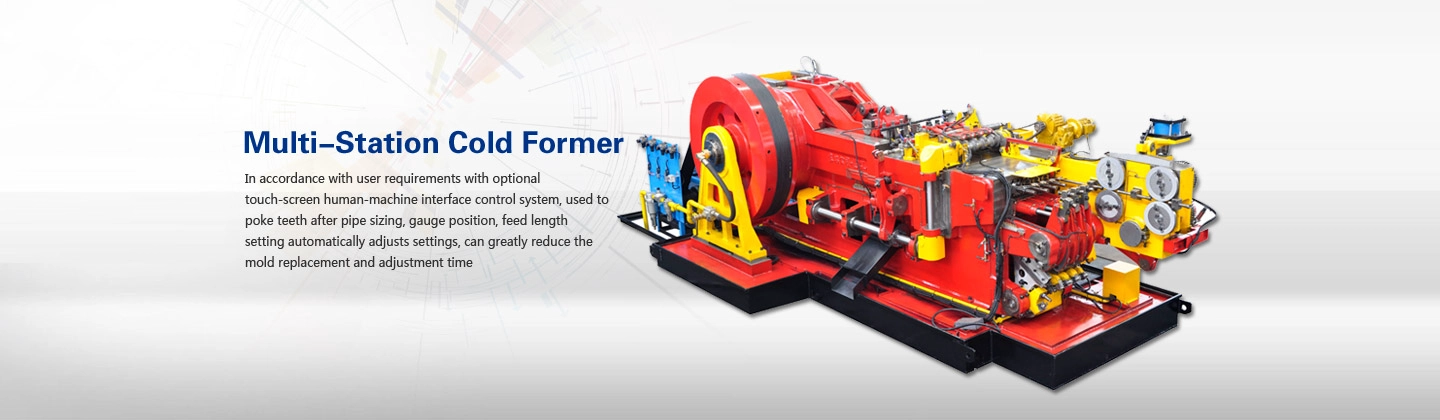
- Multi-station formers (four to six stations) are the correct choice when the part requires successive operations — pre-forming, finish forming, trimming, backward extrusion for sockets or reduced shanks. Each additional station removes a secondary operation, a re-clamping error and a handling cost.
Two practical checks matter more than the station count itself: whether the frame is rigid enough to hold tolerance under continuous high-impact load, and whether tooling can be changed quickly enough to make short runs economic. A machine that forms beautifully but takes a full shift to change over will lose to a slower machine that changes in an hour.
Step 3 — Match Thread Rolling to Header Output
Thread rolling is the stage most often mis-sized, because it is bought after the header and priced lower, so it attracts less analysis.
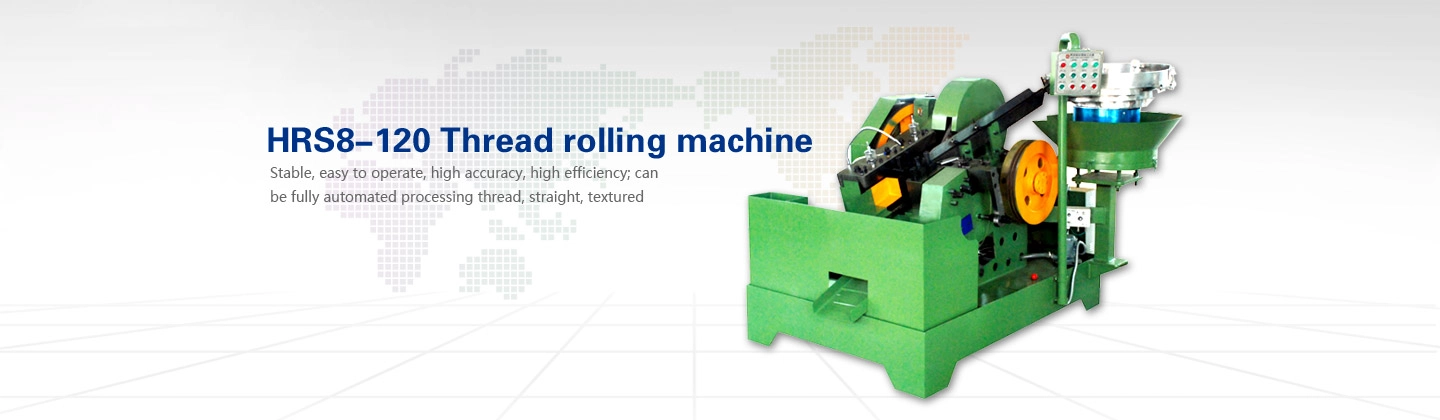
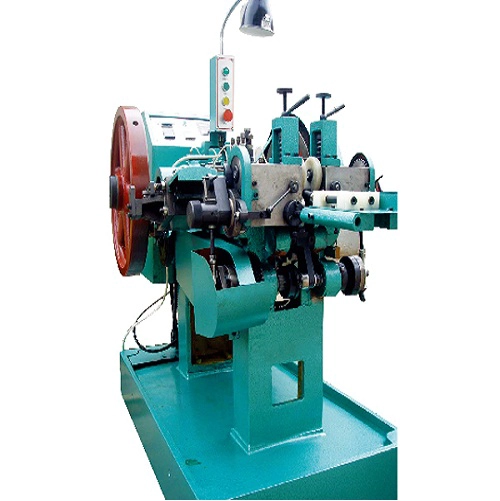
- Flat die machines are the workhorse for standard bolts and screws, with straightforward die replacement and good output in the mid-size range.
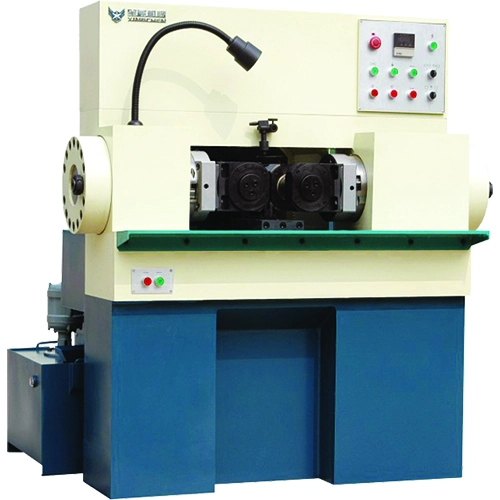
- Circular die (two-roll) machines handle larger diameters, longer threads and parts where symmetry and thread finish matter.
The rule is simple: the roller's practical output must exceed the header's practical output with margin, otherwise the header becomes an expensive storage device. Die quality also sets thread finish and die life, which feeds directly into cost per thousand pieces — a line that saves on dies usually pays for it in stoppages.
Step 4 — Heat Treatment: Continuous Beats Batch Above 8.8
Once property class 8.8 and above is in the mix, heat treatment stops being a finishing step and becomes a production constraint. Quenching and tempering must deliver uniform hardness through the section, controlled decarburization, and repeatable results part after part.
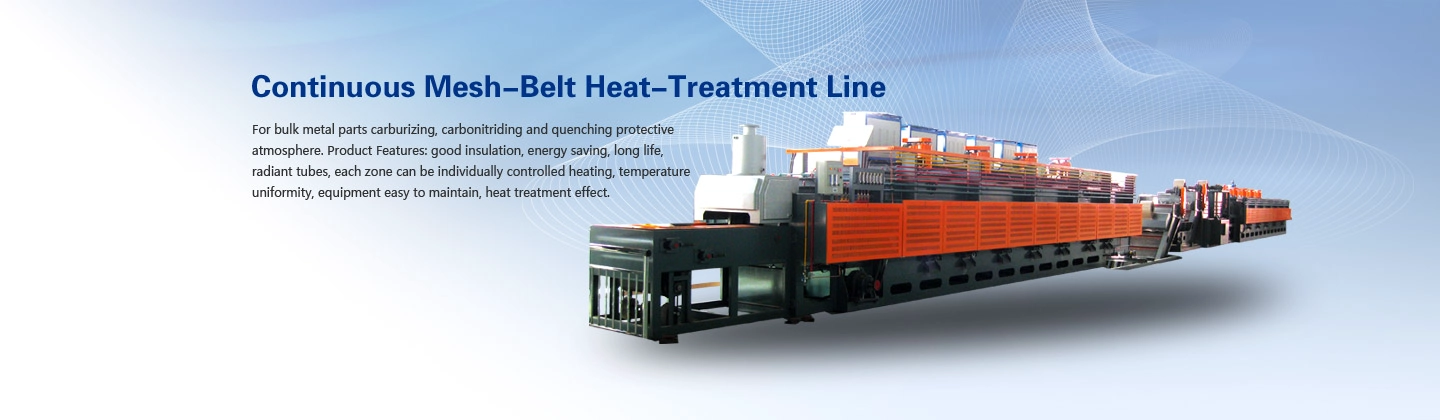
A continuous mesh belt furnace does three things a batch furnace cannot: it removes the work-in-progress buffer between forming and tempering, it applies the same thermal history to every part, and it makes energy consumption per tonne predictable. The trade-off is that a continuous furnace only pays back when it runs loaded — which is exactly why furnace sizing must follow the line's real output, not its peak output.
When specifying, ask about temperature uniformity across the belt width, atmosphere control, the quench-to-temper transfer, and how the furnace behaves during a line stoppage. Those four answers separate a production furnace from a laboratory one.
Step 5 — Choose the Coating Route Before Finalising Thread Dimensions
Coating is where a well-built line quietly produces out-of-tolerance parts, because the coating changes the thread.
| Zinc electroplating | Hot-dip galvanizing | |
|---|---|---|
| Typical use | Indoor, automotive, general industrial | Outdoor, construction, transmission, marine |
| Coating thickness | Thin, tightly controlled | Substantially thicker |
| Thread impact | Minimal, but still to be allowed for | Requires thread allowance or oversize tapping |
| Property class risk | Hydrogen embrittlement risk on 10.9/12.9 — baking after plating is mandatory | Heat exposure means property class must be re-verified |
| Standards to design against | ISO 4042 | ISO 10684 / ASTM A153 |
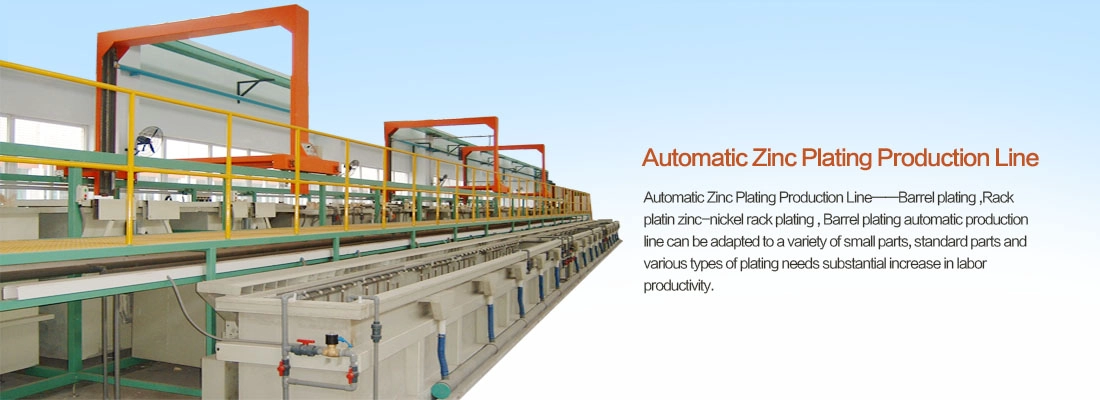
Two engineering notes worth writing into the technical agreement: high-strength parts (10.9 and above) that are electroplated need a documented de-embrittlement bake, and hot-dip galvanized fasteners need the thread tolerance decided at drawing stage — not at the plating tank.
Step 6 — Do the Line-Balancing Math Before Signing
Line output is not the sum of machine capacities. It is:
Line output = output of the slowest stage × line OEE
and line OEE is degraded by changeovers, unplanned stops, upstream starvation and downstream blocking. If a header is rated at X pieces per minute and the thread roller at 0.8X, the line produces 0.8X while the buyer has paid for X. The same logic applies to a furnace sized for peak output feeding a plating line sized for average output.
Before approving a layout, request three things from any supplier: the bottleneck stage identified explicitly, the buffer strategy between stages, and the assumed OEE used in the throughput calculation. A supplier who cannot name the bottleneck has not designed a line.
Five Configuration Mistakes That Cost More Than the Machines
- Buying stages separately from different suppliers with no interface study — conveyor heights, buffer bins and control handshakes all become site problems.
- Oversizing the furnace or coating line to "future-proof" capacity, then running it at low load factor for three years.
- Ignoring die and tooling cost per piece — the cheapest machine with expensive tooling is the most expensive line.
- No spare-parts plan for high-wear items — a stopped line costs more per day than most spare-part inventories cost per year.
- Skipping a full-load trial on the customer's own wire — steel behaviour, surface condition and coil handling differ by mill and by region.
Why Fastener Manufacturers Configure the Line With Rainbow
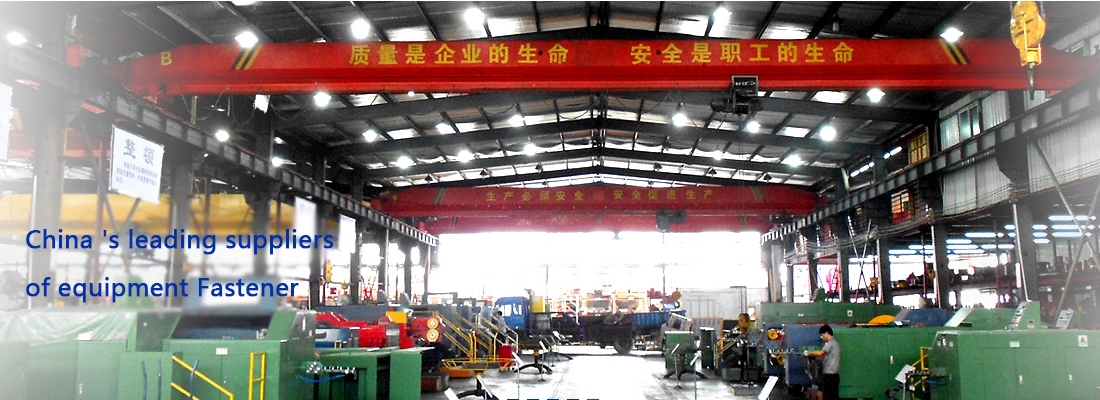
Harbin Rainbow Technology has supplied fastener equipment to the industry for more than 30 years, and covers the stages a complete line needs under one technical interface: wire drawing, RBF series multi-station bolt formers and cold heading machines, nut formers, thread rolling machines, nut tapping machines, continuous mesh belt heat treatment furnaces, and zinc plating and hot-dip galvanizing lines.
On Alibaba.com, our store carries a 5.0/5 supplier rating, a 100% on-time dispatch rate and a response time within four hours, with South Asia, Southeast Asia and South America as main markets — the same regions where much new fastener capacity is currently being built.
Practically, working with one supplier across forming, heat treatment and coating means the interfaces become the supplier's responsibility rather than the buyer's: layout, utilities, control integration and commissioning are planned as one scope, and after-sales support covers installation guidance, operator training, wear-part supply and troubleshooting across the whole line.
Planning a new bolt or nut plant, or expanding an existing one? Send us your product mix — diameter range, length, property class and target output — and our engineering team will propose a line configuration with the bottleneck stage identified.
Explore our product range, see engineering cases, or write to chen@rainbowtechnology.net.
Related equipment: six-station cold forging machine for bolt parts · continuous hardening furnace for heat treatment · zinc plating line
FAQ
How many machines do I need to start a bolt manufacturing plant?
At minimum, one forming machine, one thread rolling machine, one heat treatment unit if property class 8.8 or above is required, and one coating route if the parts are not sold plain. The count depends on part complexity and target output — a plant making simple screws at high volume needs fewer stages than one making flange bolts and special parts.
Do I need heat treatment if I only produce class 4.8 fasteners?
Not necessarily. Lower property classes can often be supplied without quenching and tempering, depending on the wire grade and the specification the buyer is working to. Heat treatment becomes mandatory once 8.8, 10.9 or 12.9 is in scope.
Can one line produce both bolts and nuts?
Forming equipment is generally dedicated — bolt formers and nut formers are different machines. Thread rolling, heat treatment and coating, however, are shared stages, which is why many plants run one heat treatment and one coating line behind both forming departments.
Flat die or circular die thread rolling — which should I choose?
Flat die for standard bolts and screws at high volume; circular die for larger diameters, longer threads and better thread finish. Many plants run both.
How long does installation and commissioning take?
It depends on line scope, site readiness and utilities, and is confirmed in the technical proposal rather than estimated at enquiry stage. A single-machine installation and a full line with furnace and plating tanks are not comparable projects.