














Thread Rolling Machines: The Engine of Precision and Strength in Fastener Manufacturing
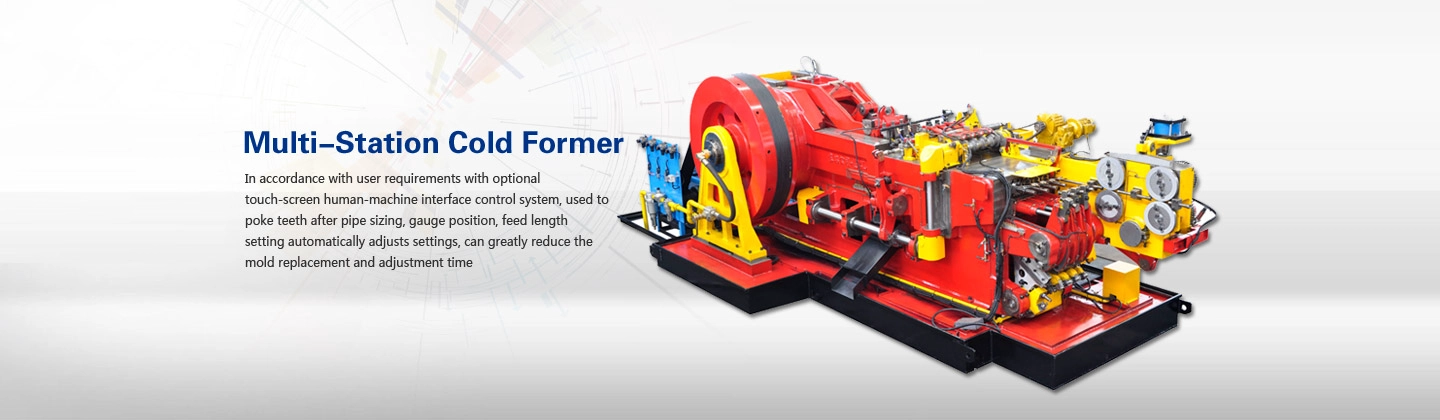
In the modern fastener production workflow, cold heading gives bolts, screws, and studs their geometric blank profile, but it is the thread rolling machine that transforms those blanks into fully functional, load-bearing fasteners.
While cutting or grinding removes material to carve threads, rolling is a chipless, cold-forming process that reshapes the metal blank under immense localized pressure. For fastener producers serving automotive, construction, and heavy machinery markets, thread rolling remains the undisputed standard for achieving high output, flawless surface finish, and maximum fatigue life.
How Thread Rolling Works: The Metallurgical Advantage
Unlike machining, which cuts through the natural grain flow of the raw wire, thread rolling forces the blank between hardened steel dies (either reciprocating flat dies or rotating cylindrical dies).
- Continuous Grain Flow: As the die ridges penetrate the blank, the metal plastically flows into the die cavities without severed fibers. The grain lines conform seamlessly along the contours of the thread crests and roots.
- Work-Hardened Surface: The compressive forces induce strain hardening, significantly increasing surface hardness and resistance to stripping.
- Smooth Root Fillets & High Fatigue Resistance: Machining inevitably leaves micro-grooves and stress risers in thread roots. Rolled threads produce mirror-smooth root radii and compressive residual stresses, resulting in up to 30%–50% higher fatigue resistance under dynamic loads.
- Zero Material Loss: Because no chips or shavings are generated, 100% of the blank material is retained, reducing overall wire cost.
Flat Die vs. Cylindrical Die: Which Fits Your Production?
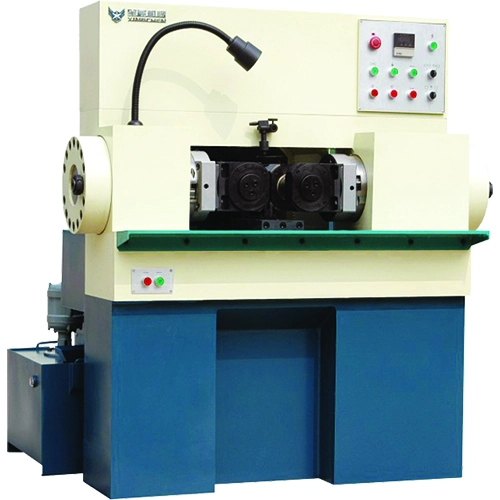
Fastener manufacturers primarily deploy two distinct configurations depending on part geometry, batch volume, and precision requirements:
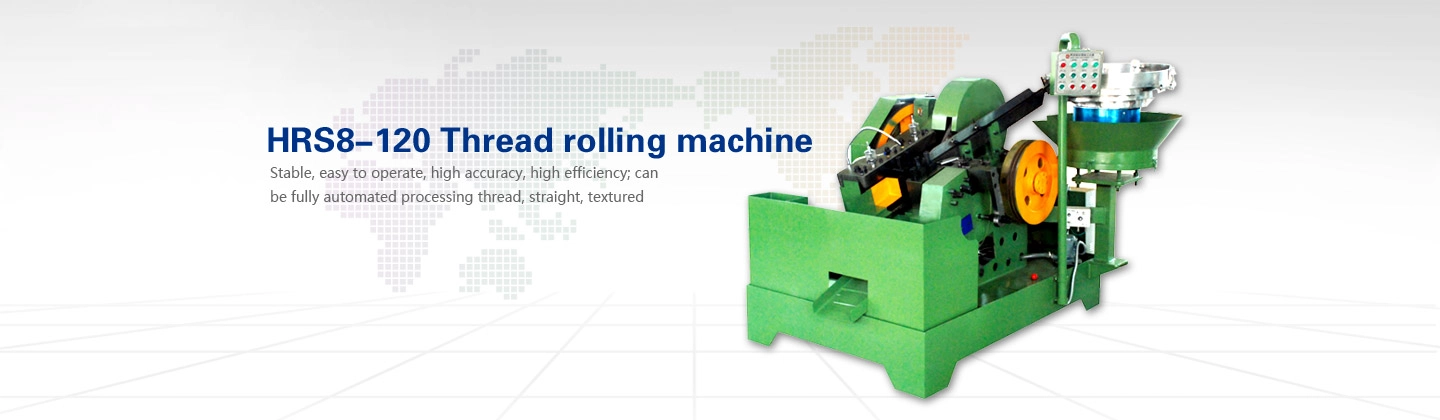
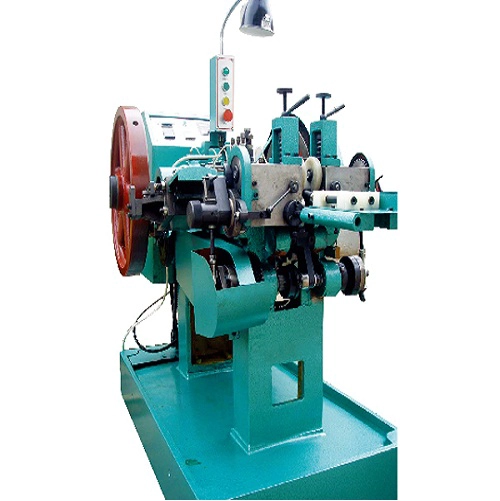
- Flat Die Thread Rolling Machines (Reciprocating Type):
- Best for: Standard screws, automotive bolts, wood screws, and high-volume mass production.
- Mechanism: One die remains stationary while a mating die reciprocates linearly. The blank feeds into the gap and rolls across the die face in a fraction of a second.
- Strengths: Exceptional cycle speeds (often 100 to 300+ pieces per minute on small-to-medium diameters) and straightforward automation via vibratory bowl or elevator hoppers.
- Cylindrical Die Thread Rolling Machines (Two-Roller or Three-Roller Type):
- Best for: Long threaded rods, hollow pipes, lead screws, large-diameter structural anchors, and precision ground threads.
- Mechanism: The blank is held between two or three rotating circular dies that apply synchronized radial or through-feed rolling pressure.
- Strengths: Capable of handling unlimited thread lengths (via through-feed mode), hollow/thin-walled workpieces without crushing (three-roller designs), and deeper, coarse-pitch profiles.
Essential Factors When Selecting a Thread Rolling Machine
When evaluating a new machine or upgrading an existing finishing cell, balance the following technical parameters:
- Maximum Blank Diameter and Thread Length: Ensure the machine’s feed throat, die pocket dimensions, and ram stroke provide ample clearance for both your current standard parts and projected longer/heavier fasteners.
- Rigidity and Spindle/Ram Alignment: Rolling high-grade alloy steels (such as 8.8, 10.9, or 12.9 grades, as well as stainless steels) requires a rigid, vibration-absorbing frame to prevent pitch-lead variations and premature die chipping.
- Infeed and Sorting Reliability: A high-speed rolling machine is only as good as its feeding line. Look for adjustable guide tracks, reliable separator gates, and anti-jam sensors that handle both shank-heavy and head-heavy blanks smoothly.
- Quick Die Setup and Adjustment: Fine-tuning the pitch match, penetration depth, and lead-in taper should be ergonomic and repeatable. Digital position readouts and micro-metric adjustment screws significantly cut changeover downtime between different thread specifications.
Conclusion
As industrial applications enforce stricter fatigue tolerances and higher yield requirements, investing in a robust, precision-aligned thread rolling machine is essential for closing the gap between raw headed blanks and premium, market-ready fasteners.