















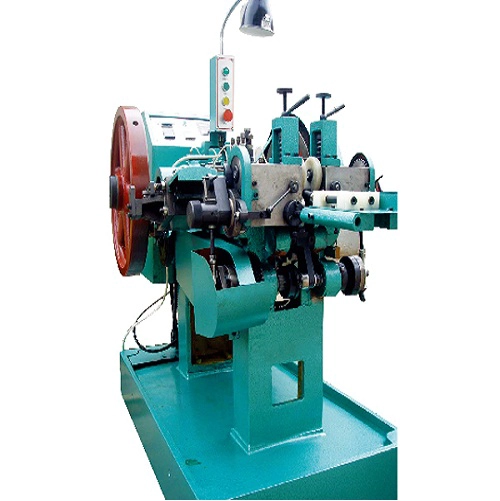
Multi-Station Nut Formers: High-Speed Precision Engineering for Fastener Manufacturers
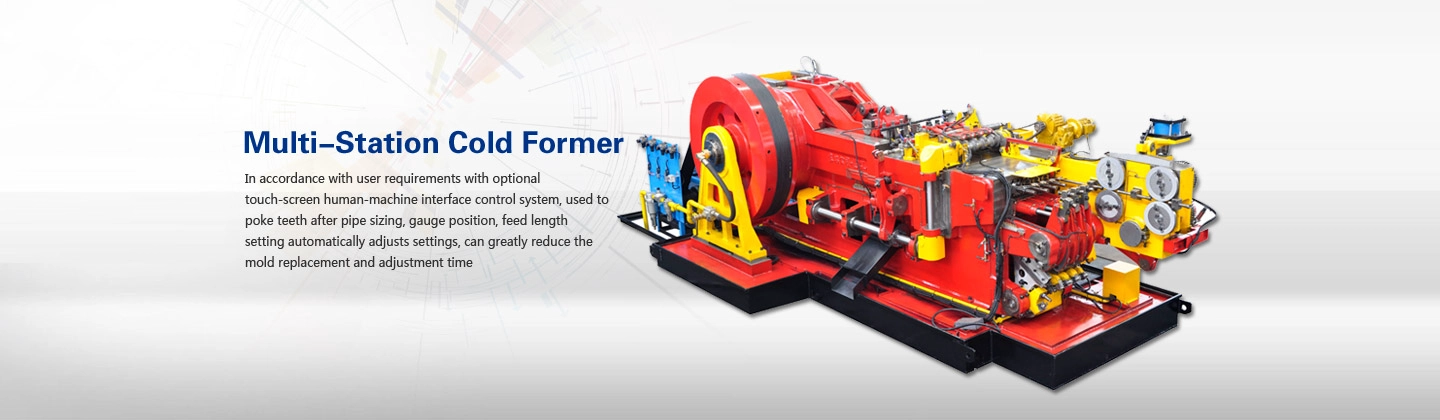
In the fastener manufacturing sector, producing internal-thread blanks—ranging from standard hex nuts to heavy-duty flange nuts and automotive specials—demands both massive forming power and micro-level dimensional consistency. While conventional heading machines handle basic symmetrical shapes, the multi-station nut former (multi-stage cold nut forming machine) has become the core production powerhouse for medium-to-high volume fastener plants worldwide.
Understanding how multi-station technology operates and what criteria matter during machine selection is key to maximizing material yield and operational uptime.
What Makes Multi-Station Nut Forming Unique?
Unlike basic two-die heading, a multi-station nut former transfers the cut wire blank through a succession of consecutive forming dies (typically 5 to 6 stations). Each station performs an incremental metal deformation step at ambient temperature:
- Precision Cutoff & Squaring: The coiled raw wire is drawn, straightened, and sheared to an exact volume. The cut blank is squared at the first station to ensure balanced material distribution.
- Progressive Upsetting & Pre-Forming: Intermediate stations progressively expand the blank diameter, pre-form the hexagonal flats, shape the flange (if applicable), and form center indentations on both faces.
- Finish Forming & Piercing: In the final forming stages, the precise outer geometry is calibrated, and the slug (the center core) is punched out cleanly, leaving an open center bore ready for subsequent thread tapping.
- Pneumatic / Mechanical Part Transfer: High-precision transfer fingers hold and rotate or translate the blank from station to station synchronously with the main ram motion, maintaining tight axial alignment.
Core Advantages Over Traditional Machining or Single-Stage Forming
- Exceptional Material Utilization: Traditional turning or hot forging creates significant chip waste or scale loss. Cold forming a nut blank achieves up to 85%–90%+ material utilization, generating only a thin center slug as scrap.
- Superior Mechanical Strength: Because the grain flow of the raw wire is continuous and forged to follow the contours of the nut body, cold-headed nuts exhibit higher shear resistance, fatigue strength, and yield durability.
- High Output Rates with Repeatable Tolerances: Operating at speeds ranging from dozens to hundreds of pieces per minute, modern multi-station formers maintain tight dimensional stability across long production runs, greatly extending the lifespan of subsequent tapping tools.
- Versatility for Complex Geometries: Beyond standard DIN 934 or ANSI hex nuts, multi-station stations allow the integration of specialized operations—such as stepped diameters, weld pips, nylon-insert cavities, and wheel nut collars.
Practical Considerations When Choosing a Nut Former
When planning an equipment investment, evaluate the following parameters against your current and upcoming production drawings:
- Number of Stations (5-Station vs. 6-Station): Simple standard nuts may only require 5 stations, while specialized flange nuts, lock nuts, or deep collars typically need 6 stations to prevent excessive single-station die stress and premature punch failure.
- Cutoff Diameter and PKO/KO Capacity: Ensure the machine's maximum shearing diameter and knockout lengths (PKO on punch side, KO on die side) provide sufficient stroke margins for your deepest parts.
- Bed Rigidity & Bushing Life: High-tensile alloy steels generate substantial lateral and reverse forces. A robust cast iron or stress-relieved steel frame ensures minimal dynamic deflection, directly protecting expensive carbide tooling.
- Ease of Tool Changeover: For job shops handling varied batches, quick-clamping die blocks, digital stroke readouts, and accessible transfer adjustments reduce changeover downtime from hours to manageable intervals.
Conclusion
As industrial end-users in automotive, renewable energy, and heavy machinery demand higher traceability and tighter tolerances, upgrading to a rigid, precision multi-station nut former is a direct path to lowering piece-cost while elevating product consistency