














Multi-Station Nut Cold Heading Machine: High-Speed Precision Forging for Modern Fastener Manufacturing
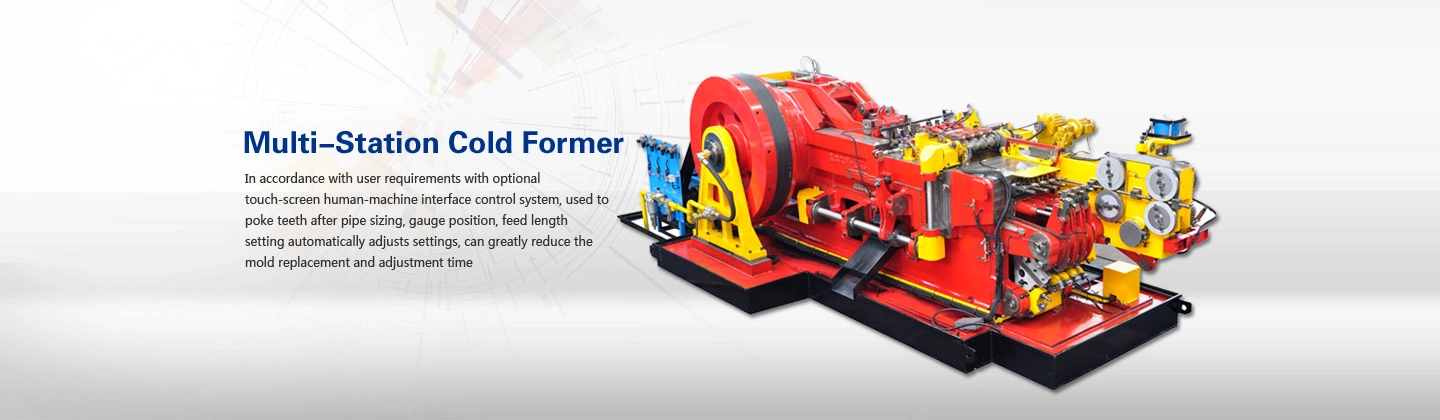
In the global fastener manufacturing industry, the multi-station nut cold heading machine has become one of the most core and irreplaceable pieces of automation equipment. As demand continues to rise for high-strength, high-precision, standardized and custom-shaped nuts, traditional single-station forming and machining processes can no longer meet modern production requirements for efficiency, consistency, cost control and material utilization. Designed for continuous, high-volume, multi-step cold extrusion forming, multi-station nut cold heading machines deliver exceptional performance in producing hex nuts, flange nuts, lock nuts, rivet nuts, square nuts and special-shaped non-standard nuts, making them the first choice for professional fastener factories, hardware parts enterprises and auto parts manufacturers worldwide.
For fastener manufacturers, upgrading to a fully automatic multi-station nut cold heading machine means a complete transformation of production capacity. Unlike traditional cutting, manual blanking or single-station stamping methods, cold heading technology forms metal wire blanks into finished nut shapes at room temperature through continuous stamping, extrusion, upsetting, shaping and ejection across multiple working stations. This advanced near-net-shape process not only greatly improves production speed but also maintains excellent material integrity, surface finish and dimensional stability, which directly enhances the overall strength and fatigue resistance of finished nuts.
What is a Multi-Station Nut Cold Heading Machine?
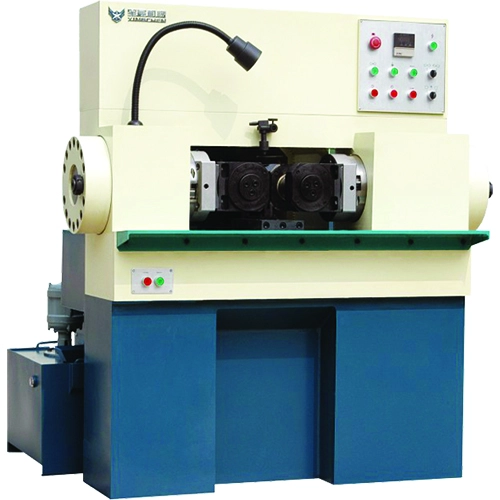
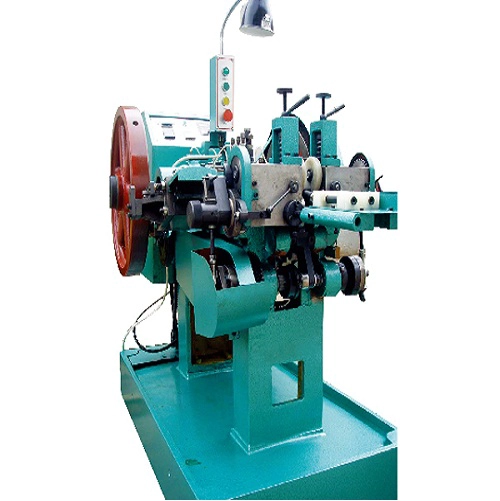
A multi-station nut cold heading machine, also widely known as a multi-die nut cold former or automatic nut making machine, is a high-performance cold forging machine specially used for mass production of nuts and similar fastener parts. It adopts a sequential multi-station forming structure—commonly including 3-station, 4-station, 5-station and 6-station configurations—to complete the entire production flow in one continuous operation: automatic wire feeding, straightening, fixed-length cutting, blank pre-forming, main extrusion forming, thread pre-shaping, hole punching and finished product ejection.
The biggest advantage of multi-station design is that it distributes complex deformation processes across multiple stations, which reduces excessive single-station pressure, extends die service life, improves forming stability, and enables the production of complex nut parts that cannot be completed by single-station or low-station machines. For manufacturers with diversified orders, this versatility means one machine can handle both standard hex nuts and customized special nuts, greatly improving production flexibility and equipment return on investment.
Core Working Process of Multi-Station Nut Cold Heading Machines
Modern automatic multi-station nut cold heading machines feature a highly integrated, servo-controlled workflow that ensures stable, continuous and high-precision output. The full production process is completed automatically without manual secondary handling, which greatly reduces labor input and defective rates.
-
Wire Feeding & Straightening: High-quality metal wire rod is automatically fed into the machine, with a professional straightening mechanism eliminating bending and internal stress to ensure stable feeding accuracy.
-
Fixed-Length Cutting: The wire is cut into uniform blanks according to preset nut size specifications, providing consistent raw blanks for subsequent forming.
-
Multi-Station Progressive Forming: Blanks are automatically transferred between stations via precision clamping or transmission mechanisms. Each station completes upsetting, extrusion, cavity forming, flange shaping and inner hole punching step by step.
-
Precision Punching & Shaping: The machine finishes inner hole preparation and outer contour shaping, ensuring nuts meet standard dimensions and assembly requirements.
-
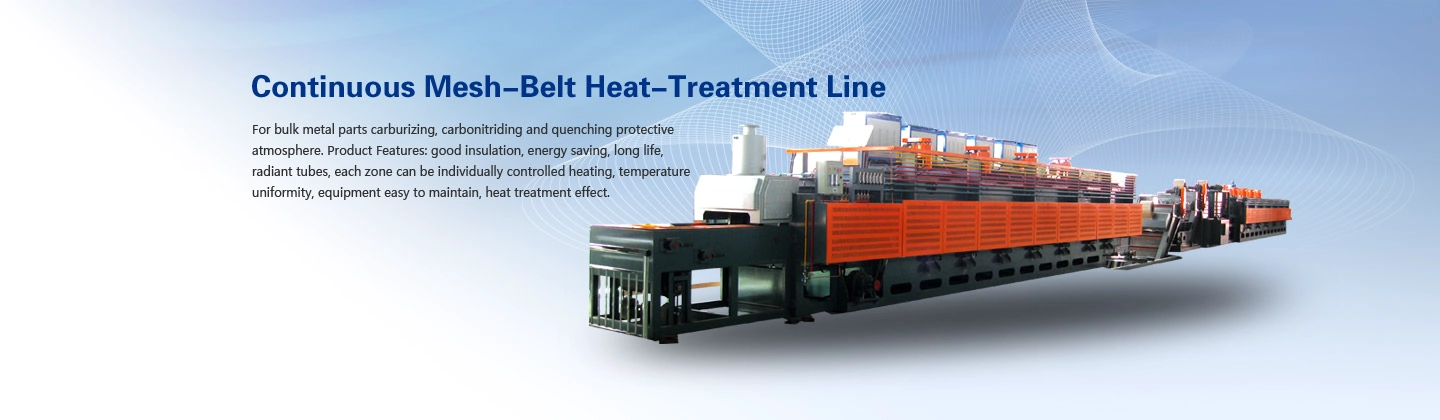
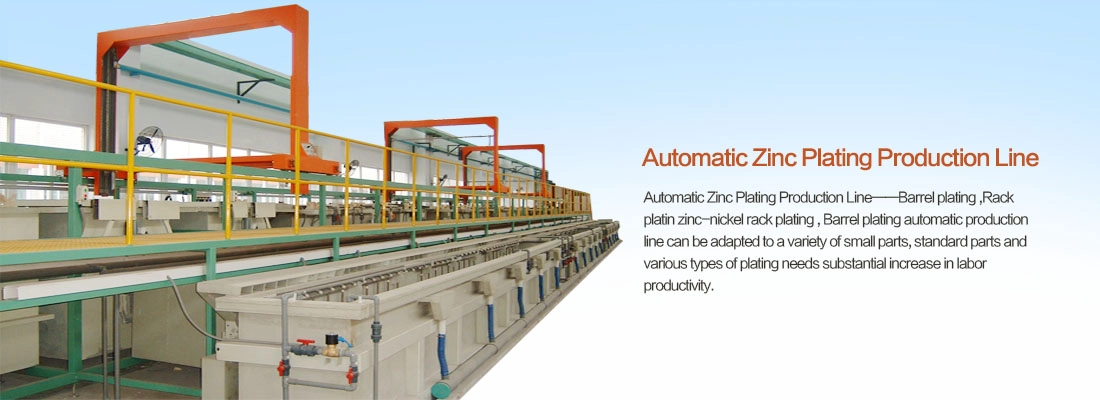
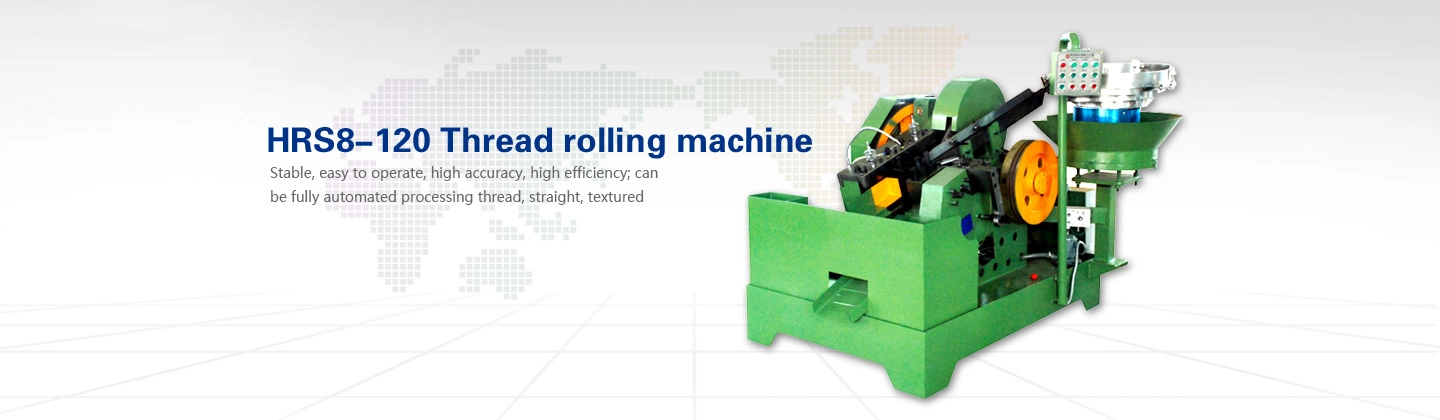
Automatic Ejection & Collection: Finished nuts are ejected smoothly and collected in a centralized manner, supporting seamless docking with subsequent tapping, heat treatment, surface plating and packaging lines.
This fully closed-loop production mode greatly improves repeatability and consistency. High-end models can achieve extremely high dimensional repeatability, usually controlled within ±0.05mm, fully meeting international fastener standards such as DIN, ISO, ANSI/ASME and GB.
Key Advantages of Multi-Station Nut Cold Heading Machines
1. Ultra-High Production Efficiency & Large Output
Compared with traditional CNC machining or single-station forming equipment, automatic multi-station nut cold heading machines have obvious speed advantages. They support continuous high-speed operation, with production capacity reaching hundreds of pieces per minute depending on nut specification and station configuration. For mass standard fastener production, this efficiency advantage directly shortens delivery cycles and improves order fulfillment capacity.
2. Extremely High Material Utilization Rate
Cold heading is a material-saving chipless forming process. Unlike traditional machining that produces a large amount of metal chips and waste, multi-station cold heading machines directly form raw wire into near-finished nuts, with a material utilization rate often exceeding 98%. This greatly reduces raw material costs, especially for medium-to-large batch production runs, creating obvious economic benefits.
3. Excellent Product Strength & Dimensional Precision
Since the cold heading process retains complete metal flow lines and produces moderate work hardening during room-temperature extrusion, finished nuts have better density, tensile strength and anti-fatigue performance than machined parts. At the same time, stable multi-station mould forming guarantees consistent outer diameter, thickness, inner hole size and flange shape, which is critical for automotive, construction, machinery and electrical applications that require strict fastening reliability.
4. Wide Adaptability to Materials & Product Types
High-performance multi-station nut cold heading machines can process a variety of metal materials, including low-carbon steel, alloy steel, stainless steel 304/316, copper alloy and other wire materials. They are widely used in manufacturing standard hex nuts, flange nuts, nylon lock nuts, square nuts, cap nuts, rivet nuts and many custom non-standard special nuts, fully meeting diversified market demands.
5. Intelligent, Stable & Easy to Operate
Modern industrial-grade nut cold heading machines are equipped with PLC central control, touch-screen human-machine interface, servo motor drive and frequency conversion speed regulation systems. Operators can quickly adjust feeding length, production speed, stroke and forming parameters. Many advanced models are also equipped with real-time monitoring, fault alarm, mould wear detection and safety protection functions, which reduce downtime, improve operation safety and lower the technical threshold for workers.
Main Applications of Multi-Station Nut Cold Heading Machines
As a core equipment in the fastener and hardware manufacturing industry, the multi-station nut cold heading machine serves almost all industrial sectors that rely on high-quality fastening connections:
-
Automotive & Transportation: Engine parts, chassis assemblies, body fasteners, flange nuts and lock nuts
-
Construction & Engineering Machinery: steel structure connections, high-strength bolts and nuts, seismic support fasteners
-
Hardware & Standard Fasteners: mass production of M-series standard nuts and custom fasteners
-
Electronics & Home Appliances: small precision nuts, rivet nuts and assembly fasteners
-
Aerospace & High-End Equipment: high-precision, high-strength special-shaped fastener blanks
-
New Energy & Pipe Fitting Industries: special lock nuts, connecting nuts and flange fasteners
What to Consider When Choosing a Multi-Station Nut Cold Heading Machine
For manufacturers planning to purchase a multi-station nut cold heading machine, making a reasonable selection based on actual production conditions is the key to maximizing equipment value. Here are the most important judging factors:
-
Station Quantity: 4-station machines are suitable for standard hex nuts; 5-station and 6-station machines are better for complex flanged, locked and special-shaped nuts.
-
Processing Range: Confirm whether the machine covers required nut specifications, such as M3 to M24 or larger custom sizes.
-
Material Adaptability: Choose machines that can stably form carbon steel, stainless steel or other special materials according to raw material usage.
-
Speed & Output: Match equipment production capacity with daily order volume and delivery requirements.
-
Precision & Stability: Prioritize machines with high-rigidity frames, precision transmission systems and reliable lubrication systems.
-
After-Sales Support: Complete mould support, spare parts supply, installation training and maintenance services ensure long-term stable operation.
Conclusion
In today’s highly competitive fastener manufacturing market, the multi-station nut cold heading machine is no longer just production equipment—it is a core asset that determines enterprise efficiency, product quality and market competitiveness. With its advantages of high speed, high precision, material saving, high stability and wide applicability, it has become the standard configuration for modern nut production lines.
As global industrial demand shifts toward higher strength, smarter manufacturing and greener production, multi-station nut cold heading machines will continue to evolve with more intelligent control, higher energy efficiency, wider forming range and more stable performance. For manufacturers committed to improving product quality, reducing production costs and expanding product categories, investing in a reliable multi-station nut cold heading machine is undoubtedly a forward-looking strategic choice.