














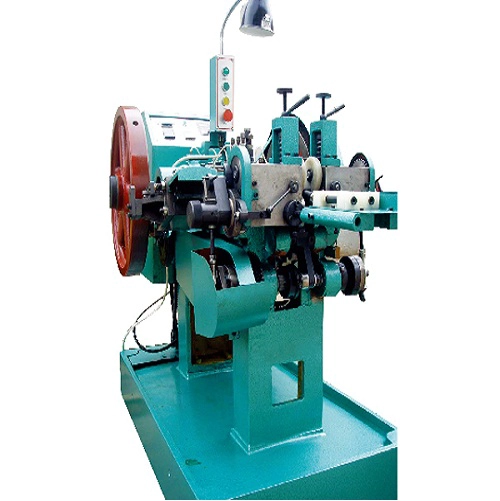
Thread Rolling Machine: High-Precision & High-Speed Automatic Thread Forming Equipment
Thread processing is one of the most critical procedures in fastener and precision hardware manufacturing. The thread finish, dimensional accuracy, and mechanical strength directly determine the assembly performance and service life of bolts, screws, studs, and threaded parts. Among all thread processing methods, cutting, turning, and grinding often cause metal fiber breakage, low strength, and material waste. A thread rolling machine adopts advanced cold rolling forming technology to complete thread molding at room temperature, becoming the most efficient and reliable solution for mass production of standard and high-precision threaded components.
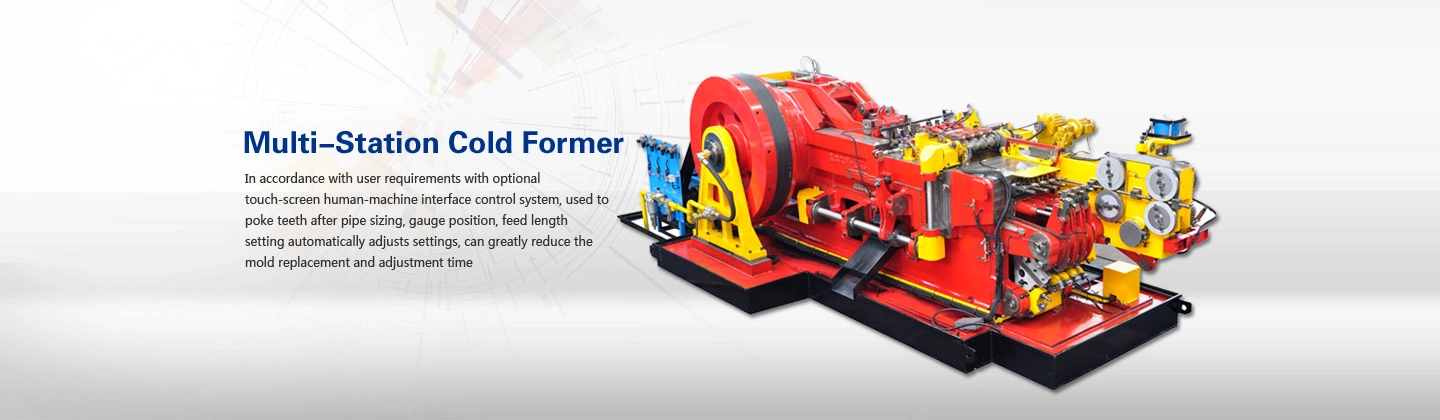
As essential supporting equipment for cold heading production lines, modern automatic thread rolling machines are widely matched with multi-station cold heading machines to form a complete fastener production workflow. With outstanding advantages in precision, efficiency, and material utilization, thread rolling equipment has become standard configuration for medium and large fastener manufacturers worldwide.
What Is a Thread Rolling Machine?
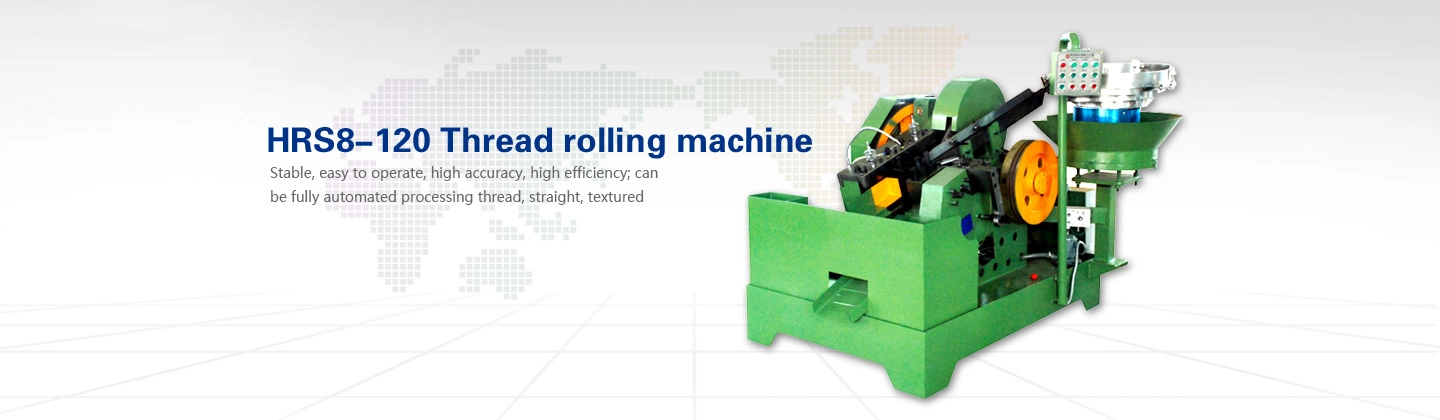
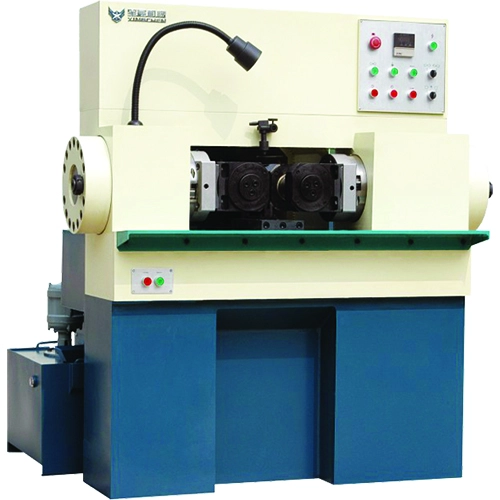
A thread rolling machine is a specialized cold forming machine used for external thread processing of metal workpieces. Different from traditional thread cutting processes that remove excess material, thread rolling adopts plastic deformation principle. It uses two or three high-hardness thread rolling dies to squeeze and roll the blank surface, extruding metal materials to form standard thread teeth without cutting any metal fibers.
The equipment is mainly used for secondary precision forming of cylindrical blanks after cold heading. It can process various standard threads such as metric, imperial, fine pitch, and special threads. Suitable for carbon steel, alloy steel, stainless steel, copper, aluminum, and other metal materials, the machine is widely used for producing screws, bolts, studs, threaded pins, and special-shaped threaded parts.
Working Principle and Production Process
The thread rolling machine realizes thread forming through physical extrusion and plastic deformation. The whole process is stable, fast, and repeatable, ensuring uniform thread precision for each batch of products. The standard working flow is as follows:
1. Automatic Feeding and Sorting
The finished cold heading blanks are automatically sorted and fed into the rolling station through a vibrating plate or conveyor belt. The equipment ensures orderly single-piece feeding to avoid overlapping and jamming, providing stable workpiece positioning for subsequent rolling procedures.
2. Precise Positioning and Clamping
The feeding mechanism accurately sends the workpiece to the center of the thread rolling dies. The high-precision positioning system ensures the workpiece is parallel to the rolling dies, preventing thread deflection, skewing, and pitch errors during rolling.
3. Cold Rolling and Thread Forming
The symmetric thread rolling dies rotate synchronously at a constant speed. Under continuous extrusion pressure, the metal surface produces plastic flow. The metal fills the tooth grooves of the dies to form complete, smooth, and high-precision thread teeth. The whole forming process does not destroy the metal fiber structure, making the thread surface denser and stronger.
4. Automatic Discharging and Screening
After thread rolling is completed, the finished workpieces are automatically discharged. Equipped with detection and screening devices, the machine can eliminate defective products such as incomplete threads and out-of-tolerance parts, ensuring the yield rate of finished products.
Key Advantages of Thread Rolling Machine
1. Higher Mechanical Strength of Threads
Traditional thread cutting will cut off the metal fiber flow line, resulting in easy fracture and poor fatigue resistance of threads. Thread rolling forms threads through extrusion and deformation. The metal fibers are continuously distributed along the thread profile, which greatly improves the tensile strength, shear strength, and fatigue resistance of threaded parts. For high-strength fasteners used in automobiles and machinery, thread rolling technology is the only qualified processing method.
2. Excellent Surface Finish and High Precision
The cold rolling process produces threads with smooth surfaces, no burrs, no tool marks, and precise tooth shape. The dimensional tolerance can be controlled within 6g/6h standard or even higher precision. The thread pitch, tooth height, and outer diameter are highly consistent, which effectively improves the assembly tightness and interchangeability of fasteners.
3. Ultra-High Material Utilization and Cost Saving
Thread cutting processes produce a large amount of metal scrap, with a material utilization rate of only 70%–80%. Thread rolling requires no material removal, with a material utilization rate close to 100%. In addition, the high-speed automatic operation greatly improves output capacity and reduces labor costs. The long service life of rolling dies also lowers long-term production input for enterprises.
4. Fast Production Speed and High Output Capacity
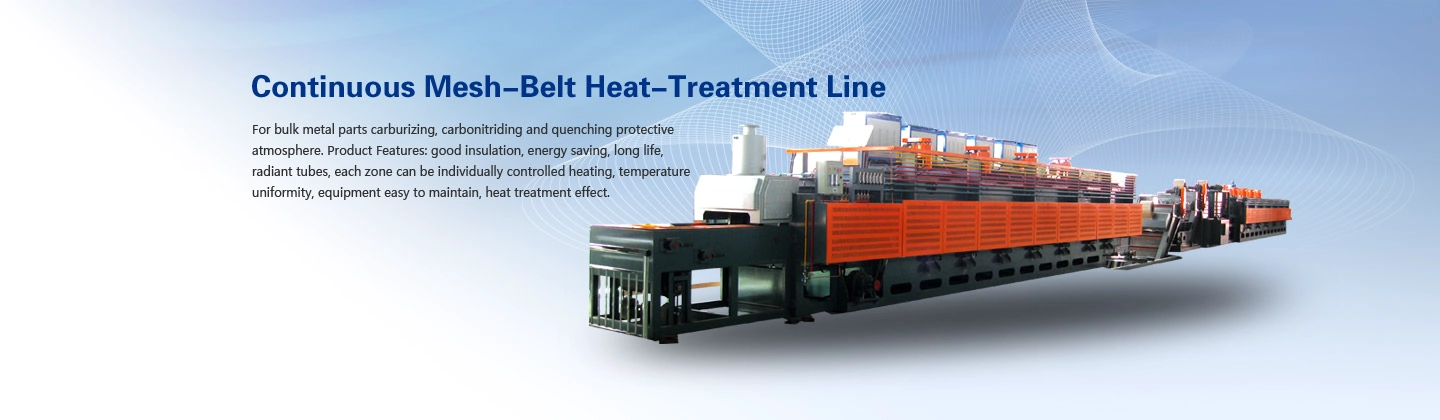
Modern high-speed automatic thread rolling machines can achieve a production speed of 80–200 pieces per minute. It can be perfectly connected with multi-station cold heading machines and heat treatment mesh belt furnaces to form a fully automatic fastener production line. It supports 24-hour continuous operation, fully meeting the large-scale and high-volume production demands of the fastener industry.
5. Low Failure Rate and Easy Maintenance
The thread rolling machine adopts mature mechanical transmission structure and intelligent PLC control system, with stable operation and low noise. The equipment features simple structure, convenient die replacement, and easy daily maintenance. It can adapt to long-term high-intensity industrial production and effectively reduce downtime losses.
Main Application Fields
-
Fastener Manufacturing Industry: Mass production of high-strength bolts, precision screws, studs, and self-tapping screws, covering standard and non-standard threaded fasteners.
-
Automotive and New Energy Industry: Processing of high-precision and high-fatigue threaded parts for automobile chassis, engines, and new energy battery structures.
-
Electronic and Electrical Industry: Production of miniature precision threads for 3C electronic products, household appliances, and precision instruments to ensure precise assembly.
-
Machinery and Aerospace Industry: Manufacturing of high-precision threaded structural parts with high strength and high stability requirements.
Market Trend and Development Prospect
With the continuous upgrading of global precision manufacturing standards, the market has higher and higher requirements for thread precision, surface quality, and mechanical performance of fasteners. Traditional cutting thread processing technology is gradually eliminated, and cold thread rolling technology has become the mainstream of the industry.
Future thread rolling machines will develop toward intelligence, high speed, and multi-function integration. Intelligent detection, automatic die adjustment, real-time data monitoring, and fault early warning functions will become standard configurations. The integration with cold heading production lines and heat treatment equipment will be further optimized to realize a fully automated intelligent fastener production workshop.
Conclusion
The thread rolling machine is indispensable core equipment in the precision fastener manufacturing process. It completely optimizes the defects of traditional thread cutting technology in terms of strength, precision, and material utilization. With the advantages of high efficiency, high precision, energy saving, and environmental protection, thread rolling equipment provides strong technical support for the production of high-quality standard fasteners and special threaded parts, and promotes the overall upgrading level of the global fastener manufacturing industry.