














Mesh-Belt Continuous Heat Treatment Furnace For Fasteners
1. What a mesh-belt furnace actually is
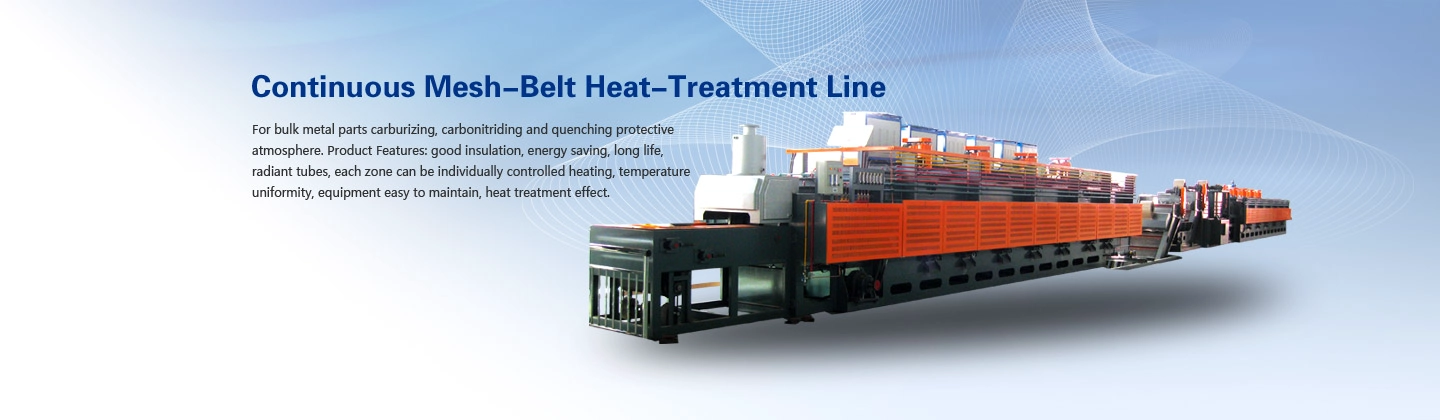
A mesh-belt continuous heat treatment furnace conveys parts through a heated tunnel on an endless woven metal belt. Parts are loaded at one end, travel through controlled-temperature zones, and are discharged — either into a quench, into a controlled cooling section, or directly to a tempering furnace — without being handled individually.
It is the standard solution for high-volume, small-to-medium components where the parts can be spread in a single layer or a shallow bed on the belt: bolts, screws, nuts, washers, stampings, bearing components, chain links, hand-tool parts.
The important distinction: this is a continuous furnace, not a batch furnace. The whole design logic — belt speed, zone length, loading density, quench capacity — is built around a steady-state cycle, which is exactly why it delivers repeatability that batch equipment struggles to match.
2. The principle of operation
2.1 Loading and conveying
Parts are fed onto the belt by a vibratory feeder, a hopper with a distribution chute, or a manual loading station, spread to a controlled bed depth. That depth is a process parameter, not an ergonomic detail: it determines how evenly each part sees the heating curve.
The belt runs on driven drums with tension control. Belt tracking and tension decide belt life more than any other single factor — a belt that is allowed to run slack, or to rub a side wall, fails long before its metallurgy does.
2.2 Multi-zone heating
The tunnel is divided into heating zones, each with its own setpoint, its own thermocouple and its own control loop. Typical architecture:
- Zone 1 — preheat / burn-off: drives off moisture and lubricant residues, brings parts up gradually.
- Zones 2–4 — austenitising (or tempering) hold: brings parts to temperature and holds long enough for the core to catch up with the surface.
- Final zone — equalisation: narrows the spread across the belt width before discharge.
Heat transfer is convection-dominant in an atmosphere furnace, with radiation contributing increasingly at higher temperatures. Because parts travel at constant speed, every part sees the same time-at-temperature profile — the property that makes the output predictable.
2.3 Atmosphere control
For fasteners and most engineering components, the furnace is not just hot air. A controlled atmosphere — endothermic gas, nitrogen-methanol, or a nitrogen-hydrogen mix depending on the process — is used to:
- prevent decarburisation and scale on the surface,
- hold a defined surface carbon potential where required,
- keep the belt and the parts bright.
Atmosphere is where the difference between "heat treated" and "heat treated correctly" is usually made, and it is also where leakage, door design and pressure control matter most.
2.4 Discharge, quench and cooling
At the discharge end the parts leave the belt and enter one of three paths:
- Direct quench — oil, water-based polymer or water, with an agitator and a controlled transfer time. Shorter transfer time means less temperature loss and more consistent hardness.
- Controlled cooling — a cooling section under protective atmosphere for processes that must not be quenched.
- Transfer to a tempering furnace — the normal route for hardening-and-tempering in one continuous flow.
2.5 Where it sits in a fastener line
In a bolt or nut line the furnace sits between thread forming and surface finishing:
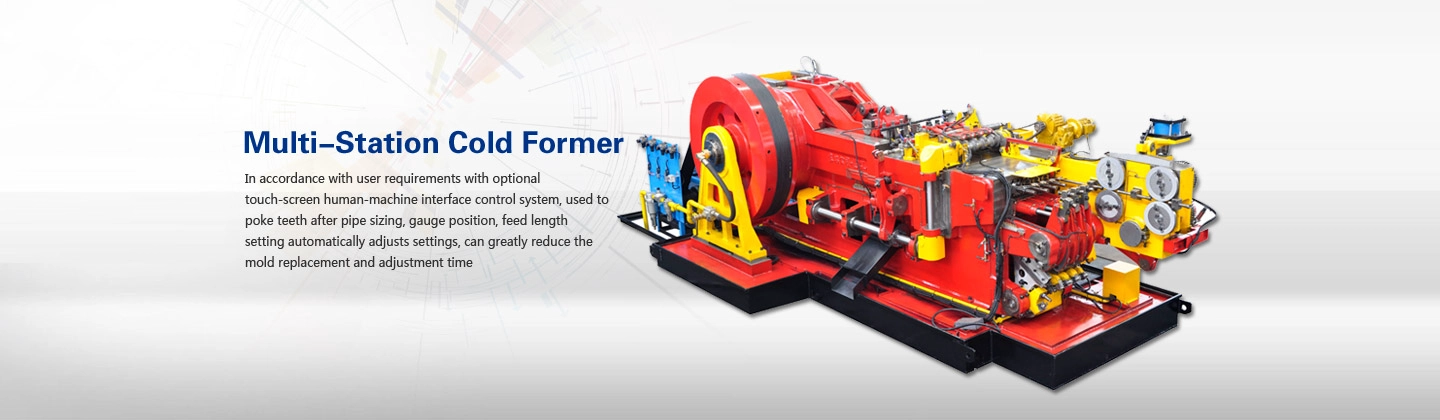
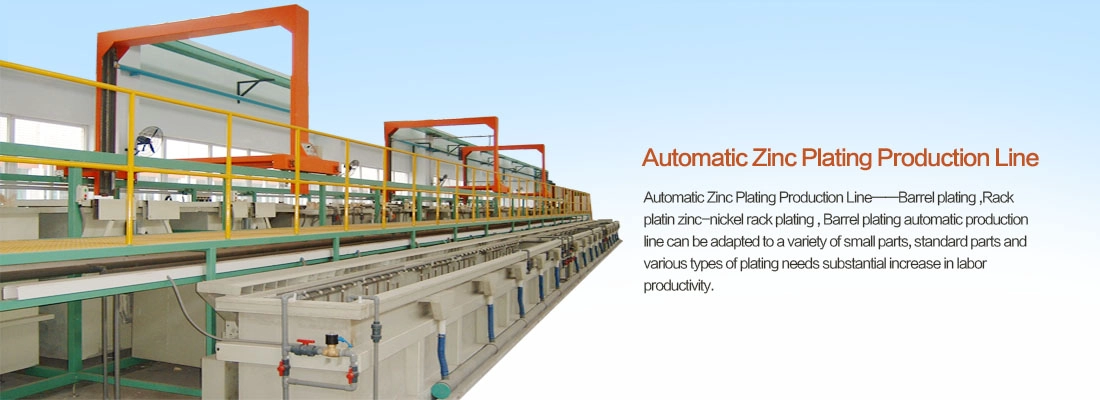
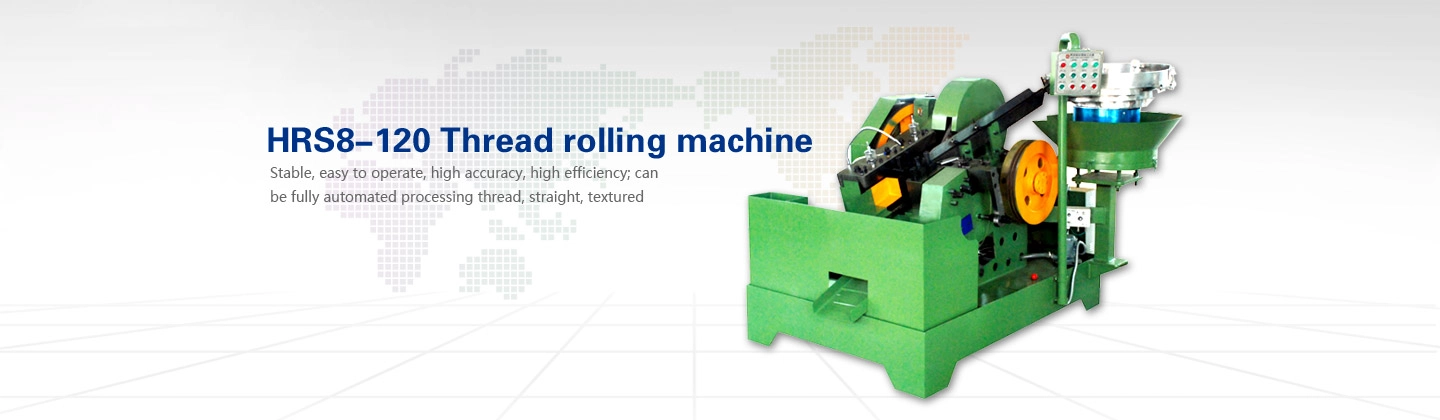
Raw material → Wire drawing → Cold forging → Thread rolling / Tapping → Mesh-belt heat treatment → Barrel zinc plating → Finished products
The furnace is the stage that fixes hardness, toughness and freedom from decarburisation. No downstream process can repair a part that left this stage with a soft core, a decarburised flank or a hardness spread across the batch — and plating will not hide it.
3. Advantages — and what they are worth in production
3.1 Uniform, repeatable properties
Steady-state conveying means every part receives the same thermal history. Hardness spread across a shift is driven by belt speed and zone stability, not by how full the furnace happens to be — the classic weakness of batch processing.
3.2 High throughput in a small footprint
Continuous operation removes loading/unloading cycles. Output is set by belt speed × loading density, and can be tuned for the order book rather than run in fixed batches.
3.3 Low distortion
Gradual, controlled heating and single-layer loading reduce thermal shock and part-to-part contact. For threaded and thin-walled parts this translates directly into fewer rejects after thread gauging.
3.4 Lower energy per tonne
A continuous furnace runs at temperature all shift: no repeated heat-up of a cold load, no cooling losses between batches. Energy per kilogram of treated parts is typically well below batch equivalents.
3.5 Less labour, fewer handling defects
Loading, conveying and discharge can be automated end-to-end. Parts are not re-handled between steps, so dents, mixing and lost traceability disappear as failure modes.
3.6 Clean surfaces, better downstream results
Atmosphere protection keeps parts free of scale and decarburisation, which improves plating adhesion and appearance and reduces pickling load before zinc plating.
3.7 Straightforward traceability
Belt speed, zone temperatures and atmosphere parameters are logged per lot — a defensible quality record for automotive, construction and export customers.
3.8 Honest limits
Mesh-belt furnaces are not universal. Know the boundaries before you specify one:
- Temperature ceiling: the belt is the limiting component; heat-resistant Ni-Cr alloy belts are typically applied up to around 950 °C. Above that, cast-link or roller-hearth designs are the correct choice.
- Load limit: belt load per square metre and bed depth are finite; overloading is the fastest way to shorten belt life.
- Belt life is a wear item, not a lifetime item: budget for replacement and design the line so it can be changed without a week of downtime.
- Atmosphere integrity: door design, gas seals and pressure control need maintenance discipline; a leaking furnace silently decarburises parts.
4. How RAINBOW configures the furnace
The configuration below is the standard architecture; the bracketed values are the project-specific selections made against your part range and output target.
1. Heating section Multi-zone electrically heated tunnel, zone lengths matched to the required soak time at your belt speed. [Number of zones] · [Total heated length] · [Connected power] · [Max. operating temperature, typically ≤ 950 °C].
2. Conveyor Endless woven mesh belt in heat-resistant Ni-Cr alloy, driven with tension control and automatic belt-tracking correction. [Belt width] · [Belt material grade] · [Max. belt load kg/m²] · [Belt speed range].
3. Atmosphere system Controlled-atmosphere operation with flow metering, pressure control and atmosphere sampling point. [Atmosphere type: endothermic gas / N₂-methanol / N₂-H₂] · [Carbon-potential control: yes/no] · [Gas consumption at rated output].
4. Discharge and quench [Direct oil quench / polymer quench / controlled cooling] with agitator, [quench tank volume], controlled transfer time and oil temperature control.
5. Tempering [Integrated mesh-belt tempering furnace / separate unit], [temperature range], with discharge cooling to handling temperature.
6. Control and documentation PLC with multi-zone PID control, recipe management per product, batch/lot logging of belt speed, zone temperatures and atmosphere parameters, alarm and interlock management. [HMI language options] · [Data export format] · [Remote support capability].
7. Safety and environmental Gas detection and automatic shut-off, door and atmosphere interlocks, exhaust and burn-off handling, insulation designed for a permissible surface temperature at operator level. [Applicable safety standard / certification].
8. Line integration Loading feeder, belt-width distribution, discharge transfer to quench or tempering, and interface to the upstream cold former or thread roller and downstream plating line. [Layout footprint] · [Integration scope: furnace only / furnace + quench + temper].