















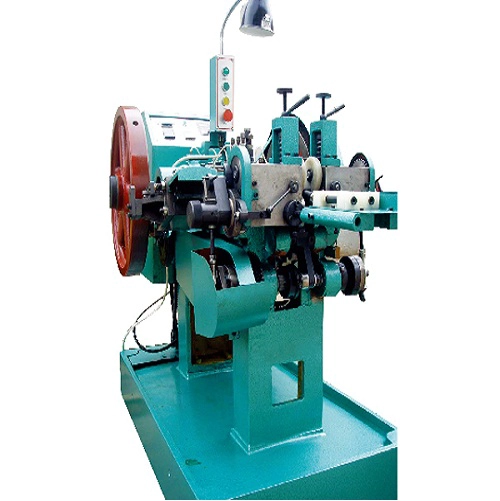
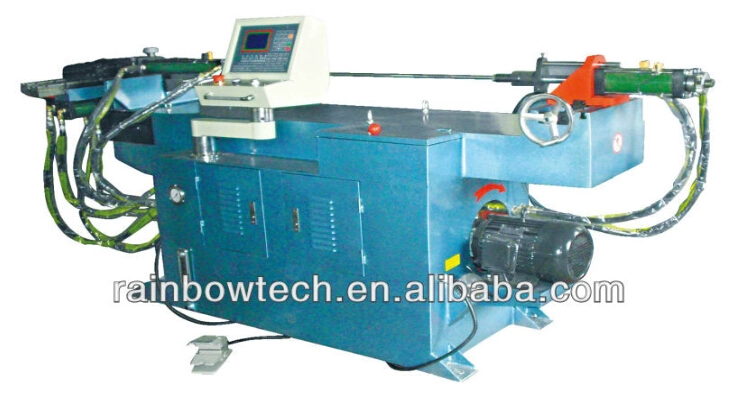
Working principle of high-speed thread rolling machine
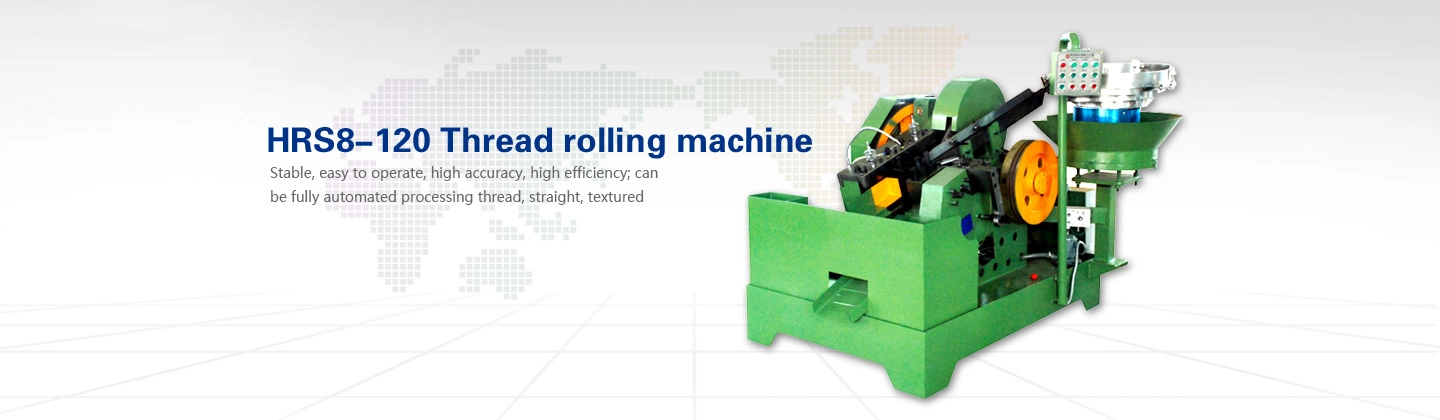
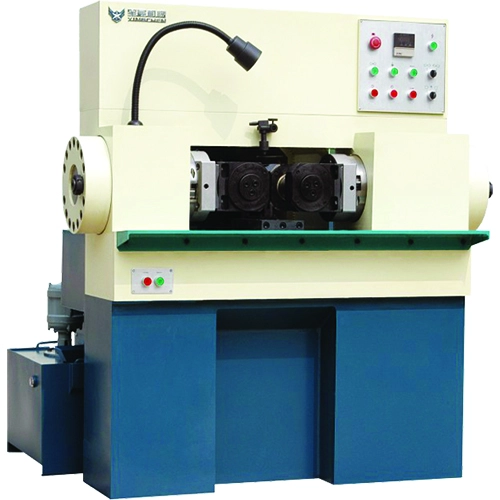
High-speed thread rolling machines use the relative motion of two rolling plates to extrude threads into metal materials. During operation, a feed mechanism feeds the bar into the gap between the plates. The pressure from the rolling plates causes the metal to plastically deform, forming spiral protrusions and grooves, completing the threading process without cutting.
Core Components and Structure
The machine's main body consists of a frame, a power system (typically an electric motor), a transmission mechanism, rolling plates, and a feed mechanism. The active rolling plate is mounted on the main shaft, while the other is fixed to a movable slide, forming an angle between the two. The feed mechanism pushes the metal bar into the gap between the plates, completing the threading process through linear or rotational motion.
Key Process Parameters
Pressure Adjustment: Pressure is adjusted based on material hardness (80-120 MPa for mild steel, 150-180 MPa for stainless steel). Modern models are equipped with pressure sensors for real-time monitoring and compensation.
Feeding Method: Pushing is suitable for short parts, while pulling with rollers is suitable for large-scale production. Precision models can also implement automatic loading. Lubrication and Cooling: Cutting fluid containing extreme pressure additives prevents wear on the thread rolling plate. Substituting conventional engine oil can cause tooth flank damage.
Features: High processing efficiency (hundreds of parts can be completed per minute), excellent thread strength, and a cold-rolled forming process eliminates high-temperature concerns.