




1-Die-2-Blow Heading Machine: The Workhorse Behind Standard Screws
1-Die-2-Blow Heading Machine: The Workhorse Behind Standard Screws
Most screws in the world are not made on a complicated machine. They are made on a heading machine with one die and two punches, running a few hundred strokes a minute, fed by a coil of wire — and they come out at a cost per thousand that no other process has managed to beat.
Understanding why that simple arrangement is so effective also explains its limits. Both matter when you are choosing equipment, because the same two blows that make a drywall screw at high speed will not make a long-shank special without a second machine.
What "one die, two blows" actually means
The wire is fed, straightened and cut to a blank. The blank is transferred into a single die, and two punches strike it in sequence:
- First blow — a pre-forming punch gathers the material and starts the head shape. It does not try to finish the head; it moves enough volume into position for the second strike.
- Second blow — the finishing punch forms the final head geometry: pan, cheese, countersunk or the recess your screw needs.
That is the whole cycle. One die holds the part; two punches divide the deformation into a gathering step and a finishing step. Dividing it is what makes the process viable — a single blow would require so much force and so much die strength that both part quality and tool life would collapse.
What it makes well
This is the natural equipment for standard screws in the small to medium wire range: drywall screws, chipboard screws, self-tapping screws, machine screws, and general fasteners with a simple head and a straight or slightly tapered shank.
| Part feature | Suitability |
|---|---|
| Pan, cheese, countersunk head | Excellent — the classic two-blow head |
| Short to medium shank | Good — formed directly from the cut blank |
| Sharp point, drill point | Point is normally formed in a separate station or machine |
| Flange with deep recess | Possible only within two blows; otherwise needs more stations |
| Long shank, backward extrusion | Not suitable — a multi-station former is required |
Where two blows is not enough
The limit is not the machine's build quality; it is the process itself. Two blows give you one gathering step and one finishing step. When a part needs a third or fourth deformation — a long shank formed by backward extrusion, a deep internal recess combined with a flange, a head much larger than the shank can supply — the honest answer is a multi-station former, not a heavier punch.
Ask for a part with three forming steps on a two-blow machine and the supplier has two choices: refuse, or accept and deliver a part with laps, cracks and short die life. The second outcome is why buyers sometimes conclude that "heading does not work for this part" when the real issue was the configuration.
Why it still dominates standard screw production
- Cycle time. Two blows per part, one transfer, continuous wire feed — the stroke count per minute is high and the idle time between parts is negligible.
- Tooling cost. One die and two punches per part is a small tooling set compared with a multi-station die stack, which is decisive for a plant running many similar parts.
- Changeover. Fewer components to align means faster changeover, which is what makes mid-size batches economic.
- Maintenance. Fewer moving forming elements, simpler kinematics, and a maintenance routine an in-house team can actually own.
- Footprint and power. A compact machine that fits into a line of several headers feeding one heat treatment and one coating line.
Pairing it with a thread roller
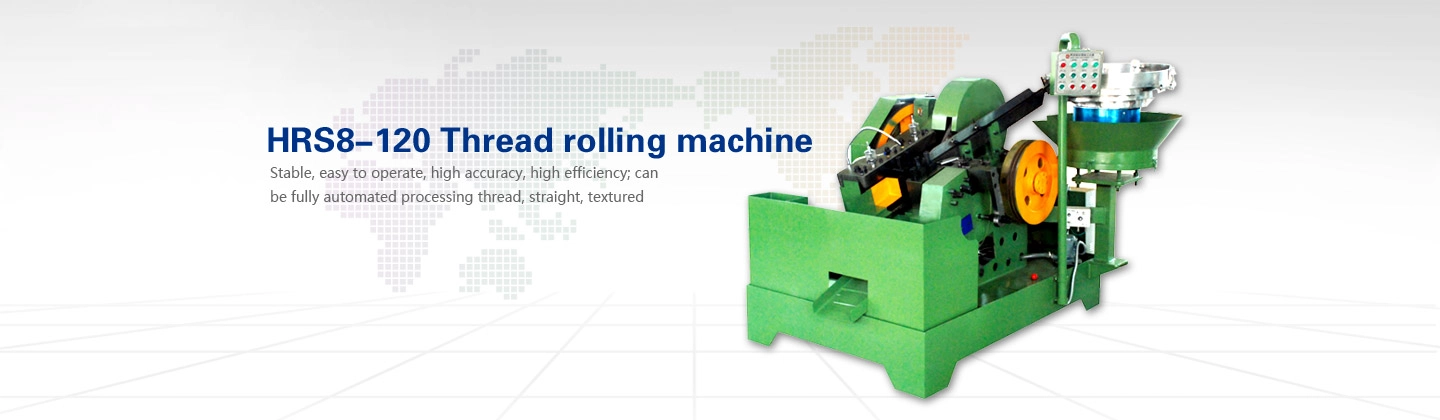
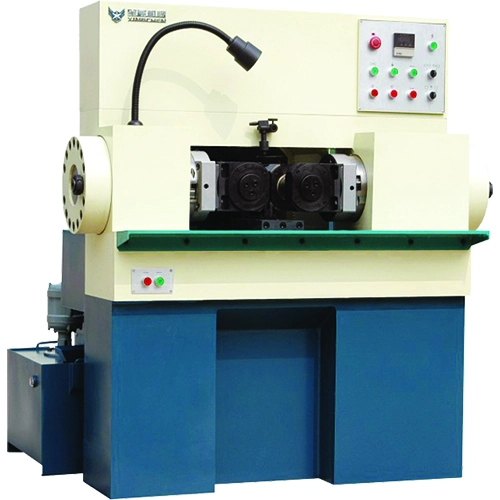
A heading machine on its own does not deliver a finished screw. The part comes off headed, with a blank shank that then goes to thread rolling — flat die for most screws, circular die for larger diameters and longer parts.
Three things decide whether the pair runs as a line or as two bottlenecks:
- Output match. The roller must absorb what the header produces. If it does not, you have bought the header's speed and are shipping the roller's.
- Blank diameter discipline. The thread is raised from the blank's own material, so the pre-roll diameter must be calculated from the pitch diameter. This is the most common source of scrap after a new roller is installed.
- One operator, two machines. With correct layout — header, short buffer, roller — one operator can run the pair, which is where the labour advantage of this configuration actually comes from.
What to check before buying
- Wire range and cut length — the physical envelope, stated honestly for the parts you intend to run.
- Punch guidance and die rigidity — decides whether the head stays concentric at high stroke rates.
- Cut-off quality — a poor cut face becomes a defect in the head on every single cycle.
- Feeding reliability at speed — most stoppages on a high-speed header are feed-related, not forming-related.
- Tooling standard and spare availability — dies and punches are consumables; their lead time is a production risk.
- Safety and guarding — a two-blow header cycles fast enough that guarding is not optional.
Frequently asked questions
Can a 1-die-2-blow machine make bolts as well as screws?
Within its wire range and with the right tooling, yes for simple short bolts. Parts that need a long shank, a large flange or several forming steps belong on a multi-station former instead.
Why two blows and not one?
One blow would concentrate the entire deformation in a single strike, which demands excessive force and die strength and gives poor head quality and short tool life. Two blows split the work into gathering and finishing.
Can it make self-drilling screws?
The head and shank are formed on the header, but the drill point is normally produced in a separate operation or on a machine configured for it. Confirm the complete process route before ordering, not just the heading step.
What output should I expect?
Output depends on wire diameter, head complexity, stroke rate and how well the line is balanced with the roller. It is calculated from your actual part and shift pattern during technical review rather than quoted as a single figure.
What we supply
We supply the machines: 1-die-2-blow heading machines, thread rolling machines and the rest of the screw line. Dies are sourced to match the machine you order, and if you have no drawing, a few sample screws are enough for the die to be made from.
Related equipment
If you are building or upgrading a screw line, these are the pages that pair with this article:
- Bolt and screw making machines — the heading side of the line.
- Thread rolling machines — the second half of a screw line, flat die or round die.
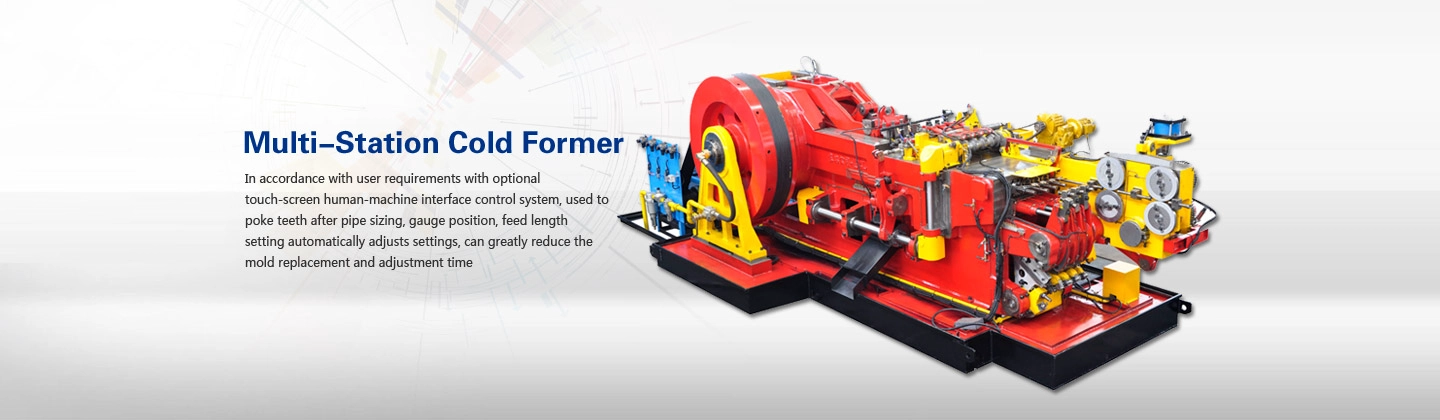
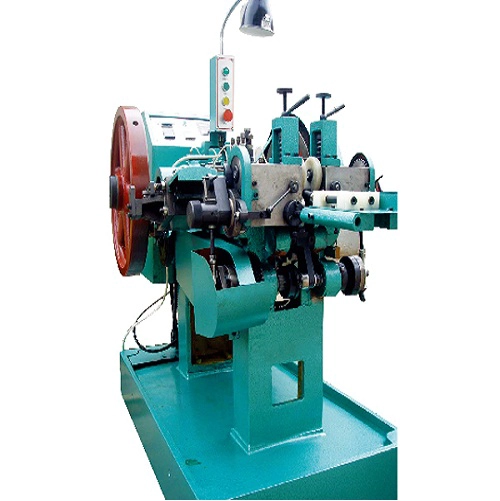
- TH0432 one-die-two-blow cold heading machine — a working example of this machine type.
- Wire drawing machines — upstream of the header, and the first place quality is set.
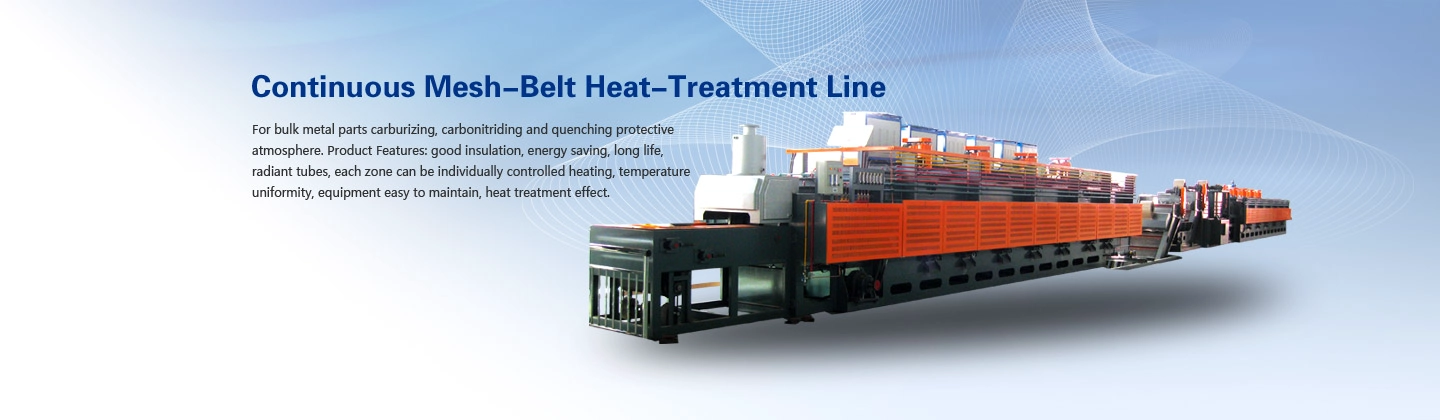
- Continuous mesh belt furnaces — required once the screw goes above property class 8.8.
About the author: Avril Xu, Harbin Rainbow Technology Co., Ltd. — more than 30 years in fastener equipment, supplying 1-die-2-blow heading machines, thread rolling machines, nut formers, continuous mesh belt furnaces and complete screw and bolt production lines.