





Rolled Thread vs Cut Thread: What Changes When Screws Move to Rolling
Rolled Thread vs Cut Thread: What Changes When Screws Move to Rolling
Two screws, same drawing, same material, same hardness. One has a thread cut into it with a die head; the other has a thread formed by pressure until the metal flowed into shape. Dimensionally they can pass the same gauge. In service they behave differently, and the difference is decided before either part is made.
This is not an argument that rolling always wins. It is a description of what actually changes — in the metal, on the machine, and in the cost of the part — so the decision can be made on the right grounds.
Two ways to make the same thread
Cutting removes material. A die head or tap shears the thread profile out of the blank, leaving small chips and interrupting the grain structure along the flanks of every thread.
Rolling displaces material. The blank — turned to a specific roll diameter — is squeezed between dies, and the metal flows outward into the thread form. Nothing is removed; the thread is raised from the blank's own material.
What rolling does to the grain
In a cut thread, the grain fibers run parallel to the shank and are severed at each thread root. In a rolled thread, the fibers follow the thread contour — up the flank, around the crest, down into the next root — without a break.
That geometry matters most precisely where screws fail: at the thread root, which is a stress concentration by design. A continuous fiber running around the root, plus the compressive residual stress left by forming, is why rolled threads typically show markedly better fatigue resistance than cut threads of the same material and class.
Four things that change on the shop floor
| What changes | Rolled thread | Cut thread |
|---|---|---|
| Grain flow at the root | Continuous, follows the profile | Severed at every root |
| Surface finish | Compressed and smoothed by the die | Depends on cutting speed and tool wear |
| Material | None removed — no chips | Chips, plus a slightly smaller blank |
| Dimensional stability | Very consistent once the die is set | Drifts with tool wear |
The productivity point is often underrated: because there are no chips and the die set holds its form, rolling tends to produce far less scrap per thousand pieces, and the operator's intervention is mostly about blank diameter and lubrication rather than about adjusting a cutter.
Blank diameter: the number that decides success
Rolling does not create material. The blank must contain exactly the volume that the finished thread will occupy, which is why the roll (blank) diameter is calculated from the thread's pitch diameter rather than taken from the nominal size. Get it wrong in either direction and the consequences are predictable:
- Too small — the thread is incomplete, the crest does not fill, and the part fails a go/no-go gauge on the pitch diameter.
- Too large — the die is overloaded, the part may split at the crest, and die life drops sharply.
This is the single most common reason a buyer who "already rolls threads" still has a scrap problem after adding a new machine: the new roller is fine, the blank is wrong.
Where rolling is the wrong answer
- Internal threads. Rolling taps exist, but for most screw production tapping remains the practical route.
- Very thin walls. The radial force has to go somewhere; thin sections deform or burst.
- Hardened material. Above roughly 40 HRC the blank will not flow reliably; the process wants material that can still deform.
- Undercuts and interrupted threads. The die needs continuous support along the flank.
- Very small batches with special profiles. Die cost per part has to be amortised over the run.
Flat die or circular die
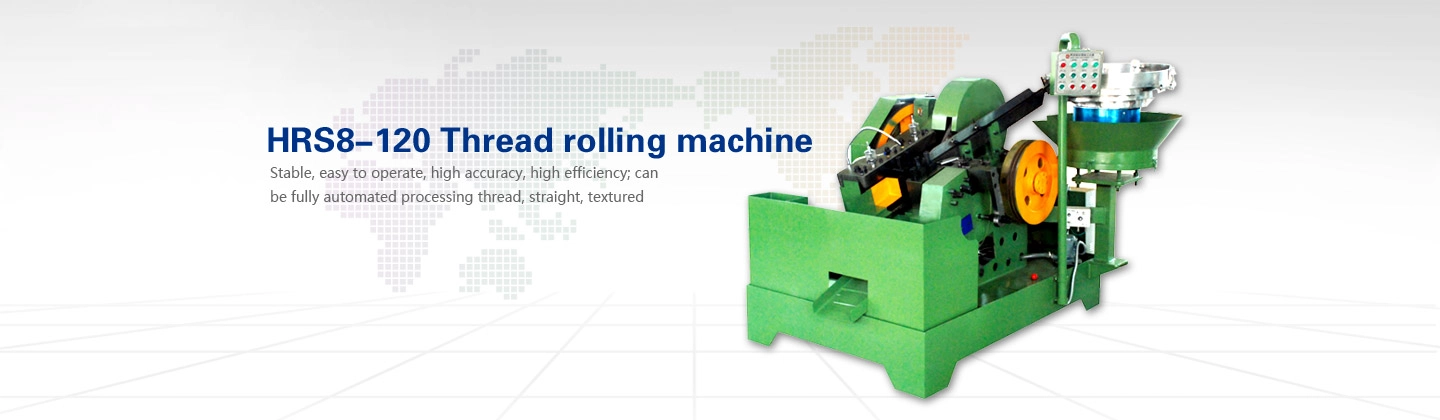
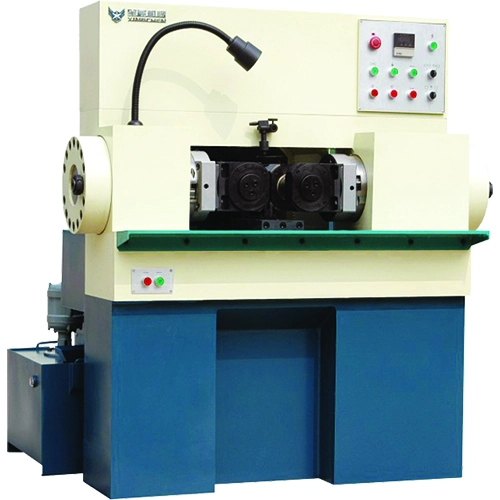
Flat die machines are the standard for high-volume screws and bolts: simple kinematics, straightforward die replacement, and easy transfer into an inline production sequence. Circular die (two-roll) machines suit larger diameters, longer parts and heavier sections, where the rolling force is easier to manage in a rotating configuration.
Whichever type, three setup habits decide the result: correct blank diameter, clean and correctly applied lubricant, and die parallelism. Die wear is not linear — a die that has started to lose its profile keeps passing parts for a while, then fails a whole batch at once.
Before you buy the roller
- Thread range and blank diameter range — including the parts you expect to add later, not only today's.
- Die length and die change time — this is where the real cost per thousand pieces sits in high-mix production.
- Speed match with the header — a roller that cannot absorb the header's output simply moves the bottleneck.
- Feeding and infeed stability — a rolled thread inherits any wobble from the infeed.
Frequently asked questions
Are rolled threads always stronger than cut threads?
For fatigue, rolled threads are normally significantly better because of continuous grain flow and compressive residual stress. For static tensile strength the thread's stress area governs, so a cut thread of the same class can carry a similar load. The practical advantage appears under cyclic loading and at the root.
Can I roll threads on a screw I already machine?
Usually yes, but the blank has to be redesigned: the pre-roll diameter is derived from the pitch diameter, not from the finished major diameter. Parts with thin walls or hard material may not be suitable at all.
Do I need heat treatment after rolling?
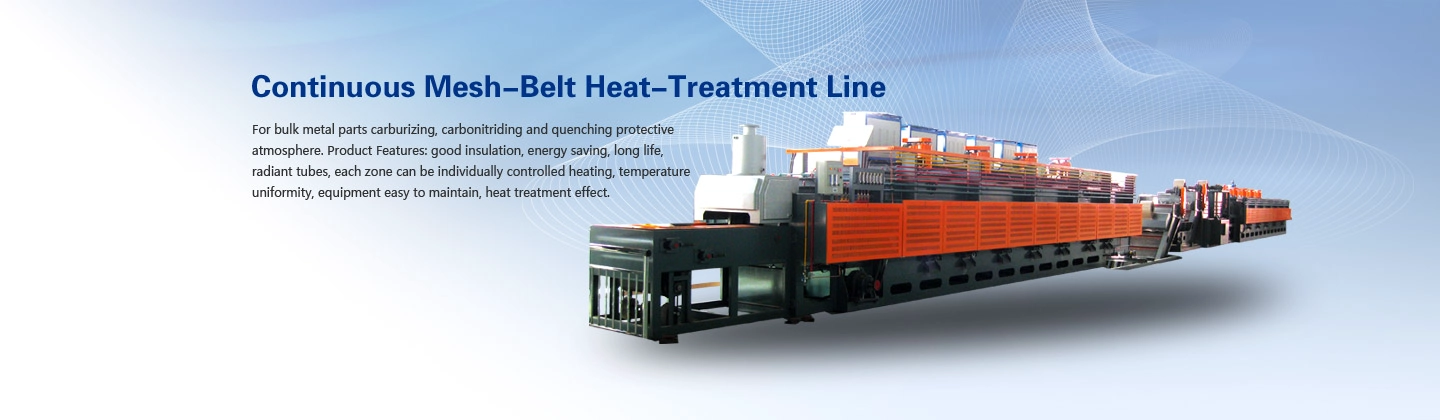
Only if the property class requires it. Rolling is a cold-forming step and does not replace quench and temper. If heat treatment follows rolling, note that the coating and the rolling sequence both affect how much of the fatigue benefit survives.
Why do my rolled threads fail the gauge at the crest?
Most often the blank is oversize, the die is worn beyond its profile, or lubrication is insufficient so the crest tears instead of flowing. Check the blank diameter first — it is the cheapest thing to verify.
What we supply
We supply the machines: thread rolling machines, heading machines and the rest of the line. Dies are sourced to match the machine you order, and if you have no drawing, a few sample screws are enough for the die to be made from.
Related equipment and reading
- Thread rolling machines — flat die and round die machines for screw threads.
- Round type thread rolling machine — for larger diameters and longer parts.
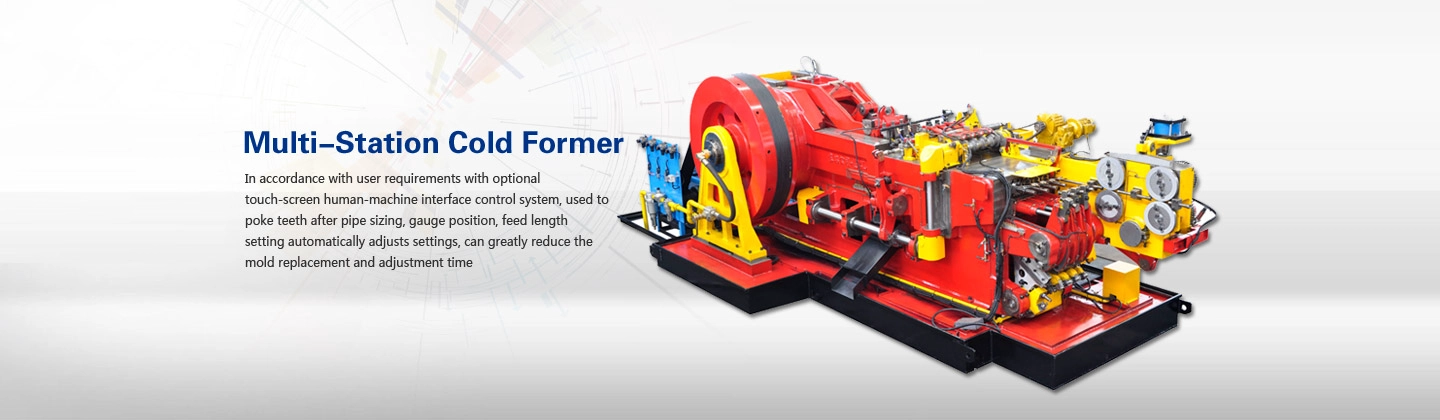
- Cold heading machines — the upstream stage that sets the blank you roll.
- Thread rolling machine for drywall screws — a typical high-volume application.
- Safe operation process for a thread rolling machine — setup and operating practice.
About the author: Avril Xu, Harbin Rainbow Technology Co., Ltd. — more than 30 years in fastener equipment, supplying thread rolling machines, 1-die-2-blow heading machines, nut formers, continuous mesh belt furnaces and complete screw and bolt production lines to buyers in South Asia, Southeast Asia, South America and Europe.