














Advantages and Disadvantages of Electrogalvanizing and Hot-Dip Galvanizing
Advantages and Disadvantages of Electrogalvanizing and Hot-Dip Galvanizing
The comparison primarily focuses on coating properties, application scenarios, and cost-effectiveness. Hot-dip galvanizing offers greater corrosion resistance and durability, but is more expensive. Electrogalvanizing, on the other hand, is more suitable for precision parts processing and offers a more aesthetically pleasing appearance.
Definition and Process Differences
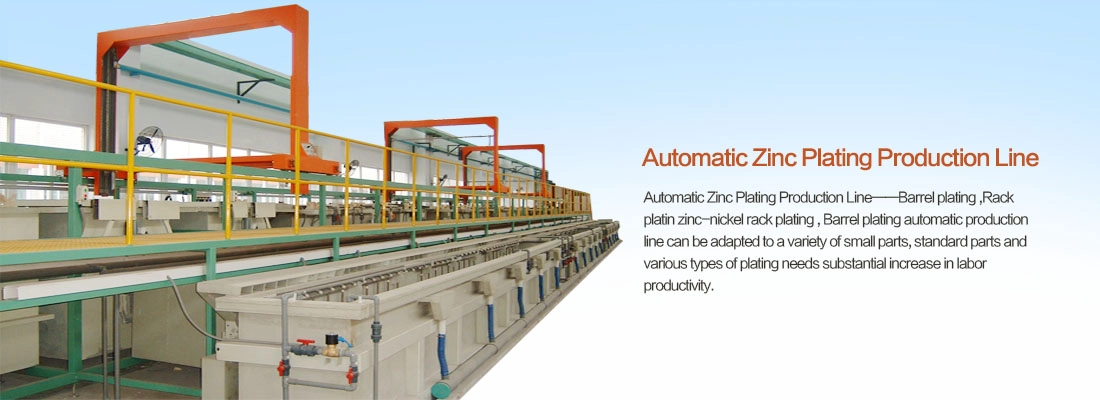
Electrogalvanizing (cold galvanizing).
Using the principle of electrolytic deposition, a 5-30μm zinc layer is formed on the metal surface, with the process temperature controlled at 20-40°C.
Process flow: Degreasing → Pickling → Electroplating → Passivation → Drying, without requiring high-temperature treatment.
Hot-dip galvanizing (hot-dip galvanizing).
The workpiece is immersed in molten zinc at 460-480°C, forming a 50-200μm alloy coating consisting of pure zinc and a zinc-iron alloy layer.
Key steps: Degreasing → Pickling → Fluxing → Galvanizing → Cooling. The zinc solution consumption is approximately 40-60kg per ton of steel.
Core Performance Comparison
Corrosion Resistance.
Hot-dip galvanizing: Outdoor service life can reach 50 years (marine environment) to 30 years (urban environment), and the zinc layer still provides electrochemical protection even after damage.
Electrogalvanizing: Rust protection period is approximately 2-5 years indoors, but pitting corrosion is more likely to occur in humid environments.
Economical Efficiency.
The cost per unit of hot-dip galvanizing is approximately 3-5 times that of electrogalvanizing, but the overall lifecycle cost is lower.
Physical Properties.
Adhesion: Hot-dip galvanizing has a bond strength of >30 MPa (metallurgical bond), while electrogalvanizing is only 5-10 MPa (physical bond).
Surface Quality: Electrogalvanizing has a surface roughness of Ra ≤ 0.8 μm, while hot-dip galvanizing has a Ra ≥ 1.6 μm.
Typical Applications
Hot-dip galvanizing's advantages.
Transmission towers (annual usage exceeds 2 million tons). Highway guardrails (coating thickness ≥ 85μm).
Ship anchor chains (must pass a 4000-hour salt spray test).
Electrogalvanizing applications.
Precision hardware (such as screws and nuts, tolerance ±0.1mm).
Electronic product casings (surface gloss ≥ 80GU).
Automotive interior parts (requires subsequent painting).